Homemade Vanilla Extract: The Easy Recipe with Used Vanilla Beans
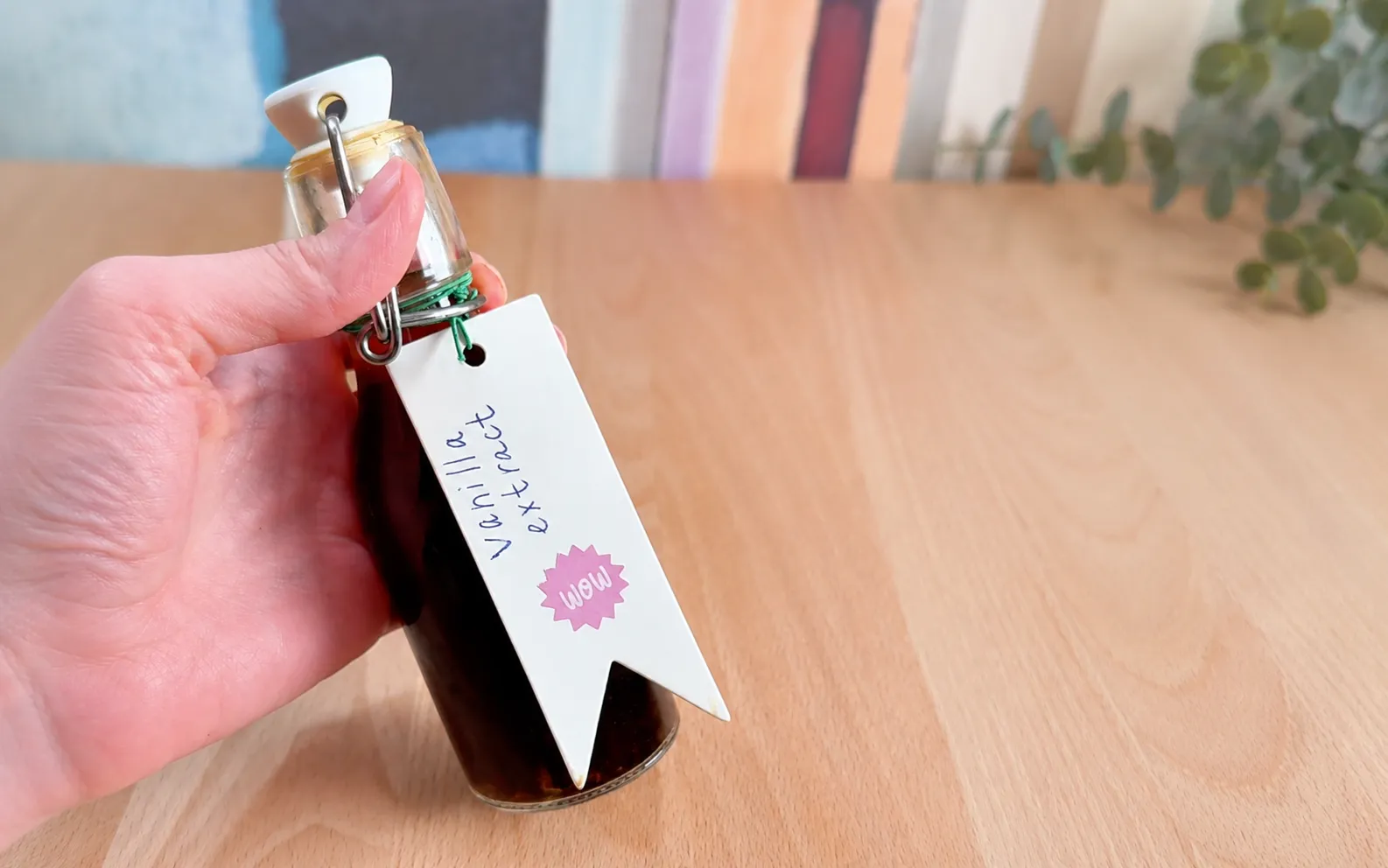
Did you know that vanilla beans still hold a huge amount of flavor after you’ve scraped them? At home we never throw them away: they go into a jar with rum or brandy, and that’s how we make our homemade vanilla extract. That jar has been going for months and keeps growing every time we use a new bean 🤗
All you need is two ingredients, a glass jar and a little patience. The result is far more aromatic than most vanilla flavorings at the supermarket, and essentially free, because it’s made from beans that would normally go in the trash.

How We Make It at Home, Step by Step
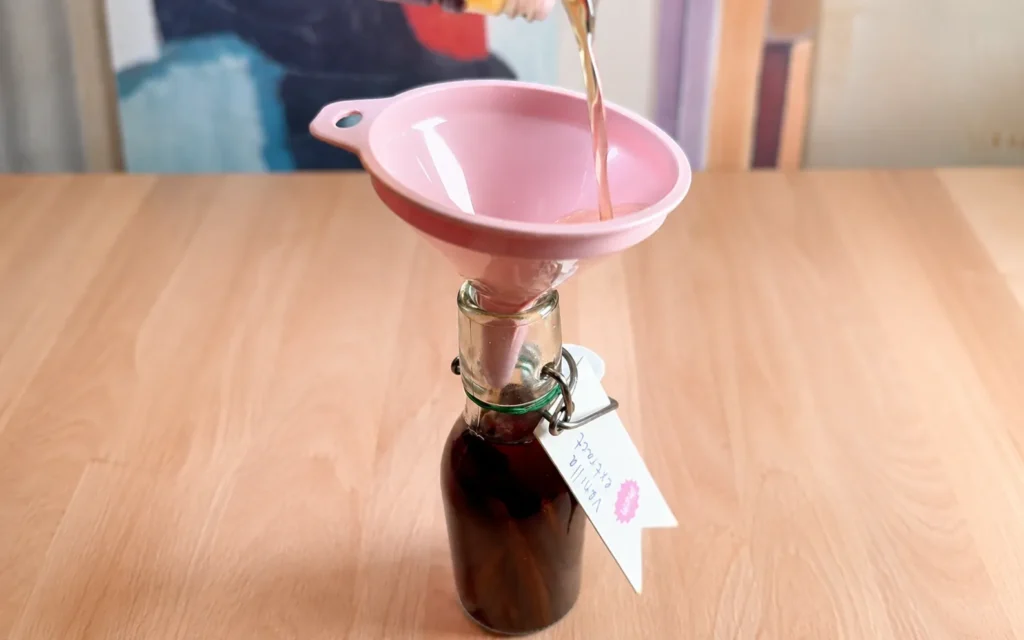
Homemade Vanilla Extract
Ingredients
- 5 used vanilla beans already scraped
- 250 ml rum or brandy 1 cup; 80 proof (40% ABV), vodka or bourbon also work
Instructions
- Put the used vanilla beans in a clean glass jar with an airtight lid. If they're too long, cut them in half so they fit properly.
- Cover the beans completely with the alcohol. It's important that no part of them sits above the liquid.
- Seal the jar and store it somewhere dark. A kitchen cabinet is perfect.
- Shake it now and then. Once a week is plenty.
- In about 8 weeks it's ready to use. The longer you leave it, the stronger the flavor.
- Every time you use some extract, top it up with more alcohol until the beans are covered again. And add new beans to the jar as you use them up in other recipes.
Notes
- Write the start date on the label. Once you’ve been topping up the jar for months, you won’t remember when you started it.
- The extract improves over time: from 3-6 months on, the aroma is much deeper.
- Sealed and protected from light, it keeps indefinitely.
- If it looks cloudy or has sediment, that’s normal: shake before using, or strain through a fine mesh sieve.
Any questions about the recipe? Ask us in the comments and we’ll get back to you. And if you make it, tell us how it turned out, we love hearing from you! 🤗
Vanilla Extract vs. Vanilla Flavoring: The Difference
We tend to use both words interchangeably, but technically they’re different products. Vanilla extract is made by steeping real beans in alcohol: complex, natural flavor with hundreds of aromatic notes. Vanilla flavoring (or imitation vanilla) is usually a synthetic product made from artificial vanillin, water and coloring. What we’re making today is the real thing, the same kind of product that costs a small fortune at baking shops.
Which Beans and Which Alcohol to Use
- Used vanilla beans. The ones you’ve already split and scraped for another recipe (custard, ice cream, cakes…). Save them: they’re gold.
- A spirit at 80 proof (40% ABV). We use rum or brandy, which bring a warm note that goes beautifully with vanilla. Vodka works too and gives you a more neutral extract. Bourbon is a classic choice in American kitchens and adds caramel and oak. No need to buy anything expensive.
One quick clarification, because it trips a lot of people up: “Bourbon vanilla” on a package of beans has nothing to do with bourbon whiskey. It refers to the Bourbon Islands (Madagascar, Réunion), where those beans are grown. You can absolutely make extract from Bourbon vanilla beans using vodka, and vice versa.
A note on the alcohol strength: the FDA standard for vanilla extract calls for a minimum of 35% alcohol, so anything at 80 proof or above works. Don’t go lower: below that the alcohol doesn’t extract properly and the extract won’t keep as well.
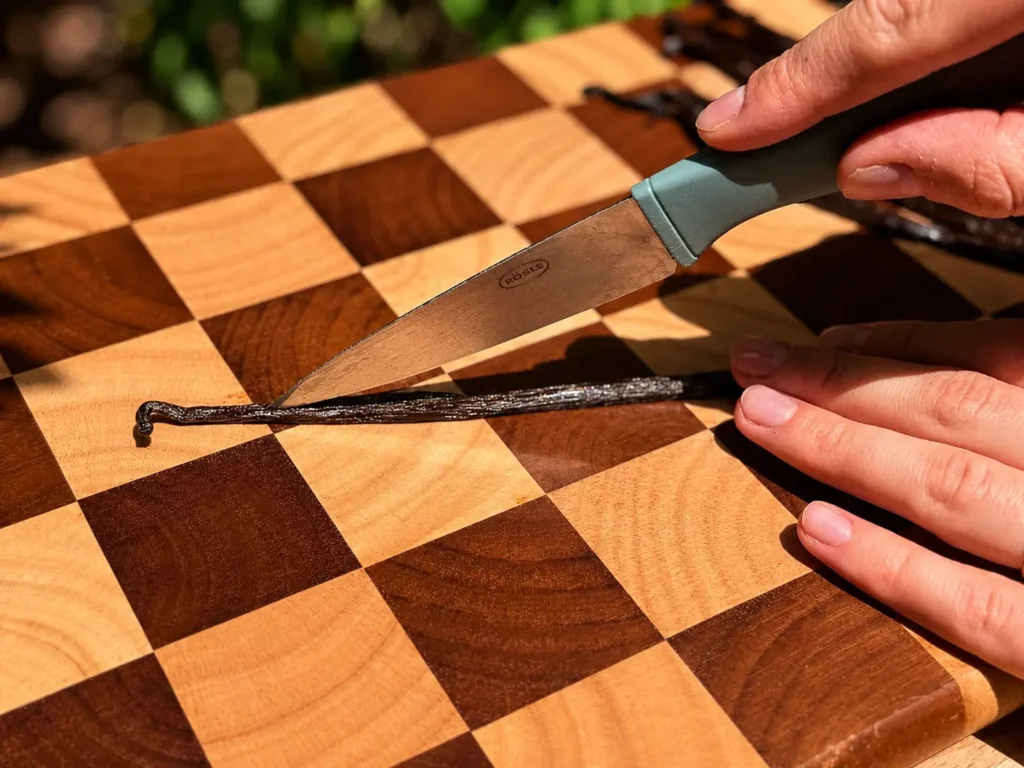
How to Scrape a Vanilla Bean
If you’ve never split one open, it’s easier than it looks and you don’t need anything special: a cutting board and a small knife (a paring knife is perfect).
Flatten the bean. Lay it on the board and run the back of the knife over it, like you’re ironing it. It opens more evenly that way and won’t slide around.
Split it lengthwise. Hold one end and make a cut from tip to tip, without cutting it into two separate halves: you just want it open.
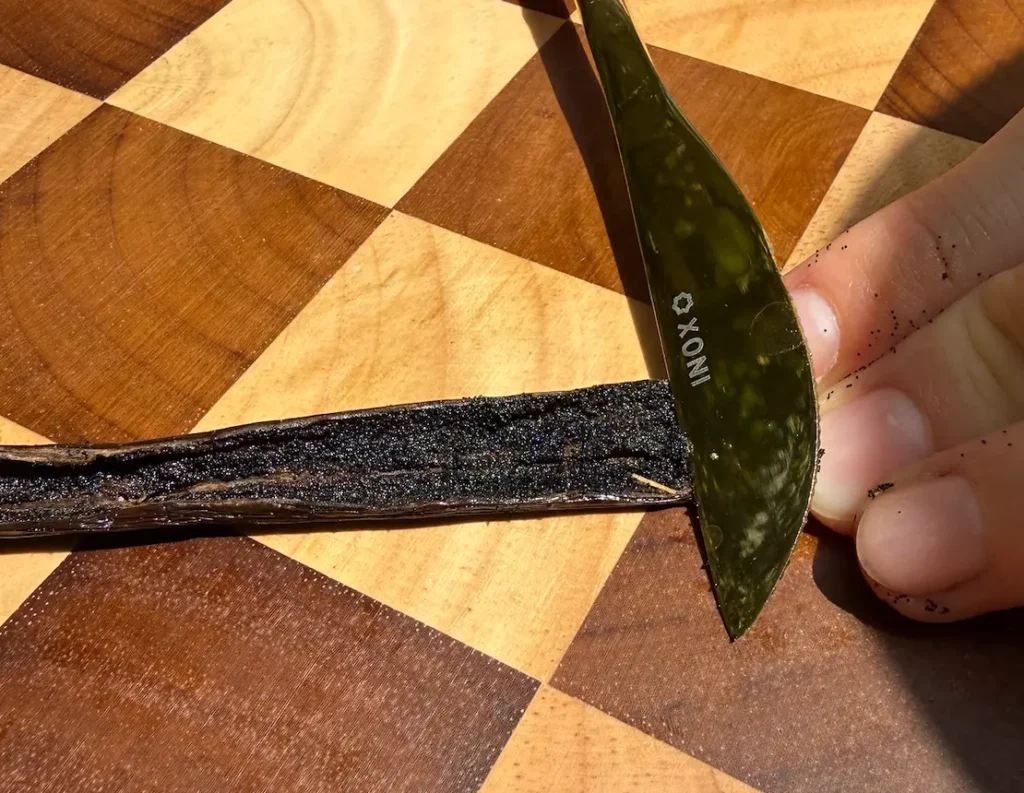
Scrape out the seeds. With the back of the knife (not the blade), run down the inside of each half, pressing lightly, from one end to the other. You’ll get a dark, glossy paste: thousands of tiny seeds, the most aromatic part of the bean.
Those seeds go straight into your recipe (custard, ice cream, cake…). And the scraped bean, you already know: into the extract jar. Nothing gets wasted here.
A tip: if the bean is very dry and brittle, don’t force it. Dip it in warm water for a few seconds to soften it, or just cut it into pieces and drop it in the extract jar without scraping.
The Never-Ending Jar
The beauty of this extract is that it never runs out: you use some, top it up and keep adding beans. To make it better and better over the months, keep two things in mind:
- Top it up little by little. Add alcohol only until the beans are covered again, not all the way to the top. If you add a lot at once, the extract gets diluted and takes a while to get its strength back.
- Clean, fully dry beans. If the bean comes from a custard or ice cream base, rinse it, let it dry completely and only then add it to the jar. That way you don’t add any milk or water that could make it cloudy.
The more beans you collect, the more concentrated and aromatic your extract gets. And it’s always on hand.
Homemade Vanilla Extract as a Gift
This is one of the best edible gifts you can give, and it’s worth planning ahead: if you want it ready for the holidays, start it in September or October so it has at least 8 weeks to steep.
A few things that make the difference:
- Strain it first. Pass it through a fine mesh strainer so the bottle looks clean, and put one whole bean in the gift bottle for looks.
- Small bottles. 2 to 4 oz amber glass bottles are plenty. Vanilla goes a long way and amber glass protects it from light.
- Label the start date. Write down when you started it. It tells the person what they’ve got, and it’s the detail that makes it look like a real product.
- Add a use. A tag with a recipe on it turns a bottle into a present.
Variations and Tips
- With fresh beans (faster and stronger). If you’re using unscraped beans, split them lengthwise and cut them into 2-3 pieces. Extract made with fresh beans is ready sooner and comes out more potent. The classic ratio is about 100 g of beans per liter of alcohol (roughly 1 oz per cup).
- Vanilla sugar. Another way to use up scraped beans: dry them thoroughly and bury them in a jar of sugar. In a couple of weeks you’ll have vanilla sugar for cakes, cookies or whipped cream.
- Double fold. Want a double-fold extract like the ones used in professional pastry? Double the amount of beans for the same amount of alcohol and let it steep longer.
- Alcohol-free version. You can make it with food-grade vegetable glycerin mixed with water, steeping for 2-3 weeks and stirring daily. The result is milder and slightly sweet, and it doesn’t keep as long, but it’s a solid alternative if you’d rather skip the alcohol.
How to Use It in Your Recipes
One teaspoon (about 4-5 g) is enough for a cake, a batch of cookies or a tub of ice cream. Try it in our frozen fruit ice cream, our fluffy pancakes without baking powder or our fluffy homemade cinnamon rolls, where real vanilla makes a noticeable difference.
It’s also the one we use in our homemade Oreos, our no-bake pumpkin cheesecake and our homemade Greek yogurt.
Frequently Asked Questions About Homemade Vanilla Extract
How long does it take to be ready?
At least 8 weeks. After that, the longer the better: at 3-6 months the flavor is noticeably deeper. There’s no rush, the jar does the work on its own.
Do used beans really work?
Yes. After you scrape out the seeds, the bean still holds most of its aromatic compounds. Since they’re used beans, it’s worth adding several and steeping longer than you would with fresh ones.
Which alcohol is best: vodka, rum, brandy or bourbon?
Any spirit at 80 proof works. Vodka gives you the most neutral extract (it tastes only of vanilla); rum and brandy add warm, sweet notes that we love in baking; bourbon brings caramel and oak, and it’s the traditional choice in American kitchens.
Can I use it in recipes for kids?
Yes, in baked or cooked recipes: the amount of extract per recipe is tiny and most of the alcohol evaporates with the heat. For no-bake preparations, keep it in mind and use a small amount, or go with the glycerin version.
How long does it keep? Does it go bad?
Alcohol acts as a natural preservative, so sealed and kept somewhere dark it lasts indefinitely. It actually improves with time.
Is it normal for it to look cloudy or have sediment?
Completely. It’s particles from the bean itself and loose seeds. Shake before using, or strain it through a fine mesh sieve if you want it clear for gifting.
How many beans do I need?
For used beans, roughly 5-6 beans per cup (250 ml) of alcohol. But it isn’t an exact science: start with what you have, cover them well with alcohol, and keep adding beans over time.
How do you scrape a vanilla bean to get the seeds out?
Flatten the bean with the back of a knife, split it lengthwise without cutting it in two, and scrape the inside with the back of the blade (not the edge) to pull the seeds out. There’s a step-by-step with photos further up in this post. The seeds go into your recipe and the empty bean goes into the extract jar.
Made This Recipe or Have a Question?
Any questions before you start? Ask us down below and we’ll get back to you. And if you’ve already made it, tell us how it turned out or leave us a rating: it really helps more people find the recipe 😊
Rate this recipe ⭐️