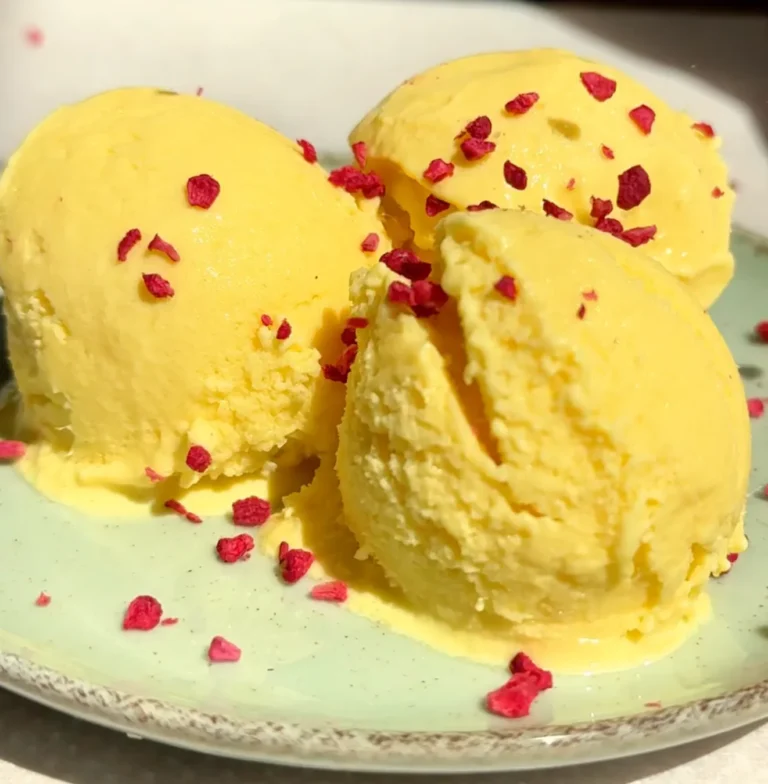

Cantaloupe Ice Cream with 2 Ingredients (No Churn)
This cantaloupe ice cream is made with just 2 ingredients: melon and cream. You don’t need an ice cream maker, there’s no added sugar, and it’s served straight from the fruit itself, which doubles as the mold and the bowl. It’s one of those recipes that looks like a magic trick 🪄.
Why this recipe works
It all comes down to the melon you pick. We use cantaloupe: the small, round ones with orange flesh.

It’s one of the sweetest, most fragrant melons out there, and that solves the two classic problems with homemade fruit ice cream:
- It doesn’t need added sugar. A ripe cantaloupe is sweet enough on its own, so the cream only adds richness without watering down the flavor.
- Its size is the perfect mold. Half a cantaloupe is a generous serving. Frozen in its own rind, you don’t need molds or containers: the fruit is the packaging.
Can you make it with another melon? Yes, with any sweet, ripe melon. The method is the same: freeze it in halves and scrape it with the cream in the hollow. A small cantaloupe gives you a perfect single serving and freezes faster; with a large melon like honeydew it works just the same, but you’ll end up with a lot more, it takes longer to freeze and it’s more awkward to serve. So if you get to choose, go small or medium.
The other secret is the scraping with a spoon: as you stir and scrape the frozen flesh together with the cream, you break up the ice crystals and the mixture turns creamy, like a sorbet. Same principle as an ice cream maker, just with a spoon and two minutes of elbow grease.
How we make it at home, step by step

Cantaloupe Ice Cream with 2 Ingredients
Ingredients
- 1 ripe cantaloupe or any small to medium melon, well ripened and sweet (about 800 g – 1 kg / 1.75–2.2 lb)
- 100 ml heavy whipping cream about ⅓ cup, or however much fits in the melon cavity once the seeds are out (at least 35% fat)
Instructions
- Cut the melon in half and scoop out the seeds with a spoon.

- Freeze it for at least 4–6 hours, cut side up and covered with parchment paper. The paper protects the surface from the freezer air, so the flesh doesn't dry out or pick up smells from other food.

- Remove the parchment and pour the cream into the hollow of each half, straight out of the freezer.

- Stir and scrape with a spoon, dragging the frozen flesh toward the center and mixing it with the cream, until it turns creamy. If the flesh is too hard, let the melon sit for 5–10 minutes at room temperature and start at the edges, which soften first.

- Serve and enjoy. Eat it straight from the melon itself, or scoop it into balls with an ice cream scoop and serve them in a bowl or a cone.


Video
If you make this recipe, leave a star rating ⭐️ it truly helps us ⭐
The trick is in the scraping
When you take the melon out of the freezer, the flesh will be rock hard. Don’t try to force it from the first second: let it sit for 5–10 minutes at room temperature and start at the edges, which soften first. The cold cream helps loosen the flesh as you go.
If it’s still too hard, be patient: better to wait a few more minutes than to force it and end up with loose chunks of ice. And if you overdo it and it turns out too runny, pop it back in the freezer for 20–30 minutes and you’re set.
H2 — Variations
- Other large fruits with the same technique: it works with large, juicy fruits with soft flesh that you can halve and scrape in the hollow. Watermelon and papaya are the best candidates (papaya even comes with its own seed cavity, just like melon).
- With a touch of condensed milk: if your melon isn’t very sweet, add a tablespoon of condensed milk along with the cream.
- Other no-churn ice creams: we have two other methods depending on what you’re after. For creamy scoopable fruit ice cream, our blending method for any fruit (banana base), which we use with strawberry, blueberry or mango. And for flavors that aren’t fruit, like lemon or chocolate, a base of cream and condensed milk.
Storage
This ice cream is at its best right after you make it, when the freshly scraped texture is creamy. If you have leftovers, cover it with plastic wrap pressed against the surface of the ice cream (touching the ice cream itself, not just the rind) and keep it in the freezer. That stops ice crystals from forming on top. Before serving it again, let it sit for 10–15 minutes at room temperature and stir once more to bring back the creaminess.
Frequently asked questions
Can I make it without cream?
You can, but the result will be more of a granita than an ice cream: the fat in the cream is what makes it creamy and keeps it from being just scraped ice. One alternative is Greek yogurt, though it comes out tangier and less creamy.
How long does it keep in the freezer?
It’s best eaten right away, when the texture is at its peak. If you put it back in the freezer, the mixture hardens; take it out 10–15 minutes before serving and stir again.
Does any melon work?
Any sweet, ripe melon works. Cantaloupe is ideal for its sweetness, aroma and size: you get a single serving and it freezes faster. With large melons (honeydew, galia) the method is the same, freeze in halves and scrape with the cream in the hollow, you’ll just have more of it and it’ll take longer to freeze.
Can I add sugar or a sweetener?
If your melon is ripe, it doesn’t need it. If you got stuck with a bland one, a drizzle of honey or condensed milk works better than plain sugar, because they blend in better when cold.
Have you tried it?
If you make this recipe, leave us a star rating down below 👇 It helps us a lot so more people can find it. Tell us what you liked or what we could improve. We read and reply to every comment 😊