Pumpkin 🎃 Sweet Potato Cake
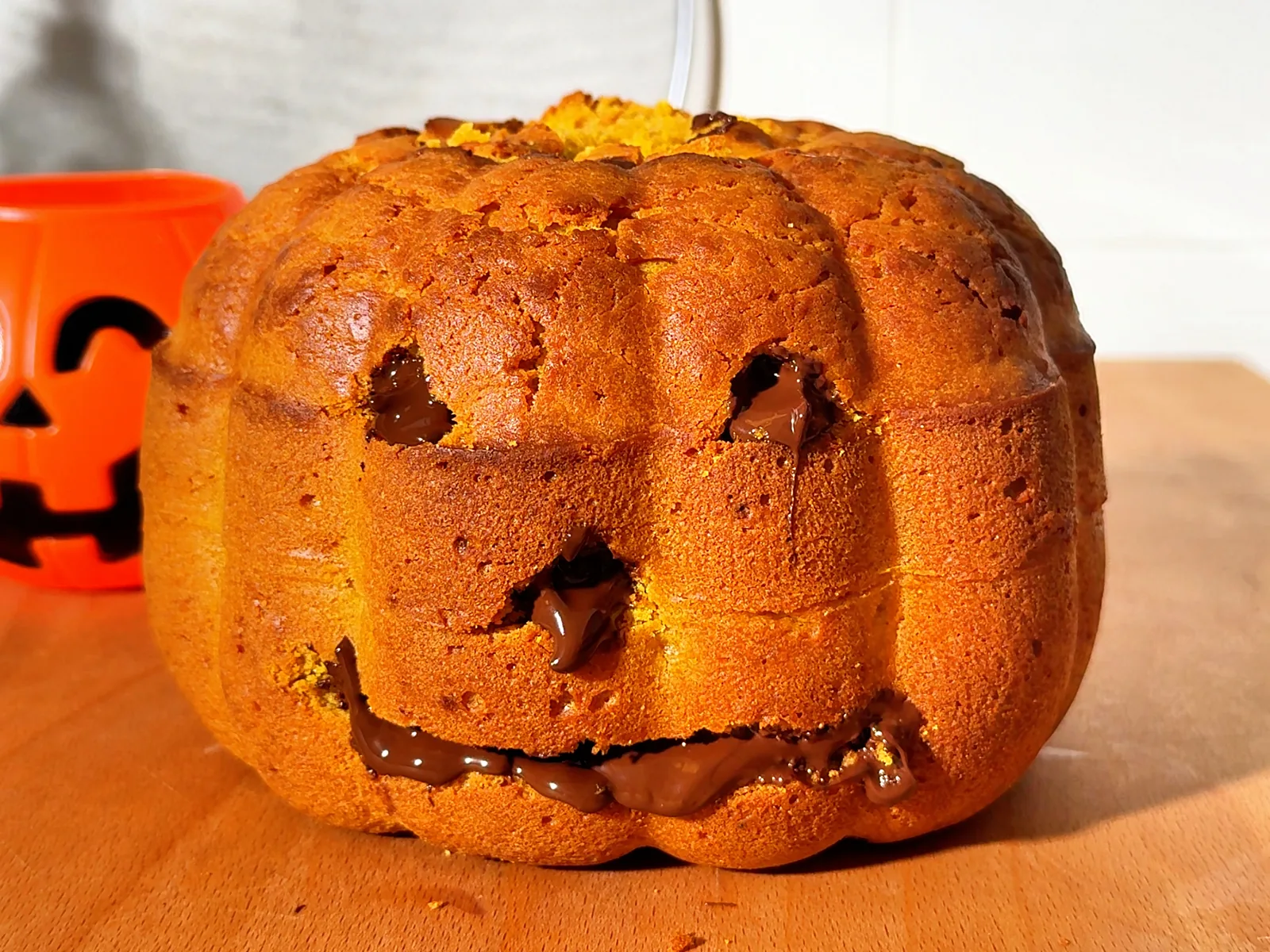
When we saw the pumpkin mold, we got so excited: we had to make a big pumpkin cake 🎃 It’s like having a Halloween pumpkin at home without carving a real one, which doesn’t look easy at all and where you risk losing a finger 😅
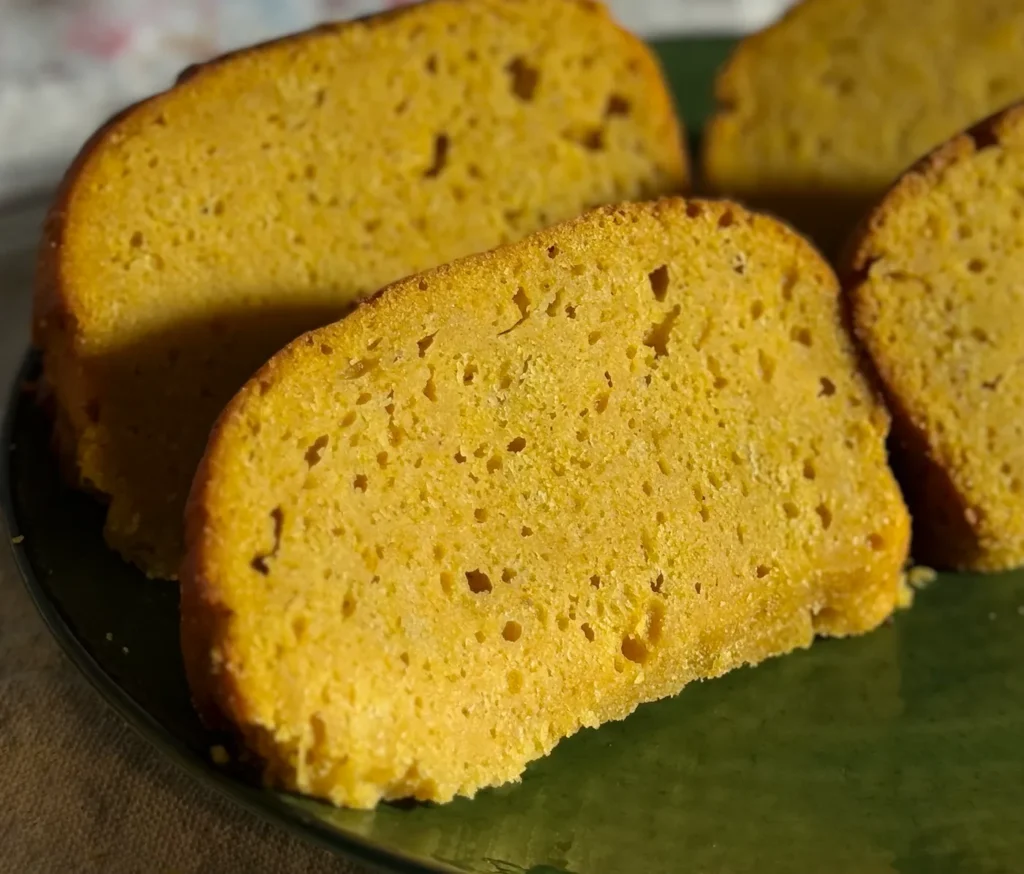
So, super excited, we got to work. The idea was to make it with just pumpkin, but that gives it a little less color, so we made it with pumpkin and sweet potato: that way the flavor and the color are much stronger. Both go in roasted, from scratch, along with a little yogurt and warm fall spices, and you get a tender, moist cake that’s orange inside.
Once it had cooled, we carved eyes, a nose and a mouth with a small knife and filled them with melted chocolate. And that’s how we got our Halloween pumpkin, the kind you can eat 🤗
And no, you don’t need a special pan: you can make it in any pan. The recipe below is for a 20-22 cm (8-9 in) round pan or a 25 cm (10 in) loaf pan. Further down we show you how to make it shaped like a pumpkin and how to give it a chocolate face.
How We Make It at Home, Step by Step

Pumpkin Sweet Potato Cake
Equipment
- 20-22 cm (8-9 in) round cake pan Or a 25 cm (10 in) loaf pan
- Lékué 3D pumpkin cake mold Optional, 2.3 L (about 10 cups), with the recipe doubled
- Electric mixer or stand mixer Optional, for whipping the eggs
- Probe thermometer Optional
Ingredients
- 105 g roasted pumpkin puree scant ½ cup; from about 250 g (9 oz) raw pumpkin, at room temperature
- 105 g roasted sweet potato puree scant ½ cup; from 1 small sweet potato of about 180 g (6 oz), at room temperature
- 3 eggs US large or EU medium; at room temperature
- 140 g granulated sugar ⅔ cup + ½ tbsp
- 105 g unsalted butter 7½ tbsp; melted and cooled to about 40 °C (105 °F)
- 85 g plain yogurt ⅓ cup; at room temperature
- 16 g lemon juice 1 tbsp
- 225 g all-purpose flour 1¾ cups + 1 tbsp
- 2 g baking soda scant ½ tsp
- 2 g fine salt ⅓ tsp
- 2 g ground cinnamon ¾ tsp
- 1 g ground ginger ½ tsp
- 1 g ground nutmeg scant ½ tsp
- 1 pinch ground turmeric ⅛ tsp; for color
- 5 g butter for greasing 1 tsp; or parchment paper
For the Halloween face (optional)
- 50 g dark baking chocolate 1¾ oz; semisweet, bittersweet or milk. To drizzle over the cake or, with the recipe doubled, to fill the face of the 3D pumpkin
Instructions
The purees
- Roast the pumpkin and sweet potato. At 200 °C (400 °F). The pumpkin in pieces, seeds removed, for about 30-40 minutes, until a fork slides in easily. The sweet potato whole and pricked with a fork, 45-60 minutes depending on size. They can go in together.
- Make the purees. Scoop out the pumpkin flesh, peel the sweet potato and blend them separately. If the pumpkin puree is watery, dry it for a few minutes in a skillet. Weigh 105 g of each and let them cool.
The batter
- Get the oven and pan ready. At 170 °C (340 °F), conventional setting with top and bottom heat, rack in the middle. Grease the pan with the 5 g of butter or line it with parchment paper.
- Melt the butter. The 105 g, and let it cool to about 40 °C (105 °F).
- Sift the dry ingredients. The flour, baking soda, salt, cinnamon, ginger, nutmeg and turmeric, together.
- Beat the eggs with the sugar. With a hand whisk, for 1 minute. Optional, for a taller, airier cake: whip them with an electric mixer or a stand mixer for 6-7 minutes, until pale and almost tripled in volume. For the 3D mold, we recommend it.
- Add the purees and the yogurt. Both purees, the yogurt and the lemon juice, and mix. Then the cooled butter, a little at a time, in a thin stream.
- Fold in the flour. In two or three additions, with a spatula, folding. Stop as soon as you can't see any flour: overmixing makes the cake tough.
Baking
- Bake right away. Pour the batter into the pan, no more than two thirds full, and into the oven without waiting, because the baking soda is already reacting with the yogurt and lemon. 40-50 minutes in a 20-22 cm (8-9 in) round pan or 55-65 minutes in a 25 cm (10 in) loaf pan.
- Check that it's done. A skewer in the center should come out clean. With a probe thermometer, 95-98 °C (203-208 °F) in the center.
- Let it cool. 10-15 minutes in the pan, then unmold and let it cool completely on a wire rack.
If you're using the 3D pumpkin mold
- Double the ingredients. All of them, and whip the eggs with the sugar in step 6.
- Prepare the mold. Grease both halves well, especially the ridges, and close it.
- Fill it. Pour the batter through the hole at the top until it's about three quarters full, and tap it gently so the batter settles into the ridges.
- Bake lower and longer. At 160 °C (320 °F), on the lowest part of the oven and on a preheated baking sheet, for 90-110 minutes. Check with a long skewer through the hole.
- Unmold in two stages. 20 minutes in the closed mold, remove the top half, wait 30 more minutes and unmold.
The Halloween face (optional)
- Carve the face. With the pumpkin completely cool, carve eyes, a nose and a mouth with a small knife.
- Fill it with chocolate. Melt the chocolate in the microwave in short bursts, stirring. Fill the holes with a piping bag or a bag with a snipped corner, and serve.
Notes
- The purees can be made the day before and kept in the fridge. Take them out ahead of time so they’re at room temperature.
- If you only have pumpkin, use 210 g of roasted pumpkin puree. It comes out with a little less color.
- For the 3D pumpkin mold (about 2.3 L), double all the ingredients and follow the steps in the mold group.
- Panela (unrefined cane sugar) instead of sugar works well too, just darker.
- If you have batter left over, bake it in muffin liners for 20-25 minutes at 180 °C (350 °F).
- It keeps for 2-3 days well covered at room temperature.
Any questions about the recipe? Ask us in the comments and we’ll get back to you. And if you make it, tell us how it turned out, we love hearing from you! 🤗
Why Pumpkin and Sweet Potato, and Why Roasted
Pumpkin gives the cake moisture and a gentle, sweet flavor, but on its own it gives a little less color than you’d expect. Sweet potato adds what’s missing: a much deeper orange, more sweetness and a creamier texture that makes the crumb more tender.
Both go in roasted, not boiled. In the oven they lose water and the flavor concentrates. Boiling does the opposite: they soak up water, and that extra water ends up in the batter, which turns heavier and takes longer to bake through in the middle.
The pinch of turmeric is just for color: with so little, you won’t taste it.
How to Make the Purees
Cut the pumpkin into pieces, scoop out the seeds and roast it at 200 °C (400 °F) until a fork slides in easily, about 30-40 minutes. Prick the sweet potato with a fork and roast it whole at the same temperature for 45 to 60 minutes, depending on its size. They can go in the oven together.
Scoop out the pumpkin flesh, peel the sweet potato and blend them separately, so you can weigh exactly 105 g of each. If the pumpkin puree is watery, dry it for a few minutes in a skillet over medium heat, stirring, until you can see the bottom of the pan for a moment when you drag the spatula through it. We explain the whole method in our homemade pumpkin puree from a fresh pumpkin.
They need to be at room temperature before you use them: if they’re warm, the whipped eggs lose air when you mix them in. Spread out on a plate, they cool quickly. You can also make them the day before and keep them in the fridge; just take them out a while ahead.
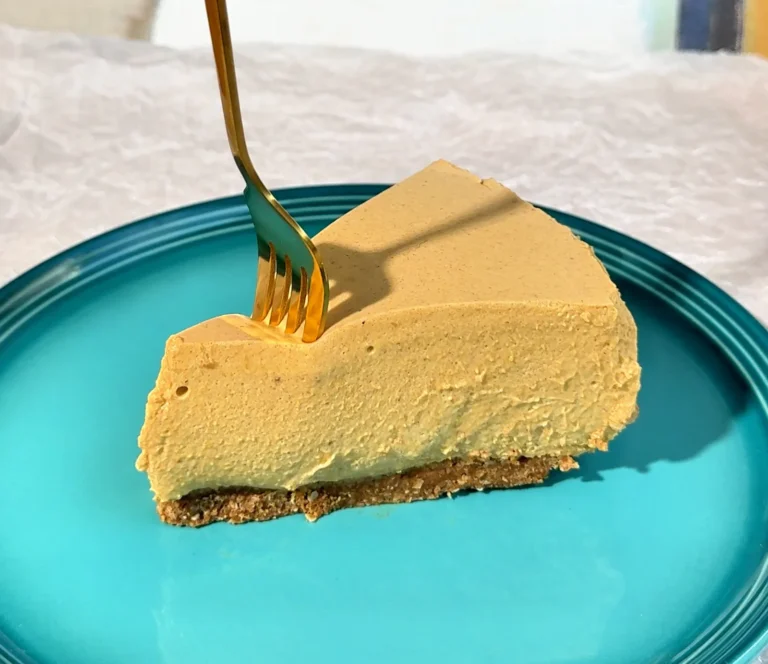
If you have pumpkin puree left over, use it in our pumpkin bagels or our no-bake pumpkin cheesecake.
Tips for a Moist, Tender Pumpkin Cake
It’s an easy recipe, but there are four moments that decide whether the crumb comes out tender or dense. Here’s what to do at each one, and why.
Whip the Eggs
In a regular pan, it’s enough to mix the eggs with the sugar for a minute with a hand whisk. But if you whip them with an electric mixer or a stand mixer for 6-7 minutes, until they turn pale and almost triple in volume, the cake rises higher and the crumb comes out airier. That’s what we did.
That air helps the cake rise, together with the baking soda. In the 3D pumpkin mold we really recommend it: the batter has to rise enough to fill the top half too.
Melted Butter, Cooled a Little
Melt it and let it cool to about 40 °C (105 °F), warm to the touch. If it’s too hot, it knocks out the air you’ve whipped in. Add it after the purees, the yogurt and the lemon juice, a little at a time in a thin stream while you mix, so it blends in without the batter splitting.
That’s why the eggs, the yogurt and the purees should be at room temperature. If they’re cold, the butter sets as it hits them and forms little lumps in the batter.
Don’t Overmix the Flour
Sift the flour together with the baking soda, the salt and the spices, so everything is evenly spread and you don’t bite into a lump of baking soda.
Then fold it in two or three additions with a spatula, from the bottom up, just until you can’t see any flour. The more you mix, the more the gluten develops, and the cake turns tough and dense.
Into the Oven Right Away
Baking soda starts releasing gas as soon as it touches something acidic, and here there are two: the yogurt and the lemon juice. If the batter sits, that gas escapes before the oven sets the crumb, and the cake rises less. That’s why it’s worth having the oven hot and the pan ready before you add the flour.
Fill the pan no more than two thirds full, so it has room to rise.
How to Tell It’s Done
Insert a skewer into the center: it should come out clean, with no wet batter on it. If you have a probe thermometer, it’s ready when the center reads 95-98 °C (203-208 °F).
Then let it rest in the pan for 10-15 minutes, so the crumb settles and doesn’t break when you unmold it, and let it cool completely on a wire rack.
How to Make a Pumpkin-Shaped Cake for Halloween
We made it in the Lékué 3D pumpkin cake mold: silicone, 2.3 L (about 10 cups) and about 19 cm wide by 15 cm tall (7½ x 6 in). It comes in two halves that fit together, with a hole at the top where you pour in the batter. With the recipe doubled, you get a whole pumpkin, with all its ridges.
Here’s how we do it:
- Double all the ingredients in the recipe, chocolate included.
- Whip the eggs with the sugar (step 6), so the batter rises enough to fill the top half.
- Grease both halves well, especially the ridges, and close the mold.
- Pour the batter through the hole at the top until it’s about three quarters full, and tap it gently so the batter settles into the ridges.
- Bake at 160 °C (320 °F) on the lowest part of the oven, on a preheated baking sheet, for 90 to 110 minutes. Check with a long skewer through the hole: it should come out clean.
- Unmold it in two stages. Leave it in the closed mold for 20 minutes, remove the top half, wait 30 more minutes and unmold.
Why does the baking change so much? It’s a lot of batter, and very tall. At 170 °C (340 °F), the outside would brown too much before the center was baked, so we lower it to 160 °C (320 °F) and give it more time. The preheated baking sheet gives it heat from below from the very first minute, and on the lowest part of the oven the top of the pumpkin stays further from the top heating element.
And why unmold it in two stages? Fresh out of the oven, a cake this big is still very tender and heavy. In the closed mold it settles without losing its shape, and then, without the top half, it releases steam before it comes out completely.
The Chocolate Halloween Face
Once the pumpkin is completely cool, carve eyes, a nose and a mouth with a small knife, like a jack-o’-lantern. When it’s cold the crumb is firm and cuts cleanly; while it’s warm it crumbles. There’s no need to carve deep: you just need a hollow for the chocolate.
For the filling, melt 100 g (3½ oz) of dark baking chocolate, semisweet or bittersweet, in a bowl in the microwave, in short bursts, stirring in between so it doesn’t burn. Transfer it to a piping bag, or a bag with one corner snipped off, and fill the holes. Milk chocolate works really well too.
We served it like that, with the chocolate still runny. At room temperature it slowly firms up, so if you make it ahead, the chocolate will set inside the face.
Making it in a regular pan? Use half the chocolate, 50 g (1¾ oz), and drizzle it over the cooled cake.
Variations
- As pumpkin bread. In a 25 cm (10 in) loaf pan, for 55 to 65 minutes at 170 °C (340 °F).
- With panela. Use the same amount of panela (unrefined cane sugar) instead of sugar. It turns out well too, just darker.
- As muffins. If you have batter left over, bake it in muffin liners for 20-25 minutes at 180 °C (350 °F).
- Pumpkin only. With 210 g of roasted pumpkin puree and no sweet potato. Just as good, with a little less color.
How to Store Pumpkin Cake
It keeps for 2-3 days well covered at room temperature. With the pumpkin and sweet potato it stays moist for those days, as long as it’s not exposed to the air: cover it with a cloth or keep it in a cake keeper or a large airtight container.
If you want to freeze it, it’s best without the chocolate, in well-wrapped slices. It keeps for 2-3 months and thaws at room temperature.
Pumpkin Sweet Potato Cake FAQ
Can I use canned pumpkin?
Yes, by weight: 105 g, or 210 g if you’re making it with pumpkin only. Make sure it’s 100% pumpkin and not pumpkin pie filling, which already has sugar and spices. It’s usually thicker than homemade, so there’s no need to dry it.
Can I make it with just pumpkin, without sweet potato?
Yes: use 210 g of roasted pumpkin puree. It’s just as good, with a little less color. That’s how we planned it at first, and it’s why we ended up adding the sweet potato.
Are sweet potatoes and yams the same?
Not exactly, but for this cake it doesn’t matter: in most US supermarkets, the orange-fleshed tubers labeled “yams” are actually sweet potatoes, and they work perfectly. Choose an orange-fleshed one, since that’s what gives the cake its color.
Can I bake it as pumpkin bread?
Yes. American pumpkin bread is a spiced pumpkin cake baked in a loaf pan, with no yeast. For that shape, use a 25 cm (10 in) loaf pan and bake for 55 to 65 minutes at 170 °C (340 °F).
Do I need to whip the eggs?
In a regular pan, no: mixing them with the sugar for a minute with a hand whisk is enough. Whipping them for 6-7 minutes gives a taller, airier cake. For the 3D pumpkin mold we do recommend it, because the batter has to rise enough to fill the top half.
Why does it have to go into the oven right away?
Because of the baking soda. It reacts as soon as it touches the yogurt and lemon juice and starts releasing the gas that makes the cake rise. If the batter sits, that gas escapes before the oven sets the crumb, and the cake rises less.
Can I use less sugar?
We don’t recommend it: it’s already low in sugar for a cake, 140 g for 225 g of flour, and the pumpkin and sweet potato add their own sweetness. Sugar also helps the eggs whip and keeps the crumb tender. If you like, you can use the same amount of panela; it comes out darker.
What chocolate should I use for the face?
We used dark baking chocolate, but milk chocolate works really well too. Melt it in a bowl in the microwave in short bursts, stirring, and fill the holes with a piping bag or a bag with a snipped corner. Carve the face when the cake is completely cool, because while it’s warm the crumb crumbles.
Can I make it without the pumpkin mold?
Yes, in any pan. The recipe card is for a 20-22 cm (8-9 in) round pan, 40-50 minutes at 170 °C (340 °F), or a 25 cm (10 in) loaf pan, 55-65 minutes.
How long does it keep, and can I freeze it?
It keeps for 2-3 days well covered at room temperature. To freeze it, leave off the chocolate and wrap it well in slices: it keeps for 2-3 months and thaws at room temperature.
Why did my cake turn out dense?
The three most common reasons: puree with too much water, overmixing when you add the flour, or letting the batter sit before baking. Dry the puree in a skillet if it looks watery, fold just until you can’t see flour, and put the pan in the oven as soon as the batter is ready.
Made This Recipe or Have a Question?
Any questions before you start? Ask us down below and we’ll get back to you. And if you’ve already made it, tell us how it turned out or leave us a rating: it really helps more people find the recipe 😊
Rate this recipe ⭐️