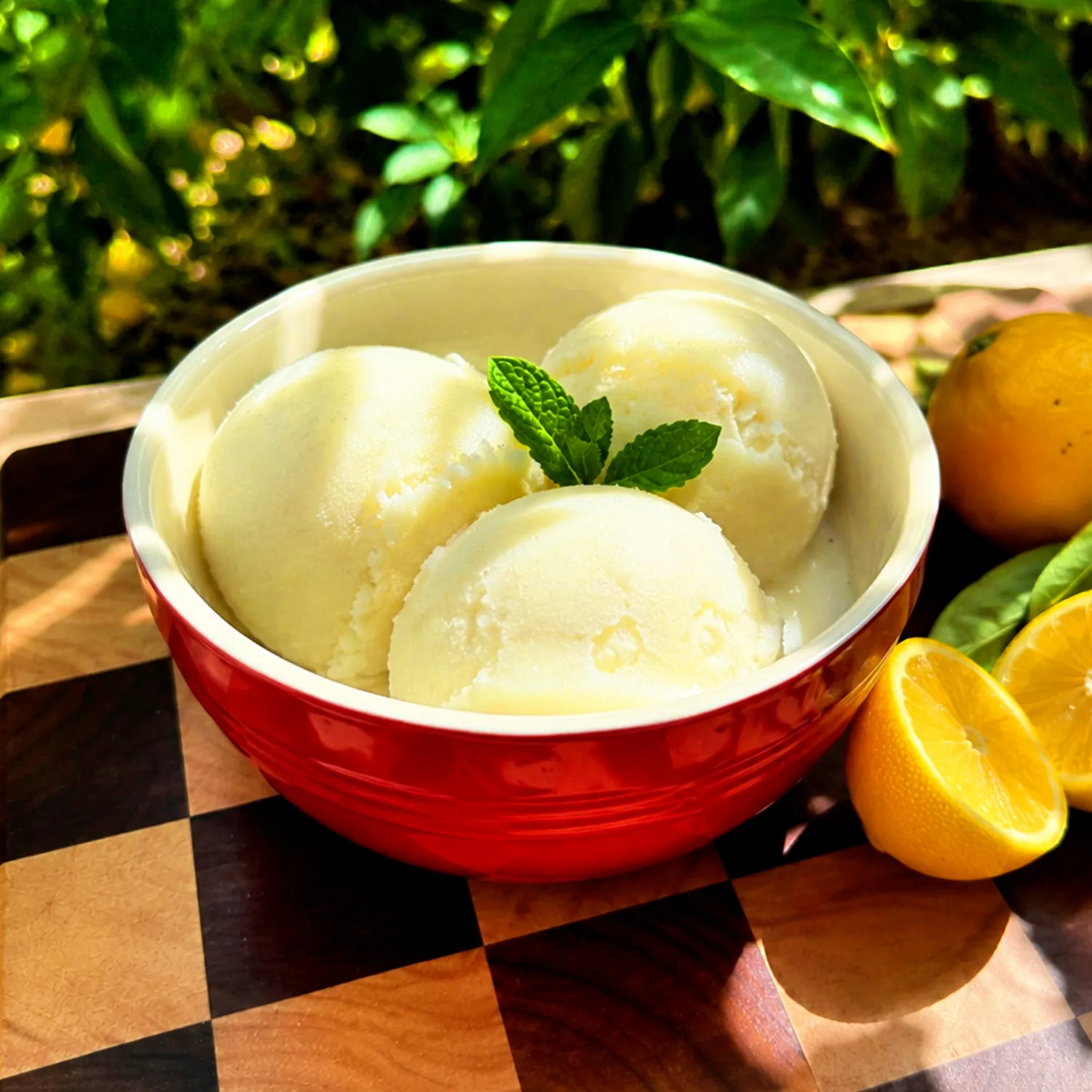
Homemade Lemon Ice Cream, No Machine and No Eggs 🍋
This homemade lemon ice cream is one of those recipes that sounds too good to be true: three ingredients, ten minutes of work, and a texture creamier than most things you’ll scoop out of a carton. No ice cream maker. No pulling the container out every hour to stir it. You whip the cream, fold in condensed milk and lemon juice, and the freezer does everything else.
It’s a different technique from our frozen fruit ice creams, where the creaminess comes from frozen banana, yogurt and milk powder. Here it comes from whipped cream and sweetened condensed milk. And lemon happens to be the flavor this base was made for: the acidity cuts through the sweetness of the condensed milk, so what you get is bright and refreshing instead of cloying.
How we make it at home, step by step

Homemade Lemon Ice Cream
Ingredients
- 2 1/2 cups cold heavy whipping cream about 600 ml, at least 36% fat
- 14 oz sweetened condensed milk 1 standard can, 396 g
- 1/2 cup fresh lemon juice about 3 medium lemons, 120 ml
- 1 lemon, zested optional
Instructions
- Whip the creamUsing a hand mixer or a whisk, whip the cold heavy cream to soft peaks. Don't take it all the way to stiff: over-whipped cream folds in badly and costs you some of the smoothness. If your kitchen runs warm, chill the bowl first.

- Mix the lemon and condensed milkIn a separate bowl, stir the sweetened condensed milk together with the lemon juice and the zest, if you're using it. The mixture will thicken almost immediately. That's the acid doing its job, and it's exactly what should happen.
- Fold the two togetherAdd the lemon mixture to the whipped cream and fold it in with a spatula, using slow lifting strokes, until there are no streaks left. Take your time here: the more air you keep, the creamier the final texture.
- FreezeTransfer to a lidded container and freeze for 5 to 6 hours, until it reaches the texture you like. At 5 hours it's soft and spoonable; at 6 it scoops cleanly.


Notes
- If it’s sweeter than you’d like, add more lemon juice, up to 2/3 cup, rather than cutting back the condensed milk. That sugar is what keeps the ice cream creamy. With less of it, you get a harder, icier result.
- Use a shallow airtight container. It freezes faster and more evenly than a deep one.
- It firms up overnight. Let it sit out for 10 minutes before serving and it goes right back to the texture you want.
Any questions about the recipe? Ask us in the comments and we’ll get back to you. And if you make it, tell us how it turned out, we love hearing from you! 🤗
Why this no churn method works
An ice cream maker does two jobs: it beats air into the mixture, and it breaks up ice crystals as the base freezes. This recipe gets both from the ingredients themselves.
The whipped cream brings the air. The sugar in the condensed milk lowers the freezing point, so the mixture never sets into a solid block. That’s why there’s nothing to stir: you put the container in the freezer and walk away.
The three ingredients
Heavy whipping cream. Straight from the fridge, as cold as possible. Heavy cream in the US sits around 36% fat, which is exactly what you want. What won’t work is half-and-half, light cream, or anything labeled “whipping cream” at a lower fat percentage. The mixture won’t hold air, and you’ll get ice crystals instead of scoops.
Sweetened condensed milk. One standard 14 oz can, no measuring. Don’t swap in evaporated milk: they look similar on the shelf and behave completely differently. Condensed milk carries the sugar that keeps this ice cream soft. Evaporated milk has none, and your base will freeze into a brick.
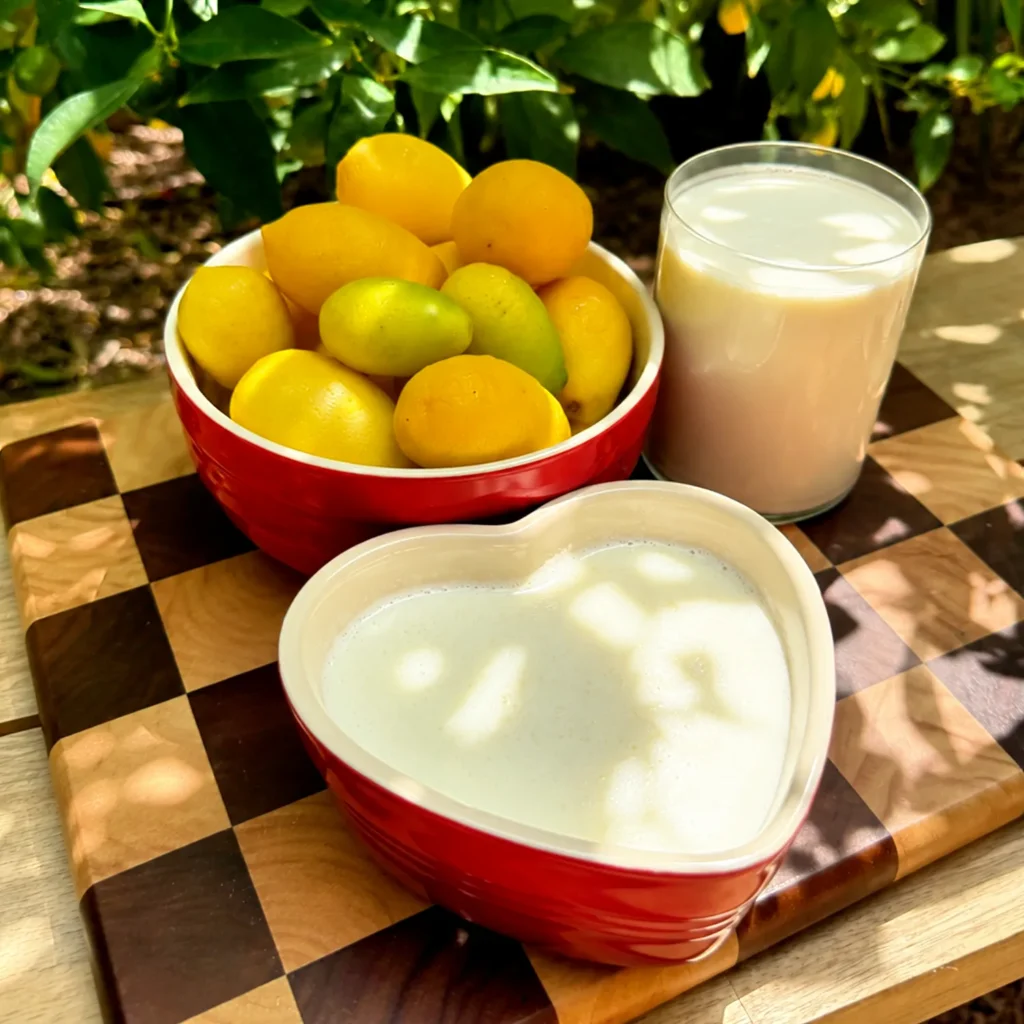
Fresh lemon juice. About three medium lemons. Bottled juice works in a pinch but leaves a slightly flat, muted aftertaste that’s very noticeable in a recipe this simple. If you’re using zest, take only the yellow part, because the white pith underneath is bitter.
Does lemon juice curdle heavy cream?
No, and this is the question we get most often.
Acid does curdle dairy, but only when there isn’t enough fat to protect it. Heavy cream has plenty. What lemon juice actually does here is thicken the mixture, which is exactly what you want.
On top of that, the recipe mixes the lemon juice into the condensed milk first, before either one touches the whipped cream. By the time they meet, the acid is already buffered by all that sugar and milk solids. There’s no risk at all.
If you’ve ever had lemon split a cream sauce on the stove, that’s a different situation: heat plus acid plus lower-fat dairy. None of those apply to a cold, high-fat, no-cook base.
No eggs, no custard, no ice cream maker
Traditional lemon ice cream in the US is usually a custard: you temper egg yolks, cook a base, chill it overnight, then churn it. It’s excellent, and it’s a whole afternoon.
This one skips all of it. There’s nothing to cook, so there are no eggs to curdle and no base to chill before you start. Ten minutes of active work, and the only equipment you need is a hand mixer and a bowl.
The trade-off worth knowing: a churned custard has a denser, more elastic texture, the kind you get in a good scoop shop. A no churn base is lighter and a little more airy. Neither is better. They’re just different, and this one is the one you’ll actually make on a Tuesday.
Variations
- Lemon and cookies: fold in crushed graham crackers or vanilla wafers right before freezing. It ends up tasting like frozen lemon icebox pie.
- Orange or tangerine: same technique, same amounts, swap the juice. Tangerine comes out gentler and sweeter.
- Limoncello: stir in 1 tablespoon along with the lemon juice. It keeps the ice cream a little softer straight from the freezer.
- Lactose free: works exactly the same with lactose-free heavy cream.
- Same technique, different mood: our no-churn chocolate ice cream 🍫
How to store it
In an airtight container in the freezer, it stays at its best for about two weeks. After that it’s still perfectly safe to eat, but ice crystals start forming on the surface and you lose some of the creaminess.
Two things that help: press a piece of plastic wrap directly onto the surface before putting the lid on, and store the container at the back of the freezer rather than in the door, where the temperature swings every time someone opens it.
Homemade lemon ice cream FAQ
Can I use half-and-half or light cream?
No. You need heavy whipping cream at around 36% fat so it whips and holds air. With anything lighter the ice cream freezes hard and grainy.
Can I substitute evaporated milk for condensed milk?
No, they aren’t interchangeable. Sweetened condensed milk brings the sugar that stops the ice cream from freezing solid. Evaporated milk has no sugar, and the result would be a block of ice.
Do I have to stir it while it freezes?
No. The air from the whipped cream and the sugar from the condensed milk already prevent ice crystals. That’s the whole advantage of this method.
How long does it need in the freezer?
Between five and six hours. At five you’ll have soft-serve texture; at six it’s firm enough to scoop properly. Overnight is fine too.
Can I use lemon curd instead of fresh juice?
You can, but it changes the recipe. Lemon curd is already sweetened and thickened with eggs and butter, so you’d want to cut the condensed milk back to about half a can. Our version keeps it to three ingredients and a brighter, sharper lemon flavor.
Can I make it dairy free?
The closest version uses very cold full-fat canned coconut cream in place of the heavy cream, plus coconut condensed milk. The texture comes out a bit denser, but it works.
Is bottled lemon juice okay?
Fresh is noticeably better in a recipe with only three ingredients. If bottled is what you have, start with a little less, since it’s often more concentrated, and taste before freezing.
Why did my ice cream turn out hard?
Almost always one of two things: cream with too little fat, or less condensed milk than the recipe calls for. The sugar is what keeps it scoopable, so reducing it to make the ice cream less sweet backfires.
Made This Recipe or Have a Question?
Any questions before you start? Ask us down below and we’ll get back to you. And if you’ve already made it, tell us how it turned out or leave us a rating: it really helps more people find the recipe 😊
Rate this recipe ⭐️