Homemade Watermelon Gummies: Easy, and Just 2 Ingredients
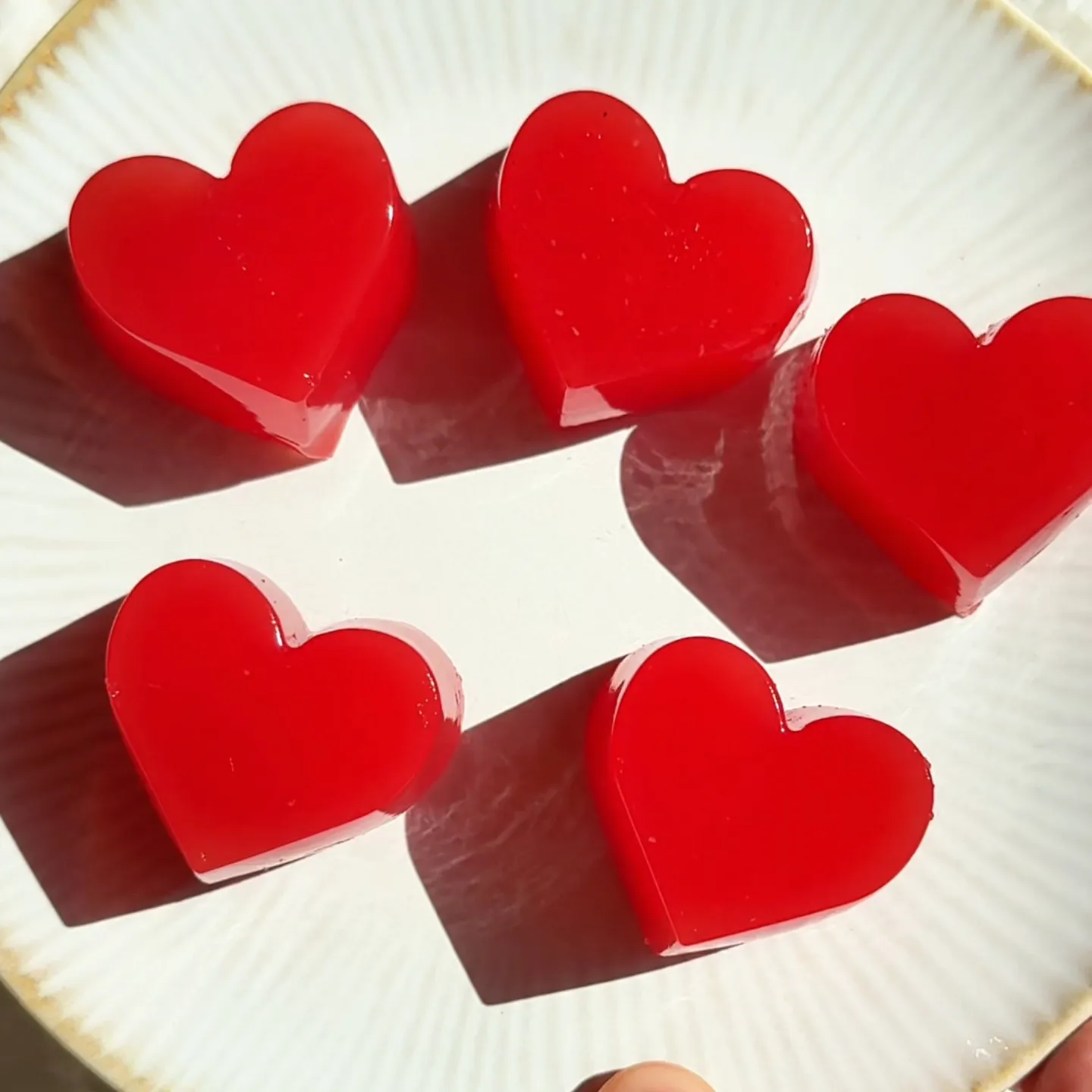
If one fruit is begging to become a gummy in summer, it’s watermelon. Today you’ll learn how to make homemade watermelon gummies: the watermelon candy you grew up with, but made with real fruit and only 2 ingredients 🍉
This recipe applies our base formula for homemade fruit gummies to watermelon. If you want the technique in depth or want to try other fruits, that’s the full guide with 7 tested flavors. Here we focus on what makes watermelon special (and a little tricky): the exact amounts, the reason behind every step, and how to get them to set on the first try.
Why watermelon is the trickiest fruit for gummies
Watermelon is basically water with a great reputation: around 92% of its weight is water. That’s what makes it so refreshing to eat, and so hard to set. The more water a juice contains, the more gelatin you need to get a firm texture that holds its shape.
In the base formula we work between 3% and 6% gelatin relative to the weight of the liquid. With watermelon we go straight to the top of that range: 20 g of gelatin per 350 g of juice, or 5.7%. Use less and what you get is dessert jello. Tasty, but it falls apart in your hand.
There’s a second trick we only use with this fruit: we bloom the gelatin in the juice itself, not in water. Watermelon flavor is delicate, and adding water would dilute it even further. So we set aside 100 g of cold juice and bloom the gelatin there. Every drop of liquid in the recipe is watermelon, and you can taste it.
The good news: watermelon has no enzymes that break down gelatin, unlike kiwi or pineapple, so there’s nothing to boil. Juice, gelatin, fridge. Done.
How we make them at home, step by step
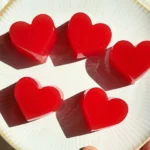
Homemade Watermelon Gummies (Only 2 Ingredients)
Ingredients
- 350 g watermelon juice (about 1½ cups, from a ripe watermelon)
- 20 g unflavored powdered gelatin (about 2½ Tbsp, or 3 standard ¼ oz packets)
Instructions
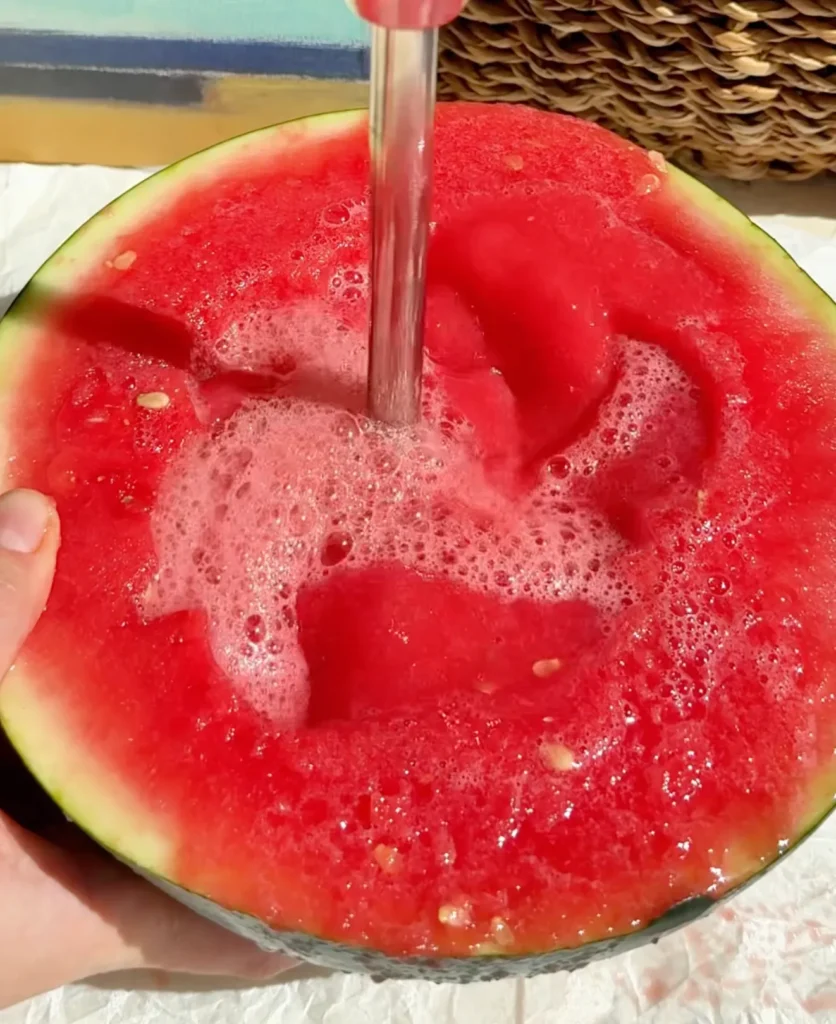
- Make the juice. Cut the watermelon, scoop out the flesh, blend it, and strain until you have 350 g (1½ cups) of juice. Straining is optional: the texture comes out smoother, but if you'd rather keep the pulp, skip it.

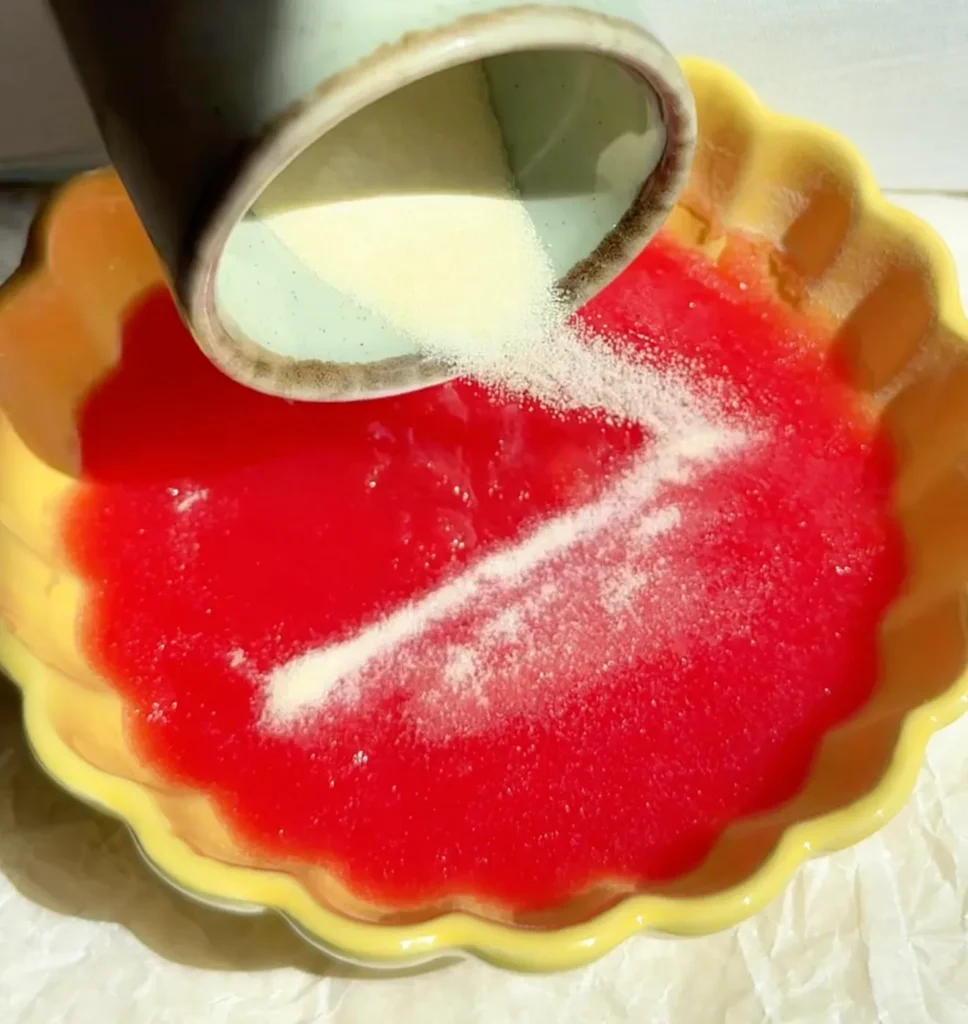
- Bloom the gelatin in the juice itself. Set aside 100 g of the juice (cold works best) and sprinkle the 20 g of gelatin over the top in a fine, even layer across the whole surface. Don't dump it in one spot. Stir lightly and let it sit 5 to 10 minutes, until it looks like a thick paste.

- Heat without boiling. Warm the remaining 250 g of juice in a saucepan or the microwave until very hot, but never boiling: boiling weakens the gelatin and the gummies won't set properly.
- Combine. Add the bloomed gelatin to the hot juice and stir well until it's completely dissolved.

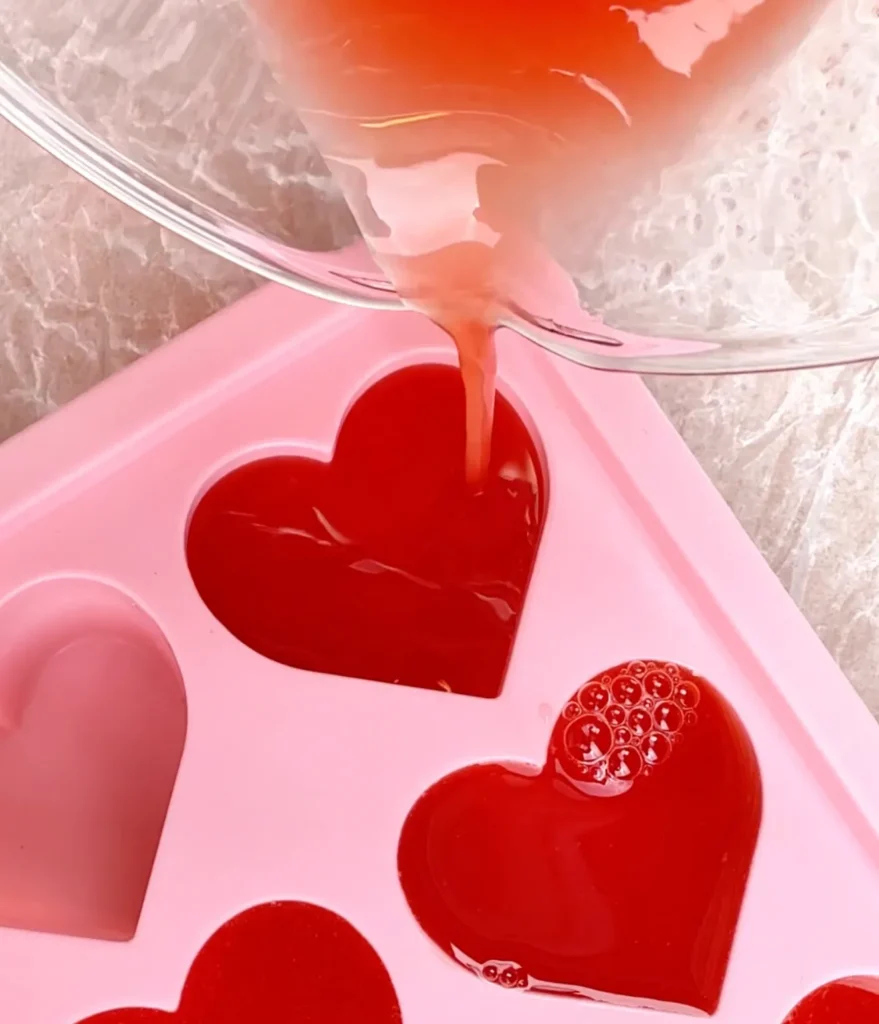
- Molds and fridge. Fill your molds and refrigerate for at least 6 hours. No molds? Use a container and cut into cubes afterward.

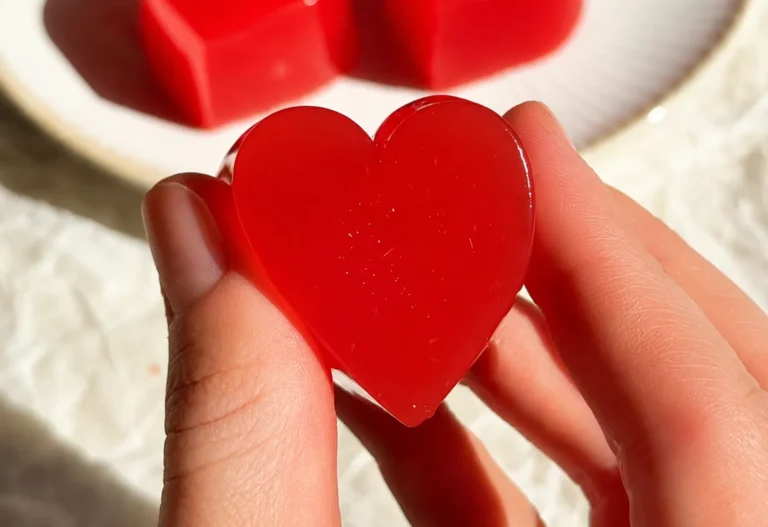
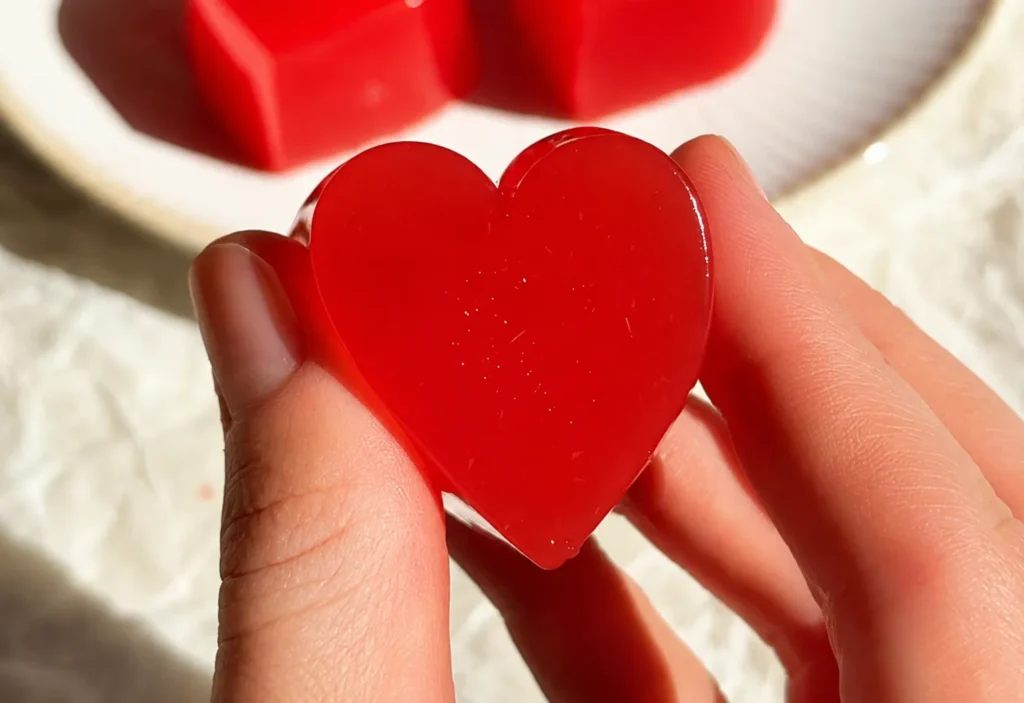
- Unmold and enjoy. If they resist coming out, pop the molds in the freezer for 10 to 15 minutes right before unmolding: they release cleanly and with a nice shine. (Freezer for this step only, not for storing them.)

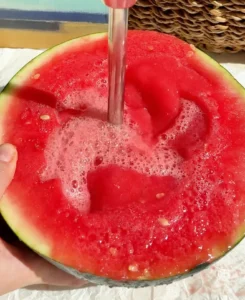
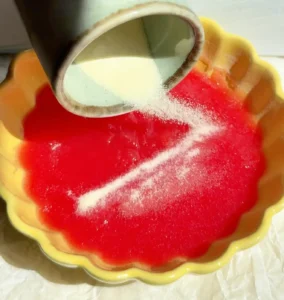
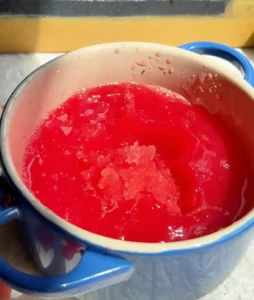
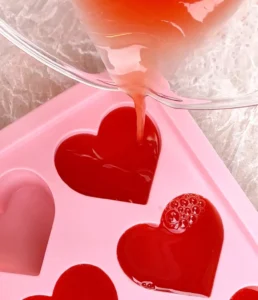
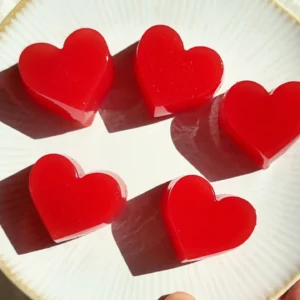
Video
If you make this recipe, leave us a star rating ⭐️ It really does help us out ⭐️
Homemade watermelon candy: the trick for kids who won’t eat fruit
If there’s someone at home (little or not so little) who rejects fruit the moment it hits the plate, this recipe is a great way in. That same watermelon sitting forgotten in the fruit bowl, turned into a gummy with a fun shape, disappears in minutes. It’s not magic, it’s format. You swap “piece of fruit” for “candy” and the conversation at the table changes on its own.
Two things that make it work even better:
- Let them help. Filling molds is kids’ favorite part, and what they help make, they eat with far more enthusiasm. It’s a summer afternoon activity that ends in a snack.
- It’s not a replacement for whole fruit. These gummies are made from watermelon juice, so they bring its flavor and its natural sugars, but if you strain, you lose some of the fiber from the whole fruit. They’re not a substitute for eating fruit. They’re a way to introduce its flavor to someone who won’t go near it today. The long-term goal is still that watermelon slices sound appealing too.
And if your problem is the opposite, kids who tear through store-bought candy, here’s the real-fruit alternative for a school lunchbox or a snack at the park: they hold up 2 to 3 hours out of the fridge with no problem.
Watermelon gummies FAQ
Should I strain the juice or not?
It’s optional and only changes the texture: strained comes out smoother and glossier, while unstrained keeps the pulp (and its fiber), with a more rustic finish. The one non-negotiable: if your watermelon has black seeds, remove them before blending or strain afterward.
Does any watermelon work?
The riper and sweeter, the better: the sweetness of the gummies is your watermelon’s sweetness, and we don’t add anything else. A bland watermelon makes bland gummies. This is the moment to use the good seasonal ones.
Can I use gelatin sheets?
Yes. Each sheet is roughly 2 g of powdered gelatin, so you’ll need 10 sheets for this recipe. The process changes slightly: bloom them in cold water, squeeze them out well, and dissolve them in the hot juice.
How long do they keep?
Up to 3 days in the fridge in an airtight container. Out of the fridge they hold 2 to 3 hours, which makes them perfect for a school lunch or an afternoon at the park. And don’t freeze them: the texture is ruined when they thaw.
Are they OK for young kids?
They’re watermelon juice and gelatin, so generally yes, adapting size and texture to their age to avoid choking. For babies, check with your pediatrician as you would with any new food.
Can I make them with other fruits?
Yes, and we have the full guide. Our base fruit gummy formula has the gelatin ratio for any fruit plus a table with 7 tested flavors, from mango to dragon fruit.
What gelatin do we use?
Unflavored powdered gelatin, from brands with animal welfare certification. Gelatin is an animal-derived ingredient (it comes from collagen), and at home we apply the same standard we do to meat: we look for the welfare label when we buy it. That’s our personal choice, not a recipe requirement, and it works the same with any unflavored powdered gelatin. If you’d rather skip gelatin entirely, our gummy guide has a vegan cornstarch version with a different texture, but just as good.
Did you try it?
If you make this recipe, leave us a star rating below 👇 It really helps more people find it. Tell us what you liked or what we could improve. We read and reply to every comment 😊