Pumpkin Cinnamon Rolls, Our Favorite Fall Breakfast 🍂
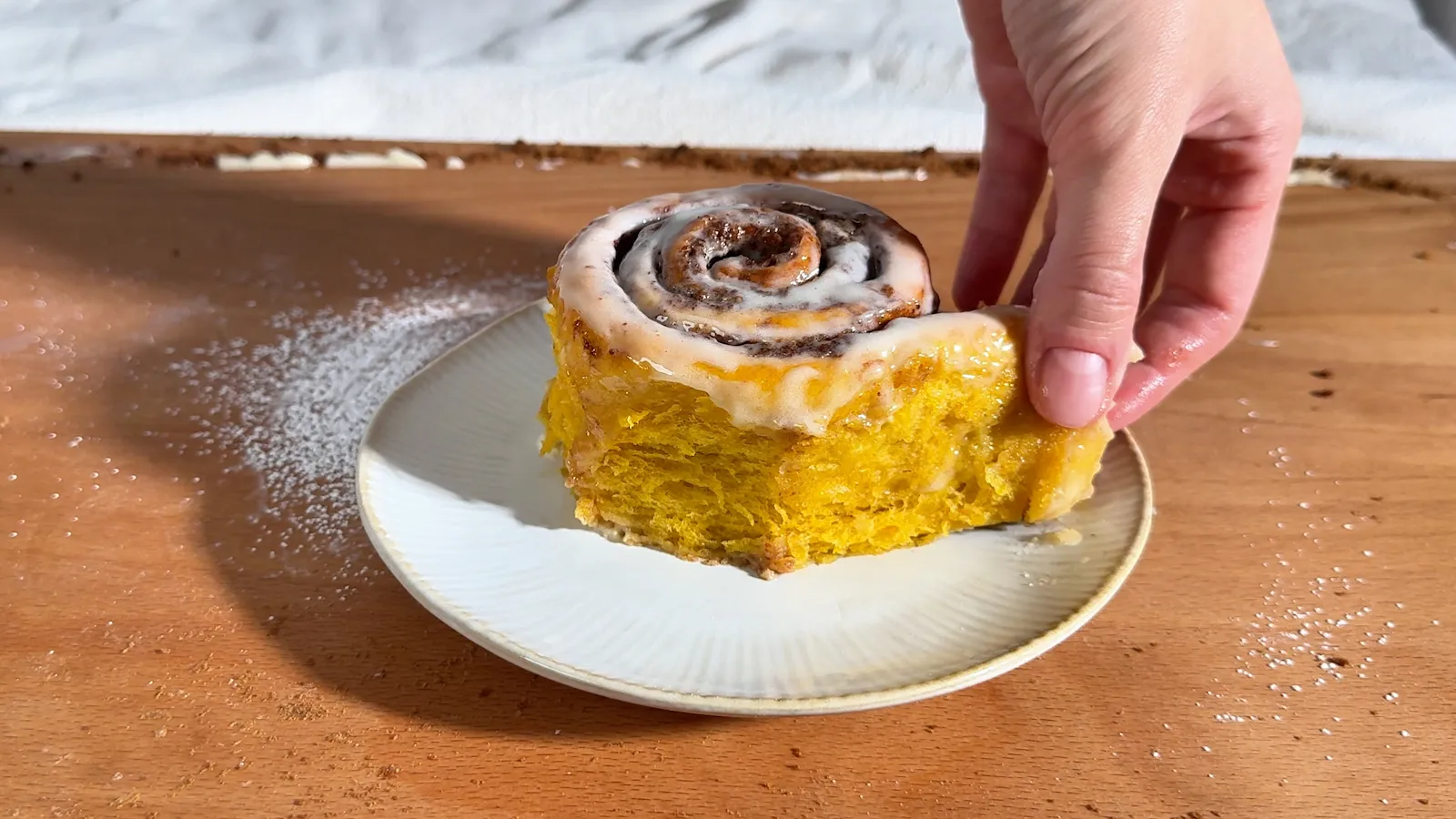
Cinnamon rolls are our favorite breakfast 🤗 And after making them so many times, we’ve discovered they work with all kinds of flavors. Since we’re right in the middle of pumpkin season, we started with these: pumpkin cinnamon rolls, with a soft orange crumb that smells like fall spices 🎃
The dough is made with well-reduced pumpkin puree, which gives it its color and a very tender crumb. The filling is brown sugar with cinnamon and a little ginger, nutmeg and cloves. And on top, a thin layer of cream cheese frosting: thin on purpose, because any more and all you taste is sugar.
If it’s your first time making cinnamon rolls, the technique is the same as in our fluffy homemade cinnamon rolls. Here we focus on what changes with pumpkin: the puree and the baking, which is the trickiest part of this recipe.
How We Make Them at Home, Step by Step
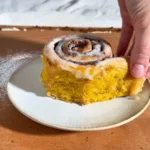
Pumpkin Cinnamon Rolls
Equipment
- 22 cm (9 in) round cake pan Or a 20 x 30 cm (8 x 12 in) rectangular pan
- Kitchen thermometer Highly recommended: 92 °C (198 °F) in the center
- Stand mixer Optional, you can knead by hand
- Rolling Pin
- Pizza Cutter Or a sharp knife
Ingredients
Dough
- 500 g bread flour 4 cups; or all-purpose flour
- 300 g reduced pumpkin puree 1¼ cups; from about 400 g (1⅔ cups) regular puree, at room temperature
- 50 g egg 1 large egg out of the shell; at room temperature
- 75 g granulated sugar 6 tbsp
- 7 g fine salt 1¼ tsp
- 70 g unsalted butter 5 tbsp; soft enough to dent with a finger, not melted
- 5 g instant yeast 1⅔ tsp; or 7 g (2¼ tsp) active dry yeast, or 16 g (½ oz) fresh cake yeast
- 5 g vanilla extract 1 tsp; optional
- 2 g ground cinnamon ¾ tsp; optional
- 1 pinch ground turmeric ⅛ tsp; optional, for color
- 60 g milk ¼ cup; held back, only if the dough is dry, at room temperature
Filling
- 90 g unsalted butter 6 tbsp + 1 tsp; soft, at room temperature
- 130 g brown sugar ½ cup + 2 tbsp packed
- 10 g ground cinnamon 1 tbsp + 1 tsp
- 2 g ground ginger 1 tsp; optional
- 1 g ground nutmeg ½ tsp; optional
- 1 pinch ground cloves ⅛ tsp; optional
- 1 g fine salt a generous pinch
For baking
- 30 g heavy cream 2 tbsp; optional, cold or at room temperature
Frosting
- 20 g cream cheese 1½ tbsp; at room temperature
- 40 g unsalted butter scant 3 tbsp; at room temperature
- 60 g powdered sugar ½ cup
- 30 g heavy cream 2 tbsp; at room temperature
- 5 g vanilla extract 1 tsp; optional
Instructions
The dough
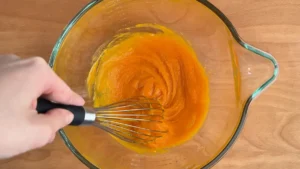
- Mix the puree with the egg and sugar. In a bowl, the 300 g of puree, the 50 g of egg, the 75 g of sugar and the 5 g of vanilla, whisked until smooth. With fresh yeast: crumble the 16 g over the mixture here and whisk until there are no lumps. With active dry yeast: dissolve the 7 g in 30 g of the reserve milk, warm, wait 10 minutes and add it here.

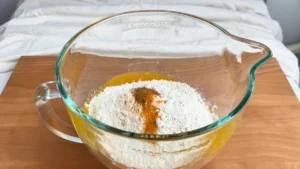
- Add the flour. With the 5 g of instant yeast, the 7 g of salt, the 2 g of cinnamon and the pinch of turmeric. Mix with a spatula and then with your hands, or with the dough hook of a stand mixer on low speed, until there's no dry flour left. If there's flour that won't come together or the dough feels stiff, add milk from the reserve 10 g at a time, up to 60 g at most.
- Let it rest for 20 minutes. Covered.
- Work in the butter in three additions. The 70 g, without adding the next one until the previous one has disappeared. With a stand mixer: dough hook on low speed, about 3 minutes per addition and 3 more minutes at the end. By hand: about 15 minutes in total, pushing with the heel of your hand, folding and turning.
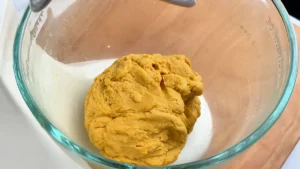
- Knead until smooth and elastic. It's ready when it pulls away from the counter almost by itself. If it gets very soft or greasy, chill it for 10 minutes and carry on.
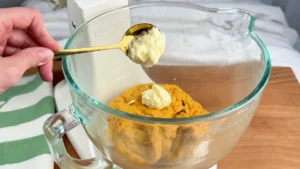
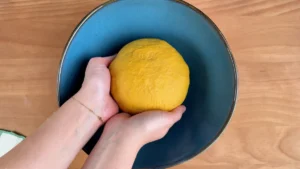
First rise
- Let it grow by 80%. In a lightly greased, covered bowl. At 22-24 °C (72-75 °F), about 2 hours; at 18 °C (64 °F), 3 hours or more. Go by volume. It can also rise in the fridge for up to 12 hours: when you take it out, if it hasn't reached 80%, wait until it does.
- Chill it for 1 hour. Cold dough rolls out much more easily. If it rose in the fridge, skip this step.
Shaping
- Make the filling. Mix the 130 g of brown sugar, the 10 g of cinnamon, the 2 g of ginger, 1 g of nutmeg, the pinch of cloves and 1 g of salt. Keep the 90 g of soft butter to one side.
- Prepare the pan. Line it with parchment paper and grease it.
- Roll out the cold dough. On a very lightly greased counter, into a rectangle about 30 x 50 cm (12 x 20 in) and ½ cm (¼ in) thick.
- Spread the butter and the filling. The butter over the whole surface and, on top, the sugar and spice mixture, all the way to the edges.
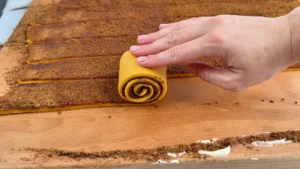
- Cut the strips. For a rectangular pan, 6 equal strips; for a round pan, 7 slightly narrower strips. Mark them before cutting so they come out even.
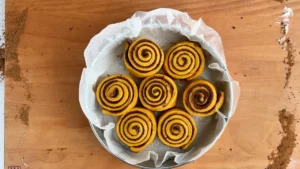
- Roll them up and place them in the pan. Each strip in a spiral, with a little space between the rolls. In the round pan, one in the center and six around it.
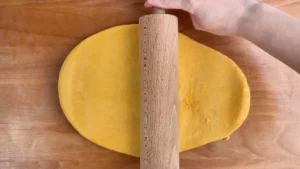
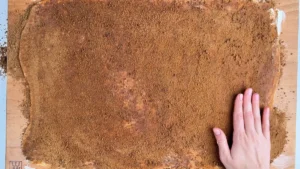
Second rise and baking
- Let them rise for 1-2 hours. Covered, until a light press with a finger leaves a dent that doesn't fully spring back. You can also leave them in the fridge overnight and let them finish rising at room temperature in the morning.
- Preheat the oven. When they're almost ready, to 180 °C (350 °F), conventional bake with top and bottom heat, not convection.
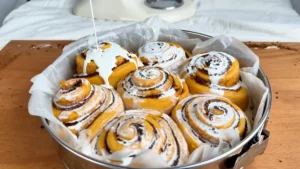
- Pour the cream over them. The 30 g over the top of the rolls. It's optional.
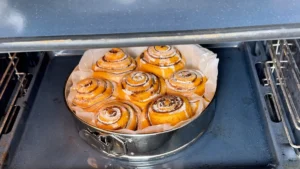
- Bake for about 35 minutes. On the lower-middle rack. Go by the thermometer, not by the color: 92 °C (198 °F) in the center, because the orange dough looks golden before it's done. If they brown too much on top, cover them with foil halfway through.
Frosting
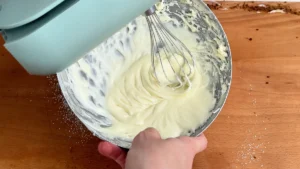
- Beat the cream cheese with the butter. The 20 g of cream cheese and the 40 g of butter, both at room temperature, until smooth.
- Add the powdered sugar. The 60 g, and beat until you have a smooth cream.
- Add the cream and vanilla. The 30 g of cream and the 5 g of vanilla, at room temperature, and beat until smooth and slightly runny. If it splits, keep beating for 1-2 minutes, or warm the bowl in the microwave for 3-5 seconds and beat again.
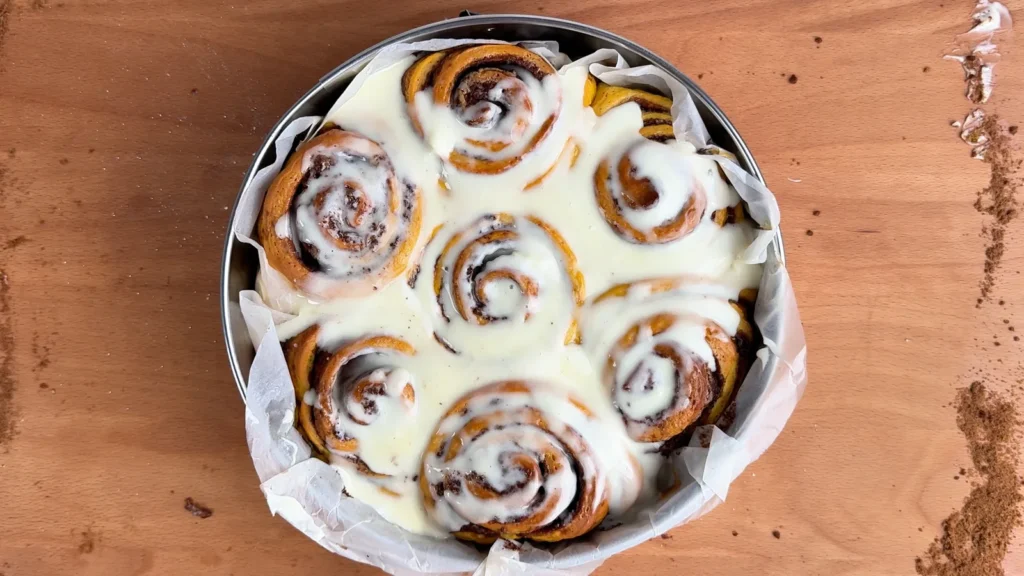
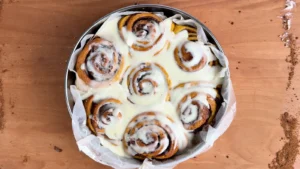
- Frost the rolls. Straight out of the oven, with a thin layer, so some of it melts and runs between the swirls.
Notes
- The puree has to be reduced and cooled: about 400 g (1⅔ cups) of regular puree gives you the 300 g the dough needs. We show you how in our homemade pumpkin puree.
- Yeast: 5 g of instant, 7 g of active dry or 16 g of fresh cake yeast. Instant yeast goes straight in with the flour. Active dry is dissolved first in 30 g of the reserve milk, warm (35-40 °C / 95-105 °F), and left for 10 minutes. Fresh yeast is crumbled into the puree mixture.
- If you have pumpkin pie spice, use 14 g (1 tbsp + 2 tsp) in the filling instead of the cinnamon, ginger, nutmeg and cloves.
- Each pinch of turmeric and cloves is about ⅛ tsp.
- Rising times are for a home at 22-24 °C (72-75 °F). If it’s colder, they’ll take longer: go by volume.
- They keep for 3 days in the fridge, well covered. To serve, 40 seconds in the microwave at 50% power.
- For the vanilla, you can use our homemade vanilla extract.
Any questions about the recipe? Ask us in the comments and we’ll get back to you. And if you make it, tell us how it turned out, we love hearing from you! 🤗
The Key: Well-Reduced Pumpkin Puree
Freshly made pumpkin puree holds a lot of water. If you add it as is, the dough turns sticky, needs much more flour and then takes longer to bake through. That’s why we reduce it first: about 400 g (1⅔ cups) of regular puree gives you the 300 g (1¼ cups) of thick puree the recipe calls for.
Do it in your widest skillet, over medium-low heat, stirring often. It’s ready when you drag the spatula across the bottom and the line takes a second to close. The type of pumpkin doesn’t matter: each one releases a different amount of water, which is why we don’t give you a time, but a texture. We walk you through it step by step, with photos, in our homemade pumpkin puree from a fresh pumpkin.
It needs to be at room temperature before you use it, with no warmth at all to the touch. If you’ve just reduced it, spread it out on a plate and it cools quickly. You can also make it the day before and keep it in the fridge; just take it out ahead of time.
Got puree left over? Use it in our pumpkin bagels, our pumpkin sweet potato cake or our no-bake pumpkin cheesecake.
Why Some of the Milk Is Held Back
No two purees are equally thick, so the dough can come out a little drier or a little wetter depending on yours. The 60 g (¼ cup) of milk is your margin to adjust it: only use it if there’s dry flour that won’t come together or the dough feels stiff, and always 10 g (2 tsp) at a time. If your puree was very well reduced, it’s normal to need almost all of it.
Which Yeast to Use
We use fresh yeast, but the recipe turns out the same with dry yeast. In the recipe card we list instant yeast, because fresh yeast (cake yeast) is hard to find in most US supermarkets. What changes is the amount and how you add it. Just make sure it’s baker’s yeast, not baking powder.
| Yeast | Amount | How to add it in this recipe |
|---|---|---|
| Instant | 5 g (1⅔ tsp) | Straight in with the flour, no proofing |
| Active dry | 7 g (2¼ tsp, 1 packet) | Dissolved in 30 g (2 tbsp) of the reserve milk, warm (35-40 °C / 95-105 °F). Wait 10 minutes until foamy and add it to the puree mixture |
| Fresh (cake yeast) | 16 g (½ oz) | Crumbled over the puree, egg and sugar mixture, then whisked until there are no lumps |
If you use active dry yeast, you’ve already used 30 g of the reserve milk: you have 30 g left to adjust the dough. We explain the three types of yeast in more detail in our fluffy homemade cinnamon rolls.
Tips for Soft, Fluffy Pumpkin Cinnamon Rolls
Add the Butter After the Rest
First we mix everything except the butter, let the dough rest for 20 minutes, and only then add the butter, in three additions. That way the gluten starts forming before the fat arrives and gets in its way. The result: taller rolls and a crumb that pulls apart in soft strands.
At first it looks like the dough won’t take the butter: it tears and slides around. That’s normal. Keep kneading and in a couple of minutes it comes back together. If it gets very soft or greasy, put it in the fridge for 10 minutes and carry on.
Chill the Dough Before Shaping
After the first rise, the dough goes into the fridge for 1 hour. Cold, it rolls out much more easily, doesn’t stick, and the rectangle comes out more even, and with it, more even rolls. If you let it rise in the fridge, it’s already cold and you can skip this step.
A Splash of Cream Before Baking
Right before they go into the oven, we pour 30 g (2 tbsp) of heavy cream over the rolls. It’s optional, but you’ll notice it: the cream soaks into the surface and runs down between the rolls, leaving them softer and more tender on the bottom.
Baking: The Trickiest Part
This is the hardest part of the recipe, especially in a basic oven: the rolls can brown too much on top and stay raw on the bottom. And with this dough there’s an extra catch, because the orange of the pumpkin looks golden long before they’re done. Here, the color fools you.
Here’s what works for us:
- At 180 °C (350 °F), conventional bake with top and bottom heat, not convection. The fan browns the surface faster.
- On the lower-middle rack, so the top stays further from the heating element and the heat reaches the base well.
- With a thermometer, 92 °C (198 °F) in the center. Insert it in the middle roll, which is the last one to bake through. It’s usually around 35 minutes, but the thermometer has the final word.
- If they brown too much, cover them with foil halfway through, just resting on top, not sealed.
For this recipe, a thermometer is what makes the biggest difference. If you don’t have one, gently pull apart two rolls in the center with a fork: the dough inside shouldn’t look wet or sticky.
A Thin Layer of Cream Cheese Frosting
The amount of frosting is small on purpose. We like it in a thin layer: any more and the rolls only taste of sugar, and you lose the pumpkin and the spices.
Take the cream cheese, butter and cream out of the fridge at least 1 hour ahead. If they’re cold, the frosting splits and you get little lumps. If it splits anyway, keep beating for 1-2 minutes, or warm the bowl in the microwave for 3-5 seconds and beat again.
We spread it over the rolls straight out of the oven: some of it melts and runs between the swirls, and the rest stays on top. And if you have vanilla, this is where it goes: the frosting doesn’t go in the oven, so the aroma comes through in full. If you’d like to make your own, here’s our homemade vanilla extract.
Make Them Ahead: Overnight Pumpkin Cinnamon Rolls
It takes a few hours, but almost all of it is waiting, and the fridge lets you spread it out however suits you best.
The dough, in the fridge for up to 12 hours. After kneading, shape it into a ball, cover it and refrigerate. When you take it out, it may already have grown by 80%; if not, wait until it does. Since it’s already cold, you can shape it right away, without the hour in the fridge.
The shaped rolls, in the fridge overnight. For fresh rolls at breakfast: shape them, place them in the pan, cover them well and refrigerate. In the morning, take them out and let them finish rising at room temperature before baking. Since they come out cold, it takes longer: allow 1-2 hours, or a bit more. It’s what we do with our sourdough cinnamon rolls, and this dough handles it just as well.
Variations
- With pumpkin pie spice. If you have it, use 14 g (1 tbsp + 2 tsp) in the filling instead of the cinnamon, ginger, nutmeg and cloves.
- Cinnamon only. The ginger, nutmeg and cloves are optional. Without them, the filling is the classic cinnamon one and the pumpkin comes through more.
- With all-purpose flour. It works too. Bread flour holds the butter better and the rolls rise a little higher.
- In a rectangular or round pan. A 20 x 30 cm (8 x 12 in) pan fits 6 rolls; a 22 cm (9 in) round pan fits 7: one in the center and six around it. We use the round one.
How to Store Pumpkin Cinnamon Rolls
We keep them in the fridge, well covered, because the frosting has cream cheese and cream. That way they stay soft for 3 days.
When we take them out, we warm them in the microwave at 50% power for 40 seconds and they’re like fresh from the oven again. At half power they warm through without the dough turning tough.
Pumpkin Cinnamon Rolls FAQ
Can I use canned pumpkin puree?
Yes, as long as it’s 100% pumpkin and not pumpkin pie filling, which already has sugar and spices. We haven’t tried it in this recipe, so go by the texture: if it’s as thick as our reduced puree (the line from the spatula takes a while to close), use 300 g (1¼ cups) as is; if it’s thinner, reduce it a little in a skillet.
Which pumpkin works best?
Any kind. Each variety releases a different amount of water, which is why we don’t give you a reducing time, but a texture: the puree is ready when you drag the spatula across the skillet and the line takes a second to close.
Why do I need to reduce the puree?
Because of the water. Freshly made puree holds so much that the dough would turn sticky, need more flour and then take longer to bake through. Once reduced, the dough is easy to handle, has more color and a more concentrated pumpkin flavor.
Can I make them without a stand mixer?
Yes, we’ve made them both ways. By hand, the part that takes longest is working in the butter: about 15 minutes in total, pushing the dough with the heel of your hand, folding it and turning it. At first it tears and slides around, but if you keep kneading it comes back together.
Can I use all-purpose flour instead of bread flour?
Yes, it works too. Bread flour has more protein and holds the butter better, so the rolls rise a little higher. With all-purpose flour they come out slightly lower, and just as good.
Which yeast can I use?
Instant, active dry or fresh. Use 5 g of instant yeast straight in with the flour, 7 g of active dry dissolved first in 30 g of the reserve milk, warm (35-40 °C / 95-105 °F), and left for 10 minutes, or 16 g of fresh cake yeast crumbled into the puree mixture. It has to be baker’s yeast, not baking powder.
Why are my rolls golden on the outside but raw inside?
It’s the most common mistake with this recipe, and it almost always comes from trusting the color. The orange dough looks golden before it’s done. Bake them on the lower-middle rack, without convection, and go by the thermometer: 92 °C (198 °F) in the center roll. If they brown too much, cover them with foil halfway through.
Can I make them the night before?
Yes. Shape the rolls, place them in the pan, cover them well and leave them in the fridge overnight. In the morning, take them out and let them finish rising at room temperature, 1 to 2 hours or a bit more, since they come out cold. You can also keep the dough in the fridge for up to 12 hours after kneading.
Can I freeze them?
We haven’t tried it with this pumpkin dough, so we can’t promise how it turns out. With our fluffy cinnamon rolls we do freeze the shaped rolls in the pan. If you try it with these, let us know how it goes in the comments.
Do I need the ginger, nutmeg and cloves?
No, they’re optional. Without them, the filling is the classic cinnamon one. And if you have pumpkin pie spice, use 14 g (1 tbsp + 2 tsp) instead of the cinnamon and the other three spices.
What is the turmeric for?
Just for color. With a pinch, the crumb turns a brighter orange and you won’t taste it. It’s optional.
Are pumpkin cinnamon rolls the same as pumpkin cinnamon buns?
Yes. Cinnamon rolls and cinnamon buns are the same thing; “buns” is more common in the UK. And with ginger, nutmeg and cloves in the filling, these are also what many people call pumpkin spice cinnamon rolls.
How long do they keep, and how do I reheat them?
Well covered in the fridge, they stay soft for 3 days. To serve them, we warm them for 40 seconds in the microwave at 50% power and they’re like fresh from the oven again.
Made This Recipe or Have a Question?
Any questions before you start? Ask us down below and we’ll get back to you. And if you’ve already made it, tell us how it turned out or leave us a rating: it really helps more people find the recipe 😊
Rate this recipe ⭐️