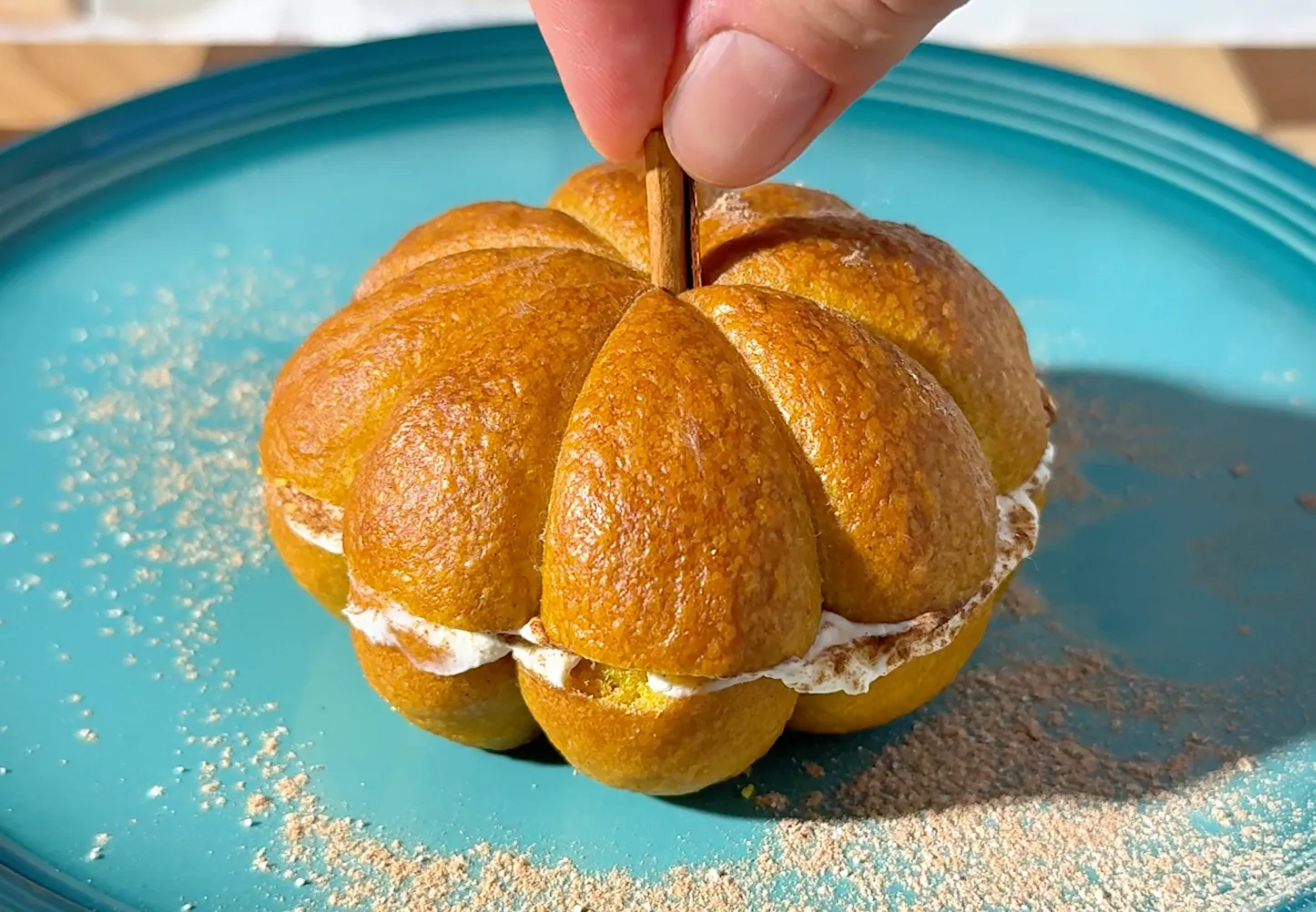
Pumpkin Bagels for a Halloween Breakfast
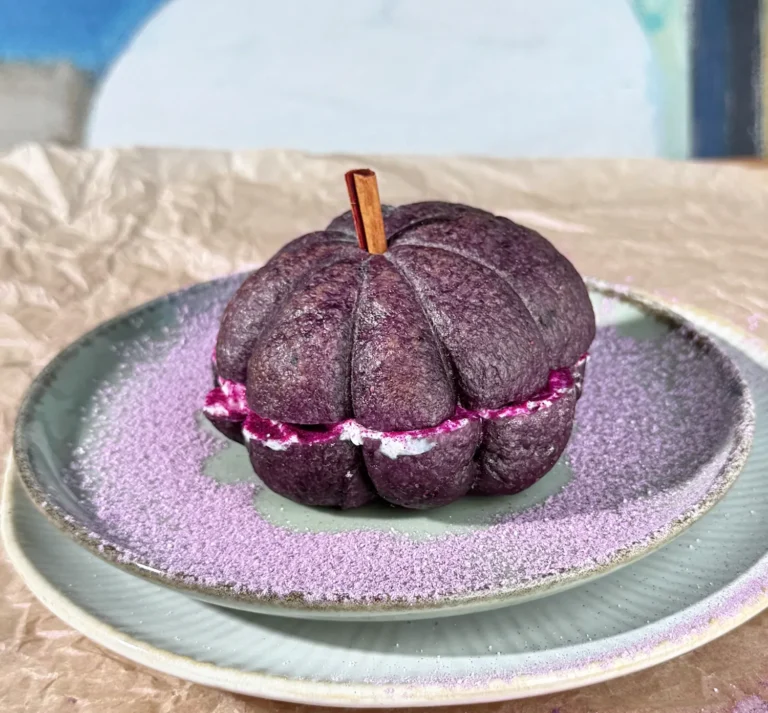
These pumpkin bagels look like they came straight from a bakery window, but the trick behind the shape is simple: kitchen twine. You tie each ball of dough like a little parcel, let it rest overnight in the fridge, boil it for a minute and a half and bake. When you snip the twine off, the ridges stay, just like a real pumpkin.
Inside, they’re proper bagels: a dense, tender crumb and a shiny, slightly chewy crust. Roasted pumpkin purée goes right into the dough, a little turmeric makes the color glow without any hint of curry, and a touch of cinnamon brings out that autumn flavor.
No pumpkin on hand? They work without it too, with just turmeric: same shape, same bright color. We explain how further down.
This isn’t a quick recipe, but almost all of the time is waiting. We give you every amount in grams (with cups and spoons in brackets) and explain why each step matters, so your pumpkin-shaped bagels turn out right the first time.
How We Make Them at Home, Step by Step
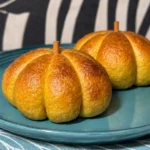
Pumpkin Bagels
Equipment
- Stand mixer with dough hook Strongly recommended: this is a very stiff dough
- Pot, about 3.3 L (3½ qt) The wider the pot, the more you can boil at once
- Spider strainer or a medium fine mesh strainer A slotted spoon works too
- Baking sheet Lined with parchment paper
- Kitchen scale
- Probe thermometer Optional, to check 95 °C (203 °F) in the center
Ingredients
Dough
- 500 g bread flour 13-14% protein (about 4 cups)
- 200 g roasted pumpkin purée roasted and blended (see notes). No pumpkin? See notes
- 85 g water at 20-22 °C (68-72 °F) (⅓ cup)
- 20 g water, reserved only if the dough won’t come together (4 tsp)
- 6 g fresh yeast 0.2 oz; or 2 g (⅔ tsp) instant yeast
- 10 g fine salt 1¾ tsp
- 15 g honey 2 tsp
- 10 g sugar 2½ tsp
- 1 g ground turmeric ⅓ tsp; optional but recommended: brightens the color with no curry taste
- 3 g ground cinnamon 1 tsp; optional
Boiling water
- 2000 g water 8½ cups
- 27 g honey 1¼ tbsp
- 5 g baking soda 1 tsp
Shaping and baking
- 8 pieces cotton kitchen twine 80 cm (24 in) each
- 15 g sunflower oil 1 tbsp: 10 g for the twine, 5 g for the parchment
- 8 short cinnamon sticks or rosemary sprigs, optional
Instructions
The dough
- Mix the dry ingredients. In the stand mixer bowl, with the dough hook, add the flour, salt, sugar, turmeric and cinnamon. Mix for 20 seconds on speed 1.
- Add the liquids and the purée. Dissolve the fresh yeast and the honey in the 85 g (⅓ cup) of water at 20-22 °C (68-72 °F) and add it to the bowl together with the pumpkin purée. If using instant yeast, add it with the dry ingredients instead.
- Knead on two speeds. 3 minutes on speed 1, until no loose flour remains, then 10 to 12 minutes on speed 2. Don't go above speed 2: with a dough this stiff, the mixer walks and the motor strains. If that happens, stop for 5 minutes and continue. If you knead by hand, expect it to take considerably longer, with a rest or two along the way: this is a stiff dough.
- Adjust the water if needed. At 5 minutes of kneading, if the dough looks cracked and won't come together, add the reserved water 5 g (1 tsp) at a time, up to 20 g (4 tsp). How much you need depends on how thick your purée is.
- Check the dough. It's ready when it pulls away from the bowl as a smooth, firm ball. It won't pass the windowpane test, and it doesn't need to. Final dough temperature: 24-25 °C (75-77 °F).

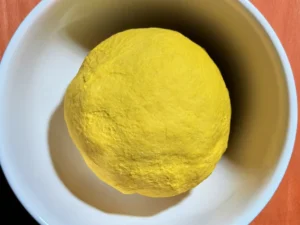
Rising and shaping
- Let it rise for 60 to 90 minutes, covered, at 22-24 °C (72-75 °F). It only grows by 30-40%. Go by volume, not the clock: the cinnamon can make it take a little longer.
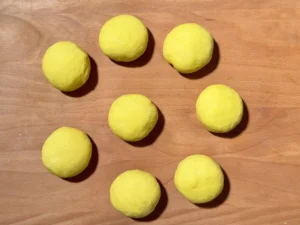
- Divide into 8 pieces of about 105 g (3¾ oz) and shape each into a ball. Flatten each piece into a disc, fold the edges into the center several times, turning the dough as you go, until the surface feels tight, then turn it over with the folds underneath. Let them rest, covered, for 15 minutes.
- Seal the base. Fold again, pressing firmly, and close the underside with small pinches until there are no cracks or creases left. A well-sealed base is what keeps the ball from splitting in the water.
- Oil the twine. Run the 8 pieces of twine, 80 cm (32 in) each, through your fingers with 10 g (2 tsp) of oil. This stops them sticking to the crust in the oven.
- Tie each ball into 8 sections. Center the twine on top of the ball, bring it down the sides and cross it underneath. Turn the ball 90° and cross again: you'll have 4 sections. Repeat, turning 45°, to get 8, then bring both ends back up to the top.
- Tie it on top, without pulling it tight. The dough is going to grow, and tight twine cuts into it.
Overnight in the fridge
- Refrigerate for 12 to 18 hours at 4 °C (39 °F), covered. This gives the shine and the chewy crust, so don't skip it.
Boiling
- Preheat the oven 30 minutes ahead. 230 °C (450 °F) with top and bottom heat, or 210 °C (410 °F) with a fan oven.
- Prepare the baking sheet. Line it with parchment, brush it with 5 g (1 tsp) of oil and set it next to the pot, with the strainer (or slotted spoon) and a timer.
- Put the water on. 2000 g (8½ cups) of water in a pot of about 3.3 L (3½ qt).
- Add the honey when it boils. 27 g (1¼ tbsp), stirring until it dissolves.
- Add the baking soda little by little. 5 g (1 tsp), over medium heat: on a rolling boil it can foam up all at once. Wait for the foam to settle and skim off what's left.
- Take out only the batch you're boiling. Keep the rest in the fridge until their turn.
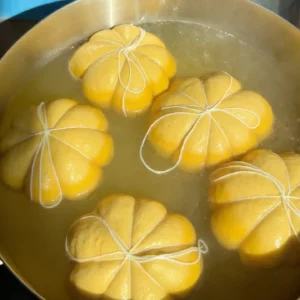
- Boil for 45 seconds, knot side up. Lower them in with the strainer (or a slotted spoon). You can boil as many as fit in your pot without touching, leaving a little room around them.

- Flip and boil for another 45 seconds.
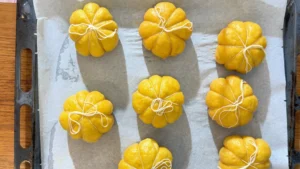
- Drain and transfer to the baking sheet. Let them drip over the pot for 5 to 10 seconds, then place them knot side up in 3 rows (3, 3 and 2), about 4 cm (1½ in) apart.
Baking
- Bake for 20 to 22 minutes at 230 °C (450 °F). All together, on the middle rack.

- Check they're done. Deep golden, hollow-sounding when tapped underneath, or 95 °C (203 °F) in the center.
- Lower to 210 °C (410 °F) if they darken too soon. The pumpkin makes them brown faster than plain bagels, starting with the bottoms. If they're very dark at 15 minutes, continue at that temperature until they pass the previous step.
Finishing
- Let them cool for 10 minutes. While hot, the crumb grips the twine.
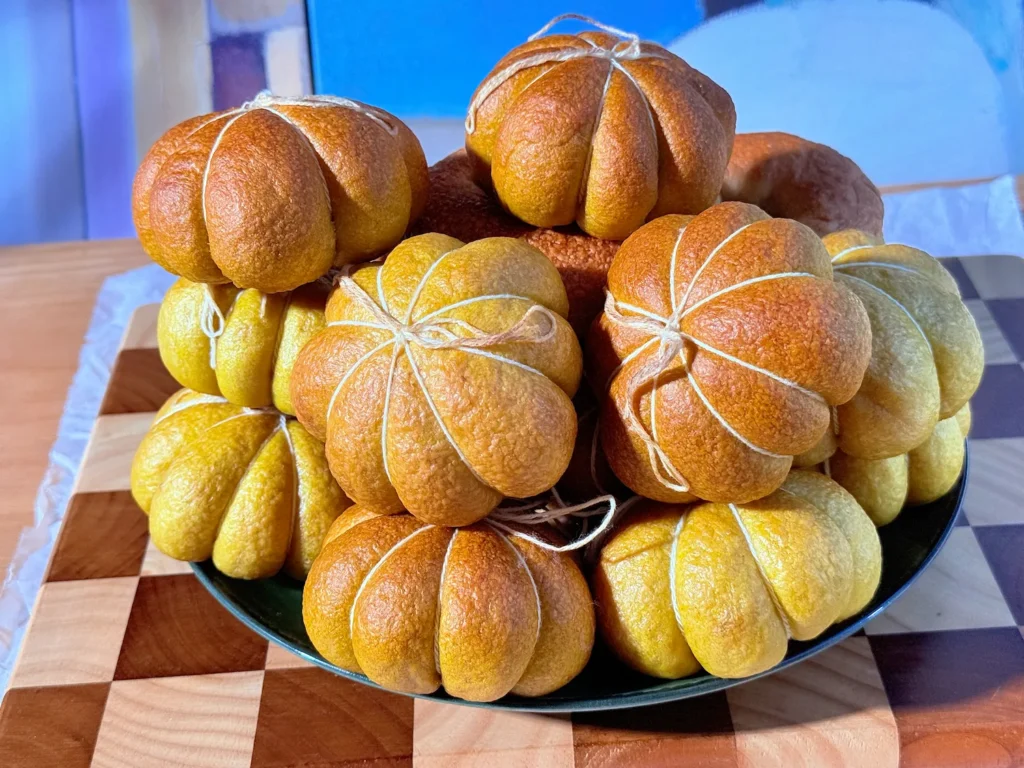
- Remove the twine. Snip the knot with scissors and pull slowly from one end. If you feel resistance, wait 5 more minutes.
- Push a cinnamon stick into the center. It's decorative and optional: remove it before eating.
Notes
- Use 100% cotton kitchen twine with no dye. Synthetic string can’t handle the oven temperature.
- With no hole, the center takes longer to bake than a regular bagel. If yours come out underbaked, next time bake at 215 °C (420 °F) for 26 to 28 minutes. With a thermometer, the center should read 95 °C (203 °F).
- With a bigger pot, you can use 3000 g (12¾ cups) of water, 40 g (2 tbsp) of honey and 8 g (1½ tsp) of baking soda.
- For the purée, roast the pumpkin at 200 °C (390 °F) for about 45 minutes, until a knife slides in easily, and blend it. For these bagels you don’t need to strain it or cook it down like our homemade pumpkin puree: roasted and blended is enough, because the water in the dough is adjusted to it. Don’t boil it: boiled pumpkin holds much more water. If your purée looks watery, a few minutes in a pan is all it needs. If you use a thicker purée (canned, or cooked down like ours), the dough may need some or all of the reserved water. Always 100% pumpkin, never pumpkin pie filling, which already has sugar and spices.
- Turmeric is optional, but it makes the color much brighter, and in this amount it doesn’t taste of curry.
- The pumpkin adds sugar, so these brown faster than plain bagels. Check them at 15 minutes.
- No pumpkin? Leave out the purée and use 255 g (1 cup + 1 tbsp) of water and 1 g (⅓ tsp) of turmeric.
- The cinnamon stick is decorative: remove it before eating.
Any questions about the recipe? Ask us in the comments and we’ll get back to you. And if you make it, tell us how it turned out, we love hearing from you! 🤗
The Kitchen Twine Trick: How the Pumpkin Ridges Form
The pumpkin shape doesn’t come from cutting or molds. Each ball of dough is tied with cotton twine that divides it into 8 sections. As the dough rises in the fridge, in the pot and in the oven, it pushes against the twine and puffs up between each strand. That’s why the ridges come out so defined.
Three details make the difference:
The ball has to be tight and well sealed underneath. If it’s loose, the twine squashes it instead of drawing ridges, and if the base is open, it splits in the water.
To get there, fold the dough rather than rolling it on the counter: at 51% hydration it’s so dry that it slides instead of gripping. Flatten the piece into a disc, fold the edges into the center all the way around two or three times, and you’ll see the top go smooth and taut. All the folds end up together on the base: close it with small pinches until no creases show.
The knot goes on loose, with about 1 cm (⅜ in) of slack. It looks too loose, and that’s on purpose. The dough grows a lot, and if the twine is snug, it ends up cutting through.
The twine is rubbed with oil. 10 g (2 tsp) of sunflower oil worked between your fingers is enough for all 8 pieces. Without it, the crust grips the twine in the oven and tears when you pull it off.
Use 100% cotton kitchen twine (butcher’s twine) with no dye. Synthetic string can’t handle an oven at 230 °C (450 °F).
Why Bagels Are Boiled Before Baking
Boiling is what turns a bread roll into a bagel. In those 45 seconds per side, the starch on the surface sets into a thin skin. In the oven, that skin becomes the glossy, slightly chewy crust that makes a bagel a bagel.
What goes into the water matters too:
Baking soda raises the pH of the water, so the crust browns faster and deeper and gets more flavor.
Honey adds shine and a warmer color to the crust.
Keep the water at a gentle simmer, with small bubbles. A rolling boil knocks the dough around and blurs the ridges, which is exactly what you don’t want here.
Don’t Skip the Night in the Fridge
Between 12 and 18 hours at 4 °C (39 °F), covered. This is what gives the shine, the chewy crust and a more flavorful crumb, because a slow, cold rise develops flavors that two hours at room temperature never will.
It also makes the timing easy: shape them in the evening, bake them the next morning. To check they’re ready, do the float test: take one straight from the fridge and drop it into a glass of cold water. If it floats within 10 seconds, they’re ready. If it sinks, leave them at room temperature for 30 to 60 minutes and test again.
Pumpkin, Turmeric and Cinnamon: What Each One Does
The pumpkin brings color, moisture and a gentle sweetness. On its own, though, its flavor is subtle: you need a lot of pumpkin before you really taste it.
The turmeric is there for the color. The purée gives a soft orange, and just 1 g of turmeric makes it much brighter. In that amount you won’t taste it, no curry flavor. It’s optional, but we recommend it.
The cinnamon is what makes people say “these taste like autumn”. It’s optional too, but we used it and we love it. Cinnamon can slow the rise a little, so go by volume (30-40% bigger) rather than by the clock.
Why only 85 g of water? Pumpkin purée is mostly water. Counting it as about 85% water, 200 g of purée brings around 170 g, so with the 85 g you add, the dough ends up as stiff as a classic bagel dough. Purées vary, which is why there’s 20 g of water held back: add it only if the dough doesn’t come together.
Roast the pumpkin, don’t boil it. Boiled pumpkin holds much more water and the numbers stop working. Roast it at 200 °C (390 °F) for about 45 minutes, until a knife slides in easily, and blend it. That’s all: for these bagels there’s no need to strain it or cook it down the way we do for our homemade pumpkin puree, which is made for recipes that need a very thick purée. If you do use a thicker purée, canned or cooked down, count on using the reserved water. Let it cool to room temperature before using it.
If you like playing with color in the dough, our blueberry bagels come out purple all the way through, colored only by the fruit 💜
No Pumpkin? Make Them with Turmeric Only
You can make exactly the same bagels without pumpkin. Leave out the purée, use 255 g (1 cup + 1 tbsp) of water and 1 g (⅓ tsp) of turmeric, and follow the same method. They come out bright yellow-orange, the pumpkin shape looks just as good, and the flavor is that of a classic honey bagel.
We’ve made them both ways and, inside, they’re nearly identical: the same tender crumb, the same gentle chew. The difference is on the outside and it’s subtle: with pumpkin the color is deeper orange and there’s a touch more sweetness. If you have pumpkin on hand, it’s worth it. If you don’t, you won’t miss it.
And if you skip both the pumpkin and the turmeric, you get our classic homemade bagels: the same dough, shaped round with a hole.
If Something Didn’t Turn Out Right
Raw in the middle. With no hole, the center takes longer to bake than a regular bagel. If you have a probe thermometer, the center should read 95 °C (203 °F). If yours came out underbaked, next time bake at 215 °C (420 °F) for 26 to 28 minutes.
This is what the inside should look like: baked all the way through, tender, with no damp or dense patches:
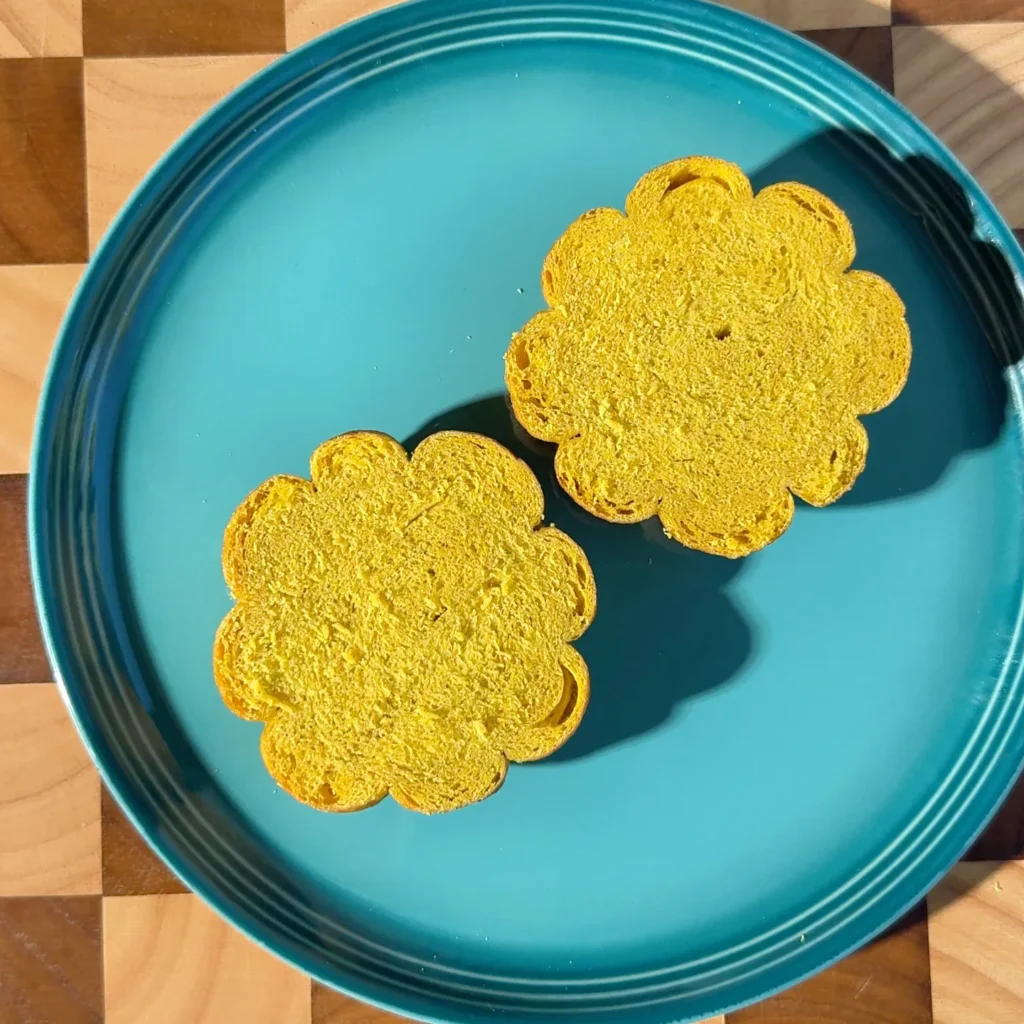
The ridges fell apart in the pot. The water was at a rolling boil. Turn the heat down until you only see small bubbles.
The twine stuck to the crust. It needed more oil, or it came off too soon. When hot, the crumb grips the twine: wait 10 minutes after baking, and if you feel resistance when pulling, give it 5 more minutes.
Too dark at 15 minutes. The pumpkin adds sugar, so these brown faster than plain bagels, and the bottoms darken first. Lower the oven to 210 °C (410 °F) and keep baking until they sound hollow when tapped underneath.
The dough looks cracked and won’t come together. Your purée was on the thick side. Add the reserved water 5 g (1 tsp) at a time, up to 20 g (4 tsp).
They’re taking longer to rise. Normal with cinnamon in the dough. Go by volume, not the clock: they’re ready when they’ve grown by 30-40%.
The stand mixer walks across the counter. This is a stiff dough, so it happens. Stop for 5 minutes and continue, or knead in two rounds of 6 minutes with a 5-minute rest in between.
Frequently Asked Questions About Pumpkin Bagels
Why do pumpkin bagels have turmeric if they already have pumpkin?
The pumpkin purée gives a soft orange, moisture and a gentle sweetness, and the turmeric makes the color much brighter. With only 1 g for the whole dough you won’t taste it, there’s no curry flavor. It’s optional, but we recommend it.
Can I make them without turmeric?
Yes. Turmeric only adds color. Without it, the bagels are paler, and the pumpkin shape looks just as good.
Can I make them without pumpkin?
Yes. Leave out the purée, use 255 g (1 cup + 1 tbsp) of water and 1 g (⅓ tsp) of turmeric, and follow the same steps. They come out yellow-orange, with the same pumpkin shape.
Can I use canned pumpkin purée?
Yes, as long as it’s 100% pumpkin purée and not pumpkin pie filling, which already has sugar and spices. Canned purée is usually thick, like roasted purée, so start with the 85 g (⅓ cup) of water and add the reserved 20 g (4 tsp) only if the dough doesn’t come together.
Do pumpkin bagels taste like pumpkin?
The pumpkin gives color, moisture and a gentle sweetness, but on its own its flavor is subtle. What really gives them that autumn taste is the cinnamon. If you want more pumpkin-pie flavor, don’t skip it.
Can I use boiled pumpkin instead of roasted?
We don’t recommend it. Boiled pumpkin holds much more water, and the dough ends up too wet. If boiled is all you have, dry the purée in a pan for a few minutes before using it.
What kind of twine should I use?
100% cotton kitchen twine, the kind used for tying roasts, with no dye. Synthetic or colored string isn’t made for the oven. Rub it with a little oil before tying so it doesn’t stick to the crust.
Can I use instant or active dry yeast instead of fresh?
Yes. Use 2 g (⅔ tsp) of instant yeast mixed straight into the flour, or about 2.5 g (¾ tsp) of active dry yeast dissolved in the water.
Why add baking soda to the boiling water?
Baking soda raises the pH of the water, which makes the crust brown more and better in the oven. That’s what gives bagels their deep golden color. The honey in the water adds the shine.
Can I skip the night in the fridge?
We don’t recommend it. The cold rise is what gives the shiny, chewy crust and the flavor of a good bagel. It also makes the timing easy: shape them one day, bake them the next.
How do I store homemade bagels?
They’re at their best the day they’re made. Keep them in a closed bag at room temperature for up to 2 days, or slice and freeze them and toast them straight from the freezer.
Can I knead it by hand?
You can, but with a dough this stiff it takes real effort and patience. We always use a stand mixer.
Can I make these in an air fryer?
Yes, with a couple of caveats. The boiling doesn’t change, it still happens on the stove; what changes is the baking. An air fryer is a small convection oven: it bakes faster and the element sits much closer, so you’ll need to drop the temperature compared to a regular oven and start checking well before the times in the recipe. Only a few fit at once, so you’ll work in batches. We haven’t baked them this way ourselves yet, so we won’t give you exact numbers: go by the usual test, hollow when tapped underneath or 95 °C (203 °F) in the center. If you try it, tell us in the comments what temperature and time worked for you.
Made This Recipe or Have a Question?
Any questions before you start? Ask us down below and we’ll get back to you. And if you’ve already made it, tell us how it turned out or leave us a rating: it really helps more people find the recipe 😊
Rate this recipe ⭐️