Sourdough Brioche Upside Down Cake, Soft and Juicy 🍓
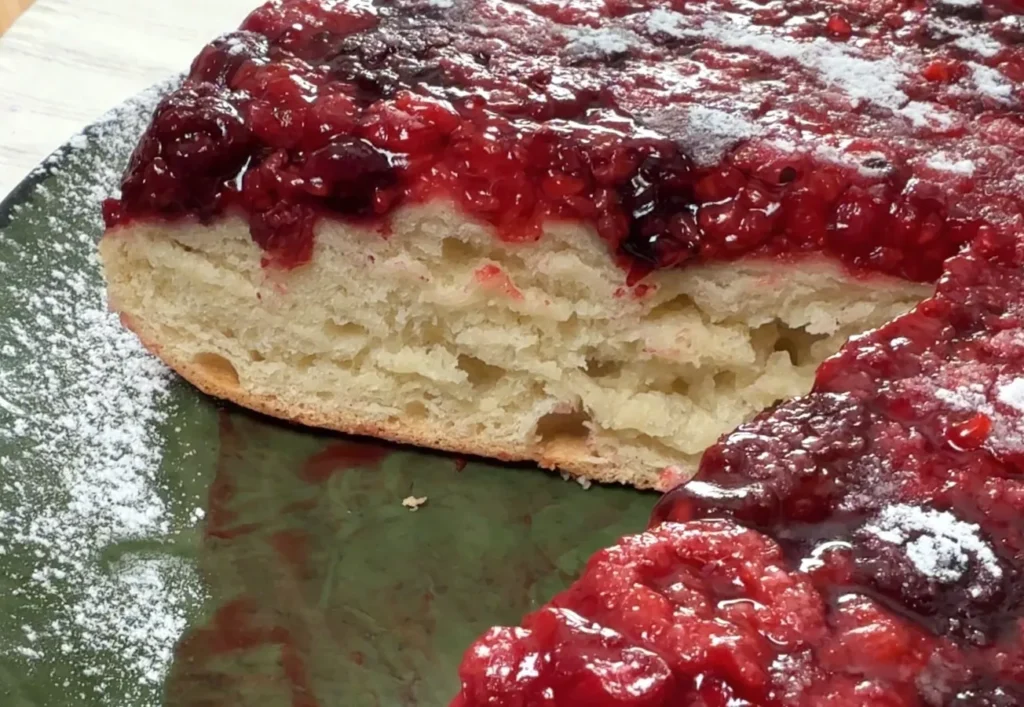
This sourdough brioche upside down cake is one of those recipes that, once you learn it, stays with you forever 🤗 A soft, fluffy brioche dough, made with sourdough only, that bakes on top of the fruit and then gets flipped. When you turn it out, the berries end up on top, caramelized and glossy.
It’s an upside down cake from the same family as the tarte Tatin, but with brioche dough instead of pastry. We make it with frozen mixed berries, which you can find all year round, and in the fall also with apples 🍎 It’s a big cake, with 6 generous slices, for breakfast, an afternoon treat or to surprise someone without any fuss.
The only thing you need ready before you start is your sourdough starter, active and at its peak. The rest is a little work and a lot of resting: the dough does almost everything on its own. And then comes the moment you flip it, which is the most exciting part of the recipe 😍
How We Make It at Home, Step by Step

Sourdough Brioche Upside Down Cake
Equipment
- 20-22 cm (8-9 in) springform pan
- Stand mixer Optional, you can knead by hand
- Parchment paper For the disc and to line the pan, bottom and sides
- Aluminum foil Under the pan, for the juice
Ingredients
Brioche dough
- 100 g sourdough starter ⅓ cup + 1 tbsp; active and at its peak, 100% hydration
- 80 g milk ⅓ cup
- 60 g granulated sugar ¼ cup + 1 tbsp; or panela
- 1 egg large; at room temperature
- ½ lemon zest only; optional
- vanilla seeds or extract; optional
- 220 g bread flour 1¾ cups
- 4 g salt ¾ tsp
- 60 g butter 4 tbsp (½ stick); softened
- neutral oil for greasing the counter and the parchment paper
Fruit layer
- 20 g butter 1½ tbsp; softened or in small cubes
- 350 g frozen mixed berries 12 oz; straight from the freezer, or apple (see notes)
- 40 g granulated sugar 3 tbsp; up to 60 g (5 tbsp) if the fruit is very tart
- 10 g potato starch or cornstarch 1 tbsp
- lemon juice a few drops
To serve
- powdered sugar for dusting; optional, berry version only
Instructions
The dough
- Mix the wet ingredients. In a bowl, the 100 g of starter, the 80 g of milk, the 60 g of sugar or panela and the egg. If you like, add the zest of ½ lemon and a little vanilla. Mix by hand with a whisk or in a stand mixer.
- Add the flour and salt. The 220 g of flour and the 4 g of salt. Mix until there's no dry flour left.
- Let it rest for 20 minutes. With the bowl covered.
- Work in the butter. The 60 g, softened, in small additions, without adding the next one until the previous one is fully absorbed. Knead by hand or with a stand mixer until the dough is smooth and elastic. At first it looks like it's tearing: keep kneading and it comes back together.
First rise
- Let it grow by 50%. In a lightly greased, covered bowl. At 22-24 °C (72-75 °F), about 2 hours; in a colder kitchen, up to 4 hours. Go by volume.
Shaping and second rise
- Turn the dough out onto the counter. Greased with a thin layer of neutral oil, no flour.
- Shape a tight ball. Stretch the dough into a rectangle, fold the sides into the center and roll it up like a snail. Or fold the four corners into the center, flip it over and tighten it with your hands until it's a smooth ball.
- Let it rest for 15 minutes. Covered with a bowl.
- Shape the disc. On a sheet of lightly oiled parchment paper, press the ball out with your hands until it's the size of your pan: 20-22 cm (8-9 in).
- Let the disc rise. Covered with an upside down bowl, with nothing touching the dough, for 1½ to 2 hours, until it looks nicely puffed and airy.
The fruit and baking
- Preheat the oven. When the disc is almost ready, to 180 °C (350 °F), conventional bake with top and bottom heat.
- Prepare the pan. Line the springform pan with parchment paper, bottom and sides, and spread the 20 g of butter over the bottom, softened or in small cubes.
- Add the fruit. The 350 g of berries, straight from the freezer, or the peeled, diced apple.
- Sprinkle the sugar and starch. Mix the 40 g of sugar with the 10 g of starch, scatter it over the fruit and finish with a few drops of lemon juice.
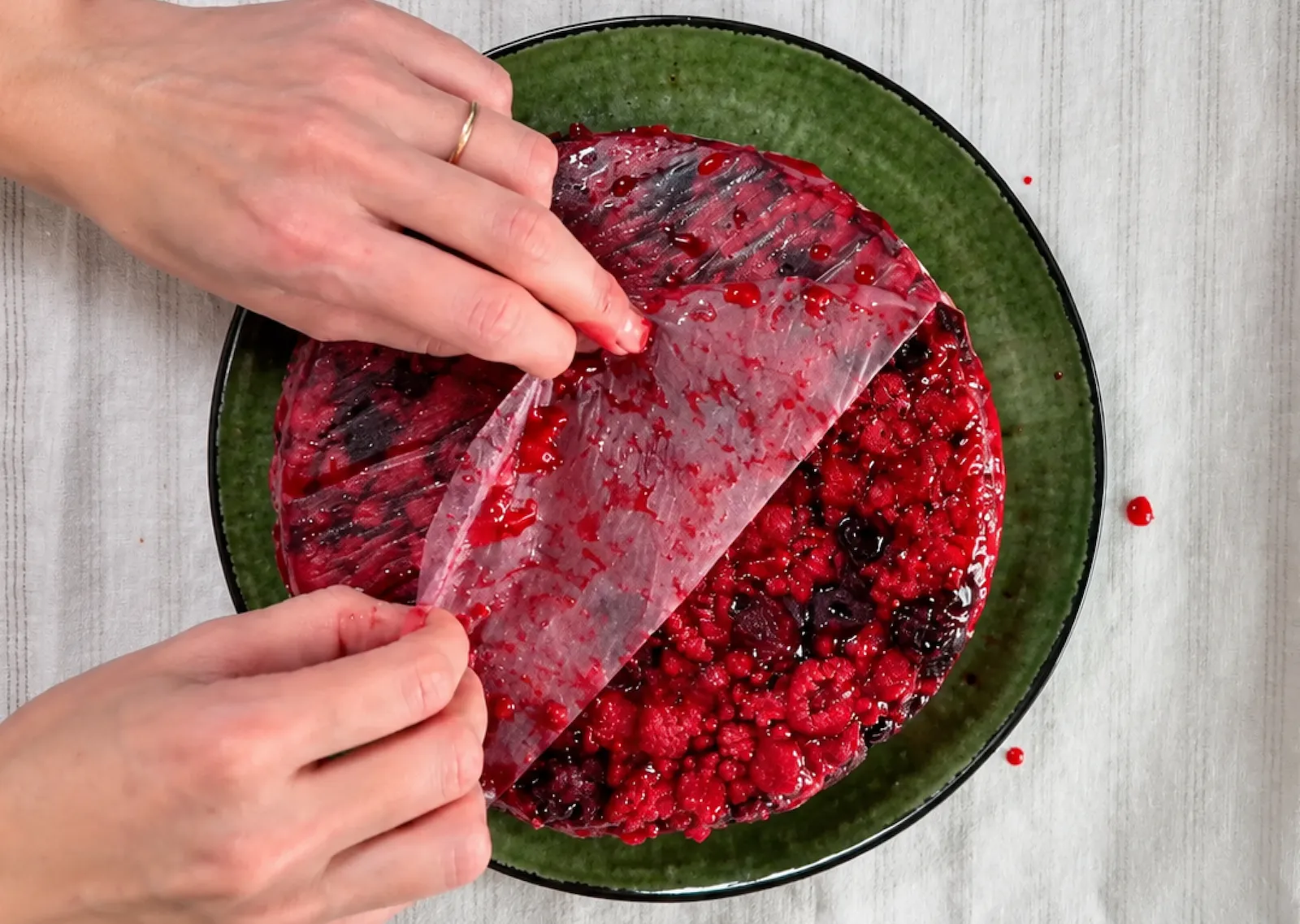
- Place the disc on top. Pick up the parchment with the disc, flip it over the pan so the dough sits on the fruit, and peel off the paper.
- Bake for 30 to 40 minutes. On the middle rack, with a sheet of foil under the pan to catch the juice, until the dough is nicely golden on top.
- Flip it while hot. As soon as it comes out of the oven, set a large plate upside down on the pan, hold them together and flip. Open the ring, lift off the base and carefully peel off the paper: the caramelized fruit ends up on top.
- Serve. With berries, a dusting of powdered sugar on top, if you like.
Notes
- Your starter needs to be active and at its peak. If you keep it in the fridge, feed it a few hours ahead: we explain how in your sourdough starter, active and at its peak. The total time doesn’t include that feeding.
- Rising times are for a kitchen at 22-24 °C (72-75 °F). If it’s colder, it will take longer: go by volume.
- Apple version: 350 g (12 oz) of sweet apple, like Golden Delicious, peeled and cut into small cubes. The rest of the fruit layer is the same, and you don’t need the powdered sugar.
- If you’re using a springform pan, line it with parchment paper on the bottom and sides and put foil underneath: berries release quite a lot of juice.
- Panela is unrefined cane sugar. You can use it instead of granulated sugar in the dough, in the same amount.
- It keeps for up to 4 days in the fridge, covered. When you take it out, you can warm your slice briefly in the microwave.
- Don’t have a starter yet? Start with our guide to making a sourdough starter from scratch.
Any questions about the recipe? Ask us in the comments and we’ll get back to you. And if you make it, tell us how it turned out, we love hearing from you! 🤗
Your Sourdough Starter, Active and at Its Peak
For this cake you need 100 g (⅓ cup + 1 tbsp) of active sourdough starter at its peak, at 100% hydration, meaning it’s fed with equal weights of flour and water. At its peak means at the highest point of its rise after feeding: it has doubled in volume, it’s full of bubbles and it smells mildly sour, a bit like yogurt.
Timing matters more here than in a regular loaf. A sourdough brioche has sugar, egg and butter, and all of them slow the starter down. If you use it tired or straight out of the fridge, the rise takes much longer and the crumb comes out denser.
Don’t have a starter yet? Start with our guide to making a sourdough starter from scratch: in a few days you’ll have one ready.
How to Get the 100 g You Need
If you keep your starter in the fridge, feed it a few hours before you start: 20 g of starter, 50 g of flour and 50 g of water at room temperature. Mix, cover loosely and leave it at room temperature until it peaks: about 4 to 5 hours in a warm kitchen (24-26 °C / 75-79 °F), 6 to 8 in a mild one (20-22 °C / 68-72 °F) and 10 to 12 if it’s cold.
That gives you 120 g: use 100 g for the cake and keep the rest in the fridge for next time. It’s the same ratio we use for our easy sourdough bread, where we explain in more detail how to tell it’s ready.
Tips for a Soft Sourdough Brioche Upside Down Cake
Add the Butter After the Rest
First we mix everything except the butter and let the dough rest for 20 minutes. That way the gluten starts forming before the fat arrives and gets in its way. Then we add the soft butter in small additions, without adding the next one until the previous one has disappeared.
At first it looks like the dough is tearing and sliding around. That’s normal: keep kneading and it comes back together. It’s ready when it’s smooth and elastic. You can do it by hand or with a stand mixer, and it’s the same technique we use in our sourdough milk bread, another soft, enriched dough.
Oil on the Counter, Never Flour
When you turn the dough out onto the counter to shape it, grease the surface with a thin layer of neutral oil. Flour that sticks to the dough changes the texture of the brioche and makes it less tender. With oil, it’s easy to handle and doesn’t stick.
A Tight Ball Before Shaping the Disc
Before pressing the dough into a disc, we shape a tight ball. It’s an important step: it gives the brioche a smoother surface and a better rise in the oven. We show you two ways, and both work:
- Like a snail. Stretch the dough into a rectangle, fold the sides into the center and roll it up.
- By the corners. Fold the four corners into the center, flip the dough over and tighten it with your hands until you have a smooth ball.
Covered, but With Nothing Touching the Dough
During the second rise, the disc needs to be covered so it doesn’t dry out, but with nothing touching it. Plastic wrap sticks to the dough and deflates it when you pull it off. The easiest way is to set a large bowl upside down over it.
Go by the Dough, Not the Clock
In our kitchen, at 22-24 °C (72-75 °F), the first rise takes about 2 hours. In a colder kitchen it can take up to 4. The dough has the final word: it’s ready when it has grown by about 50%. In the second rise, the disc takes 1½ to 2 hours to look nicely puffed and airy.
The Fruit: Berries or Apples
We use frozen mixed berries, straight from the freezer, no thawing. You can find them all year round, they cost less than fresh ones and they give the cake that beautiful color.
Every ingredient in the fruit layer has a job:
- The butter on the bottom helps the fruit caramelize and gives the cake that glossy layer on top once you flip it.
- The starch, potato starch or cornstarch, thickens the juice the fruit releases as it bakes. Without it, the juice stays runny and soaks the crumb; with it, it turns into a jammy layer that stays on top.
- The sugar: we use 40 g (3 tbsp), just enough for the fruit to caramelize. If your berries are very tart, you can go up to 60 g (5 tbsp).
- A few drops of lemon brighten the flavor of the fruit.
Mix the sugar with the starch before sprinkling it over the fruit. That way the starch spreads evenly and doesn’t clump.
Apple Upside Down Cake Version
In the fall we also make it as an apple upside down cake, and it’s gorgeous 🍎 Use the same amount, 350 g (12 oz), of apple, peeled and cut into small cubes. We like Golden Delicious, but any sweet variety works. The rest of the fruit layer is the same: butter on the bottom, sugar mixed with starch on top and a few drops of lemon.
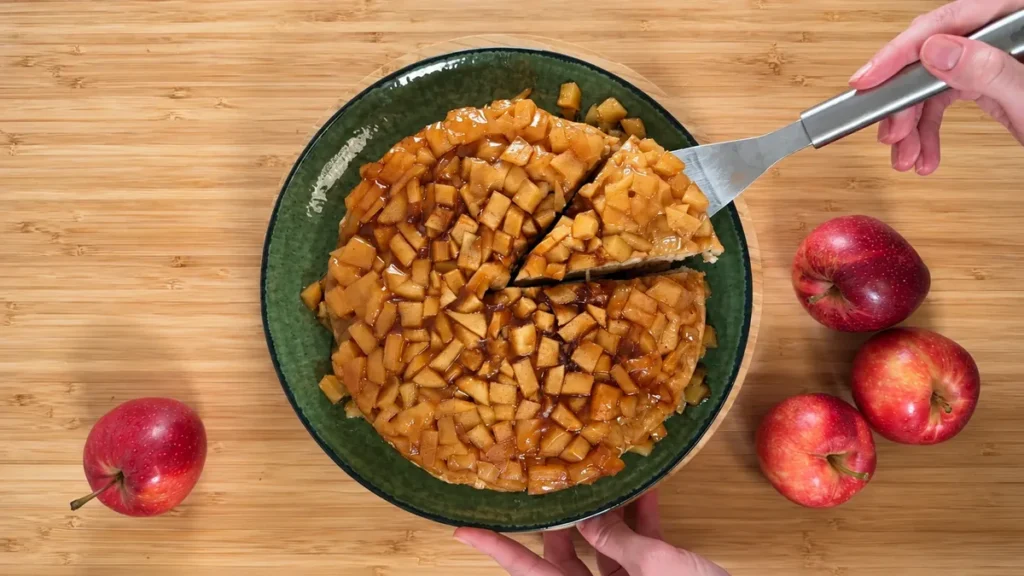
With apples you don’t need the powdered sugar at the end: the fruit already comes out golden and glossy.
The Pan and the Baking
We use a 20-22 cm (8-9 in) springform pan, lined with parchment paper on the bottom and sides. The paper does two things: it stops the fruit juice from leaking through the seam of the pan, and it helps the cake come out whole and clean when you flip it.
Even so, berries release quite a lot of juice. That’s why we put a sheet of foil under the pan: if anything drips, it lands on the foil and not in your oven.
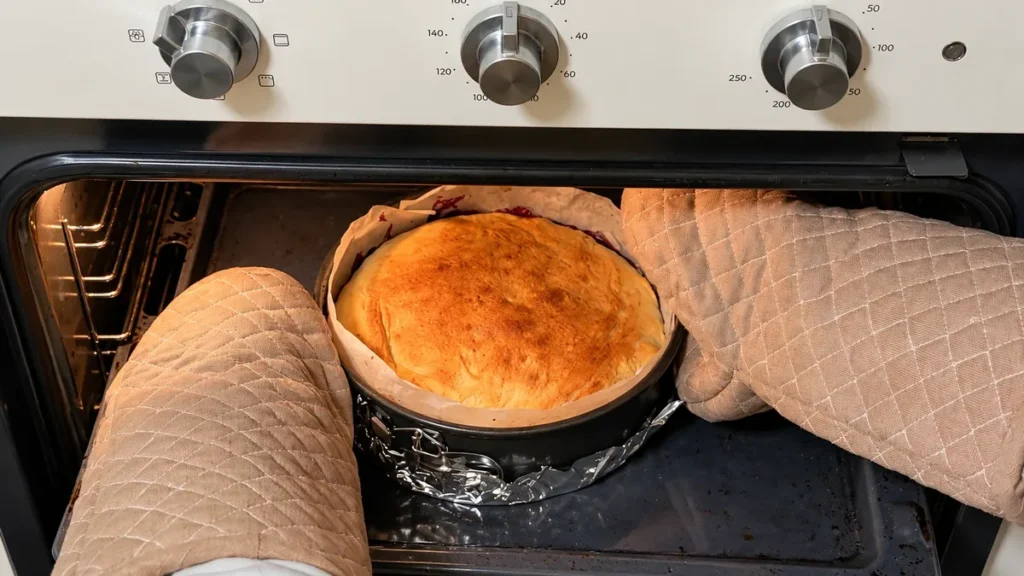
We bake it at 180 °C (350 °F), conventional bake with top and bottom heat, on the middle rack, for 30 to 40 minutes. It’s ready when the dough is nicely golden on top. That golden top is the base of the cake: once you flip it, it ends up on the bottom.
Flipping It: The Most Exciting Moment
Do it as soon as it comes out of the oven. While it’s hot, the fruit and the caramel are still runny and release on their own, and they end up on top, glossy and juicy. If you wait for it to cool, the caramel sets and sticks to the paper.
- Put on oven mitts and grab a plate slightly bigger than the pan.
- Set the plate upside down on top of the pan, hold them firmly together and flip them in one confident move.
- Open the springform ring, lift off the base and carefully peel off the parchment paper.
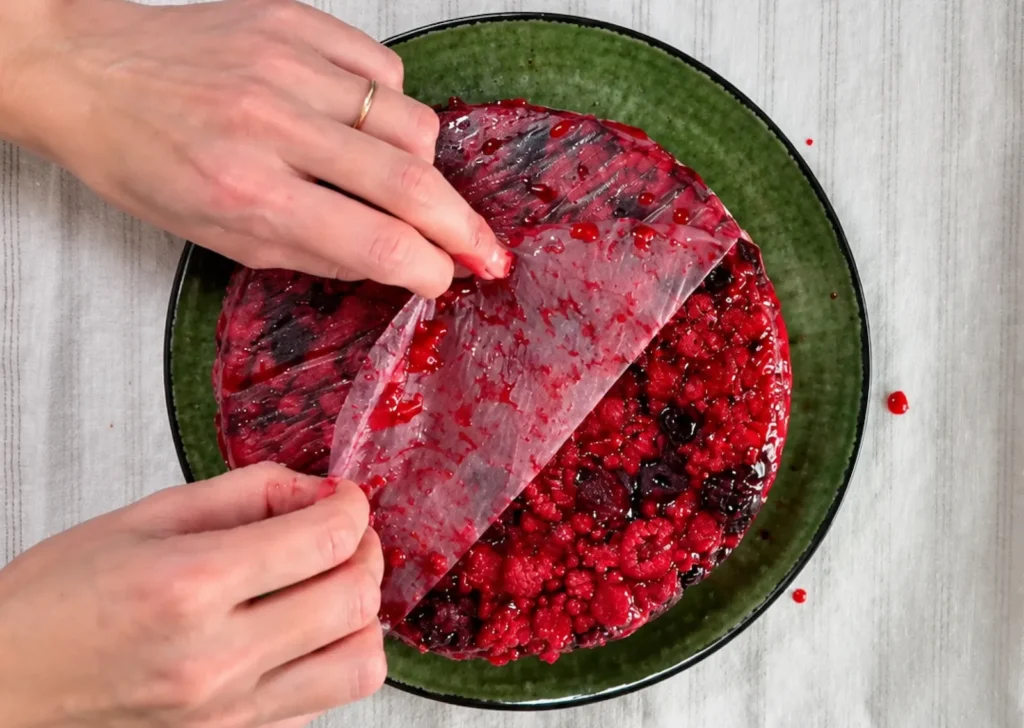
If some fruit sticks to the paper, lift it off with a spoon and put it back in place; nobody will notice. With berries, we like to finish it with a dusting of powdered sugar just before serving ✨
How to Store Sourdough Brioche Upside Down Cake
Keep it covered in the fridge, and it lasts up to 4 days. With the fruit and its juice on top, the fridge is the best place for it.
When you take it out, you can warm your slice briefly in the microwave: the crumb turns soft again and the fruit juicy, just like freshly baked 😋
Sourdough Brioche Upside Down Cake FAQ
Is this the same as a tarte Tatin?
It’s from the same family. A classic tarte Tatin is a caramelized apple tart made with puff pastry or shortcrust, baked with the fruit underneath and turned out upside down. Ours follows the same idea, but with sourdough brioche dough, which is softer and fluffier. That’s why it’s also known as a brioche Tatin.
Can I use commercial yeast instead of sourdough starter?
We haven’t tested it with yeast, so we can’t give you reliable amounts. If you’d like a similar soft dough made with yeast, take a look at our fluffy homemade cinnamon rolls.
Can I use sourdough discard?
No, this cake needs an active starter at its peak. Discard doesn’t have the strength to lift a dough with egg, sugar and butter, and the cake would come out dense.
Do I need to thaw the berries?
No, they go straight from the freezer into the pan. The starch takes care of thickening the juice they release as they bake.
Can I use fresh berries?
We haven’t tried it with fresh ones, but the fruit layer works the same way: 350 g (12 oz) of fruit, the sugar and starch on top and a few drops of lemon. We use frozen because they’re available all year round.
Can I make it with blueberries, cherries or other fruit?
We’ve made it with mixed berries and with apples. We haven’t tried other fruit yet. If you give it a go, use the same amount of fruit in small pieces and the same fruit layer, and let us know in the comments how it turned out.
Which apples are best for the apple upside down cake?
A sweet variety. We use Golden Delicious, peeled and cut into small cubes, but any sweet apple works. The amount is the same as with berries: 350 g (12 oz).
What is the starch for?
To thicken the fruit juice. Without it, the juice stays runny and soaks the crumb; with it, it turns into a glossy, jammy layer that stays on top. Potato starch or cornstarch both work.
Why do I have to flip it while it’s hot?
Because while it’s hot, the caramel and the fruit are still runny and release on their own. If you wait for it to cool, the caramel sets, sticks to the paper and the fruit stays behind in the pan.
How long does the dough take to rise?
In our kitchen, at 22-24 °C (72-75 °F), the first rise takes about 2 hours and the second, 1½ to 2 hours. In a colder kitchen, the first can take up to 4 hours. Go by the dough: in the first rise, it should grow by 50%; in the second, it should look nicely puffed and airy.
Why oil instead of flour for shaping?
Because flour that sticks to the dough changes the texture of the brioche and makes it less tender. With a thin layer of neutral oil on the counter and the parchment, the dough is easy to handle and doesn’t stick.
Can I make it without a stand mixer?
Yes, it works by hand too. The hardest part is working in the butter: add it in small additions and keep kneading, even if the dough seems to tear at first, until it’s smooth and elastic.
What pan do I need?
A 20-22 cm (8-9 in) round pan. We use a springform pan, lined with parchment paper on the bottom and sides so the juice doesn’t leak through the seam, with foil underneath in case it drips.
Can I use panela instead of sugar?
Yes, in the dough we use granulated sugar or panela interchangeably, in the same amount: 60 g (¼ cup + 1 tbsp). Panela is unrefined cane sugar, and in the US you can find it as panela or piloncillo in Latin grocery stores.
How long does it keep, and how do I store it?
Up to 4 days in the fridge, well covered. When you take it out, you can warm your slice briefly in the microwave and the crumb turns soft again.
How many slices does it make?
6 generous slices. It’s a big cake, perfect for sharing at breakfast or as an afternoon treat.
Made This Recipe or Have a Question?
Any questions before you start? Ask us down below and we’ll get back to you. And if you’ve already made it, tell us how it turned out or leave us a rating: it really helps more people find the recipe 😊
Rate this recipe ⭐️