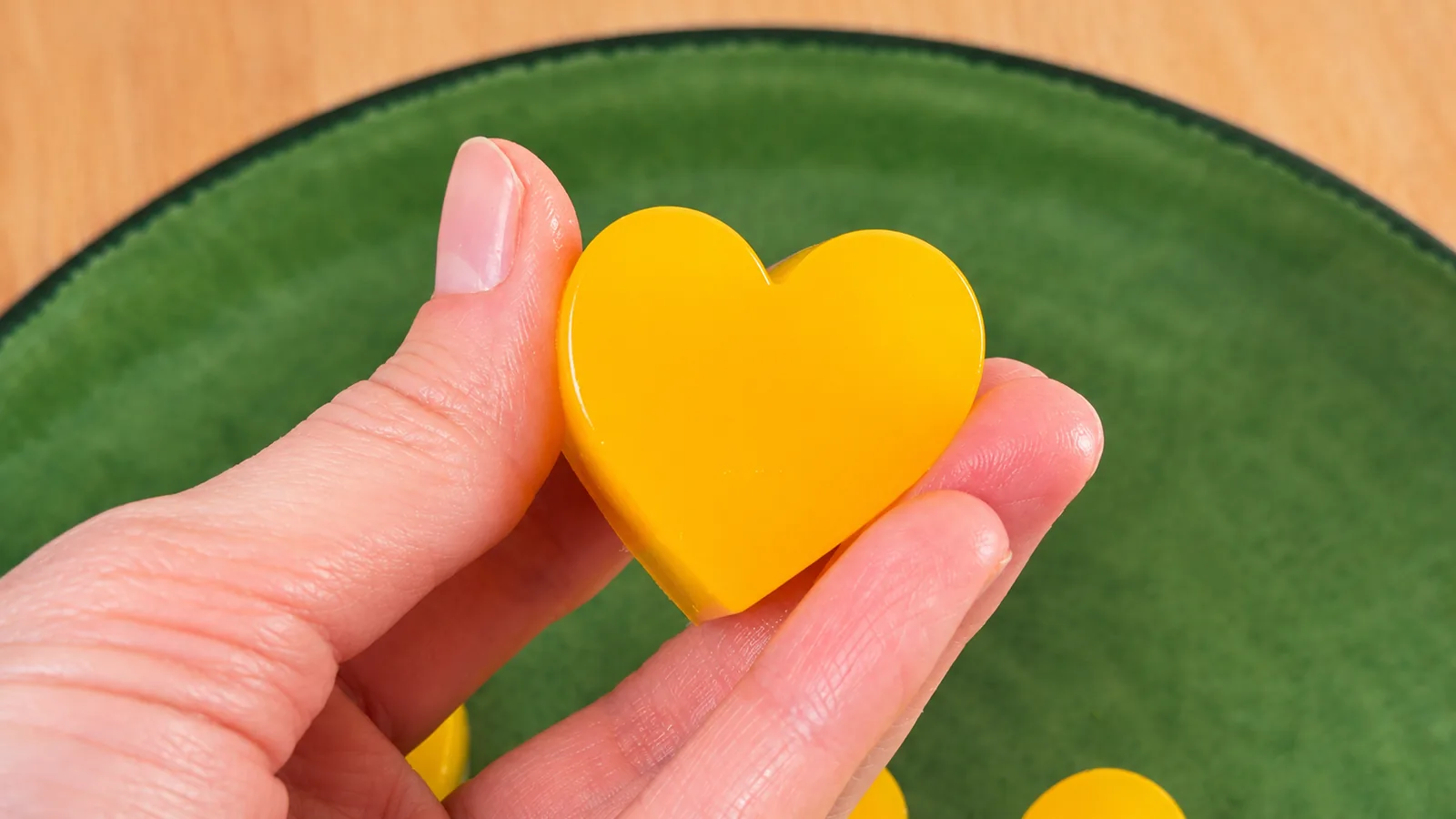
Homemade Mango Gummies with No Added Sugar 🥭
Last January we shared a video of these mango gummies and it took on a life of its own: it’s been watched more than 13 million times on Instagram, Facebook, TikTok and YouTube, and more than 40,000 people have shared it. So here’s the full recipe, with exact amounts and answers to everything you’ve asked us in the comments.
They’re made with just 3 ingredients: ripe mango, unflavored gelatin and water. Soft, bouncy, full of mango flavor and with no added sugar. They take 10 minutes to make, and the fridge does the rest 🥭
At home we make them two ways: strained and glossy when they’re for a party, and unstrained, with all the pulp, for a relaxed afternoon snack with the kids.
How We Make Them at Home, Step by Step

Homemade Mango Gummies
Equipment
- Silicone mold Hearts or any shape
- Pitcher with a spout For filling the molds
- Fine mesh strainer Optional
- Blender Optional
Ingredients
- 200 g mango puree 7 oz; from 1 medium ripe mango
- 100 ml cold water scant ½ cup
- 15 g unflavored powdered gelatin 1 tbsp + 2 tsp; about 2 Knox envelopes
- 170 ml very hot water scant ¾ cup; not boiling
- 1-2 tsp lime or lemon juice optional
Instructions
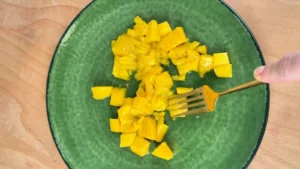
- Make the puree. Peel the mango, dice it and mash it with a fork or blend it. Weigh out 200 g (7 oz) of puree.
- Strain it for smooth, glossy gummies. Optional, but worth it: press the puree through a fine mesh strainer with the back of a spoon. It's the trick behind the almost translucent gummies in our video.
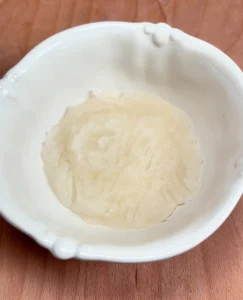
- Bloom the gelatin. Pour the 100 ml (scant ½ cup) of cold water into a bowl and sprinkle the 15 g of gelatin evenly over the surface. Stir for 10-15 seconds and let it sit for 5 minutes.
- Dissolve it with very hot water. Heat the 170 ml (scant ¾ cup) of water without letting it boil and pour it over the bloomed gelatin. Stir until it's liquid and clear; if any lumps remain, warm it over low heat for a few seconds.
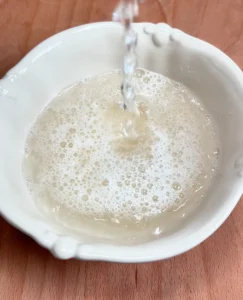
- Combine the puree and the gelatin. Little by little, stirring gently so you don't add air bubbles.
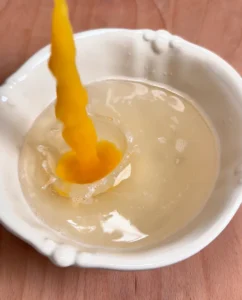
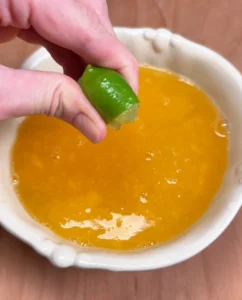
- Add lime or lemon juice, if you like. 1-2 teaspoons brighten the mango flavor.
- Fill the molds. The mixture is quite runny, so pour it into a pitcher or a cup with a spout to aim into each cavity without spilling.
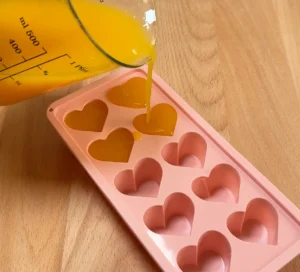
- Chill until set. At least 3 hours in the fridge, and a little longer in bigger molds.
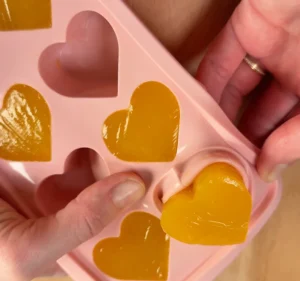
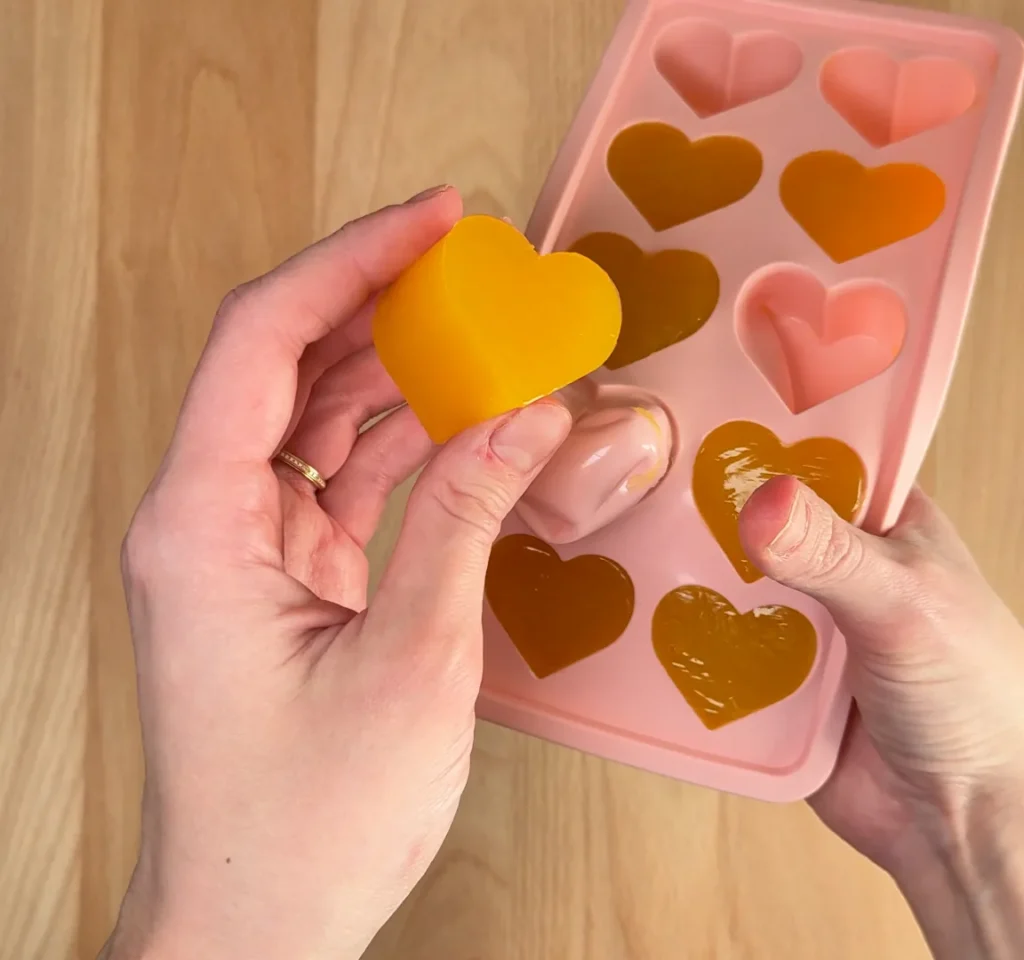
- Unmold. Push them out from the back of the mold. If they resist, put the mold in the freezer for 10-15 minutes right before unmolding.
Notes
- To strain or not? For a party or a celebration, we strain the puree: the gummies come out smooth and glossy. For an afternoon snack at home with the kids, we don’t bother.
- Bigger molds: with our heart mold, they need at least 3 hours in the fridge. If your molds are bigger or deeper, give them a little longer.
- Storage: in the fridge, in an airtight container, for up to 3 days. Don’t freeze them: they release water as they thaw and lose their texture.
- Another fruit? The base formula and 7 tested flavors are in our homemade gummies with real fruit.
Any questions about the recipe? Ask us in the comments and we’ll get back to you. And if you make it, tell us how it turned out, we love hearing from you! 🤗
The Mold and Gelatin We Use
For the hearts we use this silicone heart mold. It’s flexible, so the gummies pop out whole and glossy, and with a spouted pitcher you fill it in no time. Any silicone mold works: other shapes or sizes just change how many you get and how long they need in the fridge.
For the gelatin, buy plain unflavored powdered gelatin. Ours is beef gelatin, like this one on Amazon. In US supermarkets, Knox is the standard: this recipe takes about 2 envelopes.
One thing to watch out for: collagen peptides are not gelatin. They come from the same protein, but they’re broken into pieces too short to set, so your gummies stay liquid. Check the label: it has to say gelatin.
These are affiliate links: if you buy through them, we earn a small commission at no extra cost to you. It helps us keep our recipes free 🤗
The Optional Step That Makes All the Difference: Straining the Puree
Straining the puree is optional, but it’s the trick behind the gummies in our video: smooth, glossy and almost translucent. Press the puree through a fine mesh strainer with the back of a spoon. The mango fibers stay in the strainer and what comes out is as smooth as velvet.
Our rule of thumb: if they’re for a party or a celebration, we strain it, because they look so much prettier. If they’re for a fun afternoon snack at home with the kids, we keep it simple and skip it: they keep all the pulp, look more rustic and taste just as good.
How to Choose Your Mango
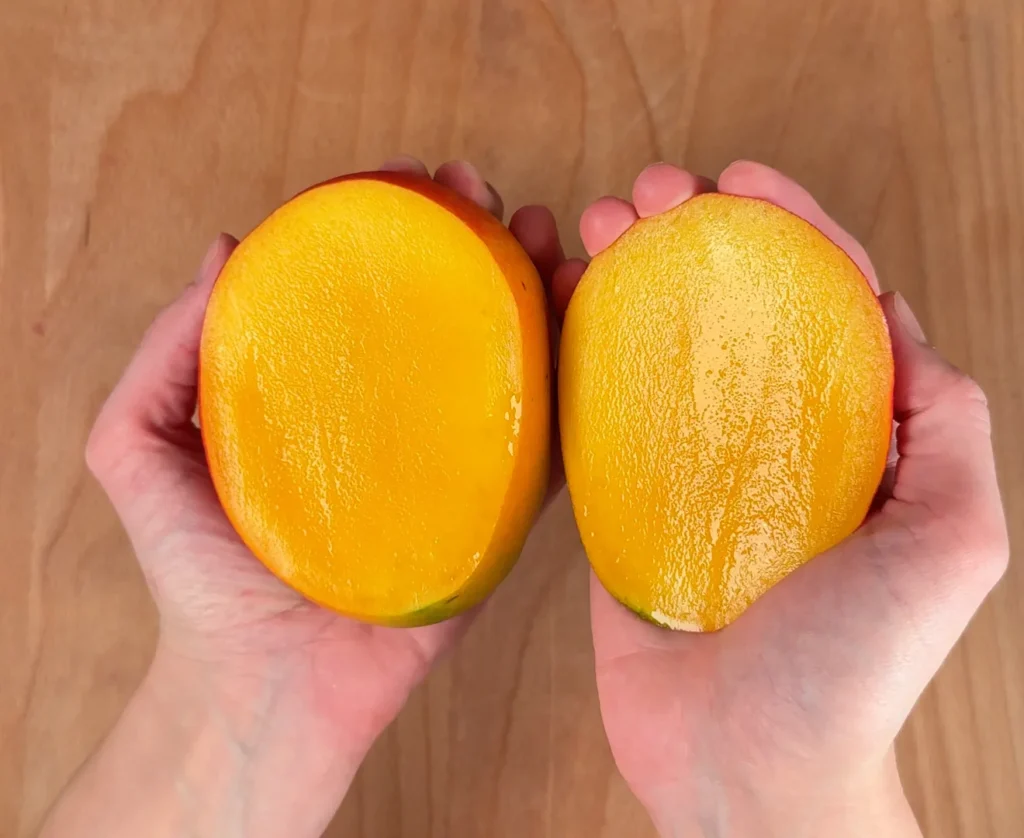
One medium mango gives you the 200 g (7 oz) of puree you need. What matters is that it’s really ripe: it should give a little when you press it with your fingers and smell like mango near the stem. Since there’s no added sugar, the mango does all the work: the riper it is, the sweeter and more intense your gummies will be.
Always weigh the puree, not the whole mango: the pit and the skin are heavy and vary a lot from one mango to another.
Why There’s Water in It (and How Much Gelatin)
Mango puree is very thick. The water makes the mixture runny enough to fill the molds properly, and it’s what gives you a soft, bouncy gummy instead of a dense fruit paste.
In total there are 470 g of liquid (200 g of puree and 270 ml of water) for 15 g of gelatin, about 3 %. That’s the soft end of the base formula in our homemade gummies with real fruit, where we explain how to work out the gelatin if you like them firmer.
Mango Gummies, Mango Jello or Jelly Sweets?
In the US these are gummies, in the UK they’re jelly sweets and in Australia, lollies. Mango jello is a close cousin: it’s made with the same kind of ingredients, but it’s softer, set in cups and eaten with a spoon. These hold their shape, so you can pick them up and pop them in a lunchbox.
How Long They Keep and How to Store Them
- In the fridge, in an airtight container, they keep well for up to 3 days.
- Out of the fridge they hold up for 2-3 hours, plenty for a school lunchbox or an afternoon at the park. In hot weather, pack them with an ice pack.
- Don’t freeze them: as they thaw, the gelatin releases water and they lose their texture.
More Gummies (and Other Recipes) with Fruit
If you liked these, our homemade gummies with real fruit have the base formula and 7 tested flavors. Our watermelon gummies are the most refreshing of the summer, and whipping the same fruit and gelatin pair gives you our apple marshmallows ☁️
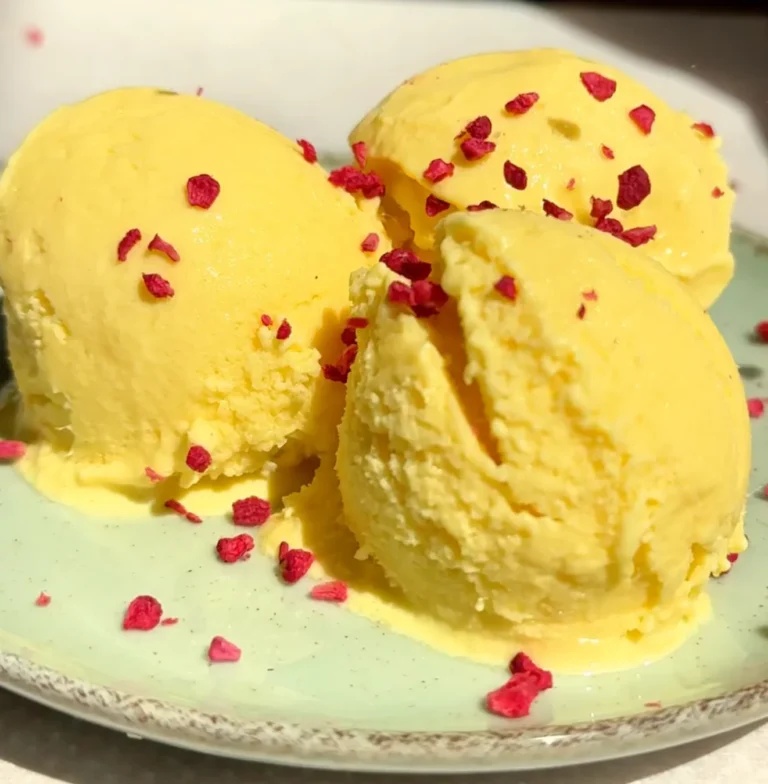
More mango ideas? Our mango ice cream with Greek yogurt is creamy and needs no ice cream maker 🥭
Frequently Asked Questions About Mango Gummies
How many mangoes do I need?
One medium mango. You need 200 g (7 oz) of puree, so peel, mash and weigh it. It’s better to weigh the puree than the whole mango, because the pit and the skin vary a lot from one mango to another.
Do I need to cook the mango?
No. Ripe mango is just mashed or blended; the only thing you heat is the water for the gelatin. Boiling the puree is only needed with fruits like kiwi, pineapple or papaya, whose enzymes stop gelatin from setting. We explain it in our homemade gummies with real fruit.
What gelatin should I use? Can I use flavored Jell-O?
Plain unflavored powdered gelatin. In US supermarkets, Knox is the standard, and beef gelatin works exactly the same. Flavored Jell-O won’t work for this recipe: it has sugar and its own flavor, and it would cover up the mango. And make sure it says gelatin, not collagen peptides, which don’t set.
Does lime or lemon juice stop the gelatin from setting?
Not in this amount (1-2 teaspoons). What stops gelatin from setting is the enzymes in some raw fruits, like kiwi or pineapple. The lime is there to bring out the mango flavor.
Do I have to add the lime?
No, it’s optional. It adds a fresh touch and balances the sweetness of the mango, but they turn out just as well without it.
How long do they last? Can they stay at room temperature?
Up to 3 days in the fridge, in an airtight container. Out of the fridge they hold up for 2-3 hours, enough for a school lunchbox or a snack on the go. Since they’re made with fresh fruit, they don’t keep in the pantry like store-bought gummies.
Can I freeze them?
We don’t recommend it: as they thaw, the gelatin releases water and they lose their texture. We only use the freezer for 10-15 minutes before unmolding, if they won’t come out of the mold.
Why didn’t mine set?
Usually it’s one of three things: more liquid than the recipe says (weigh the puree and measure the water), the water with the gelatin came to a boil, or your mold is bigger than ours and needed more time in the fridge.
Is this the same as mango jello?
Not quite. Mango jello is softer, set in cups and eaten with a spoon. These gummies hold their shape, so you can pick them up and take them with you.
Can I use agar-agar instead of gelatin?
This recipe is designed for gelatin. Agar-agar works differently: it has to be boiled to set and gives a firmer, more brittle texture, so it isn’t a gram-for-gram swap. If you’re looking for a plant-based version, the one we’ve tested uses cornstarch, in our homemade gummies with real fruit.
Are they safe for young children?
They’re just mango, gelatin and water, so generally yes, adjusting the size and texture to their age to avoid choking. For babies, check with your pediatrician, as with any new food.
Made This Recipe or Have a Question?
Any questions before you start? Ask us down below and we’ll get back to you. And if you’ve already made it, tell us how it turned out or leave us a rating: it really helps more people find the recipe 😊
Rate this recipe ⭐️