Black Sesame Cinnamon Rolls, Gray Inside and Super Soft 🖤
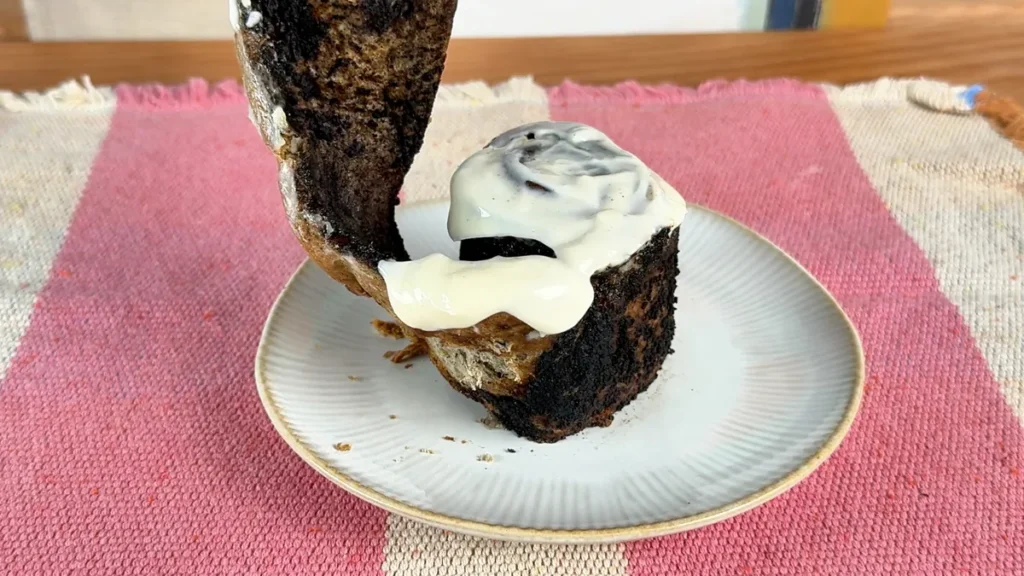
Cinnamon rolls are our favorite breakfast, and since we started making them in different flavors, we haven’t stopped 🤗 After the pumpkin ones, it was time for something bolder: black sesame cinnamon rolls, with black tahini in both the dough and the filling. They come out gray inside, with almost-black swirls and a toasty flavor that’s amazing with cinnamon.
These are tahini cinnamon rolls where the dough is half butter and half tahini. We’ve also made them with tahini only, and they’re really good, but they don’t rise as much: with the mix you get the sesame flavor and a tall, soft crumb. And on top, a cream cheese frosting that looks beautiful, white against the gray dough 🤍
We’ll also share two tricks we’ve learned from making so many cinnamon rolls, and they work for any recipe: how to spread the filling without fighting the dough and why we cut the strips before rolling. And since the dough is gray, also how to tell when they’re done without trusting the color.
How We Make Them at Home, Step by Step
Black Sesame Cinnamon Rolls
Equipment
- 22 cm (9 in) round cake pan Or a 20 x 30 cm (8 x 12 in) rectangular pan
- Kitchen thermometer Highly recommended: 92 °C (198 °F) in the center
- Stand mixer Optional, you can knead by hand
- Rolling Pin
- Pizza Cutter Or a sharp knife
Ingredients
Dough
- 500 g bread flour 4 cups
- 235 g milk 1 scant cup; at room temperature
- 1 egg large in the US, medium in Europe; about 50 g out of the shell, at room temperature
- 80 g granulated sugar ⅓ cup + 1 tbsp
- 7 g fine salt 1¼ tsp
- 5 g instant yeast 1½ tsp; or 7 g (2¼ tsp, 1 packet) active dry yeast, or 16 g (½ oz) fresh cake yeast
- 4 g vanilla extract 1 scant tsp; optional
- 40 g black tahini scant 3 tbsp; well stirred
- 40 g unsalted butter scant 3 tbsp; soft, at room temperature
- 10 g milk 2 tsp; held back, only if the dough feels stiff
Filling
- 90 g black tahini 6 tbsp; well stirred
- 12 g ground cinnamon 1 tbsp + 2 tsp
- 1 g fine salt a generous pinch
- 130 g brown sugar ½ cup + 2 tbsp; packed
For baking
- 30 g heavy cream 2 tbsp; optional
Frosting
- 100 g cream cheese 3½ oz; full-fat, cold from the fridge
- 50 g powdered sugar ⅓ cup + 1 tbsp; sifted
- 4 g vanilla extract 1 scant tsp; optional
- 10 g milk or heavy cream 2 tsp; optional, only for a runnier frosting
Instructions
Before You Start
- Take the ingredients out of the fridge. The egg, the milk and the 40 g of butter for the dough, at least 1 hour ahead. The cream cheese for the frosting stays in the fridge until the end.
- Stir the tahini really well. Until the oil and the paste are fully combined, before you weigh it. You need 130 g: 40 g for the dough and 90 g for the filling.
The Dough
- Prepare the liquids. In a bowl, the 235 g of milk, the egg, the 80 g of sugar and the 4 g of vanilla. With instant yeast: just whisk them together; the yeast goes in with the flour. With active dry yeast: warm the milk first to 35-40 °C (95-105 °F), dissolve the 7 g of yeast in it and wait 10 minutes until foamy before adding the rest. With fresh yeast: crumble the 16 g over the top and whisk until there are no lumps.
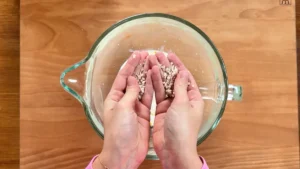
- Add the flour and salt. The 500 g of flour and the 7 g of salt (with instant yeast, mix the 5 g into the flour first). Mix with a spatula and then by hand, or with the dough hook on low speed, just until there's no dry flour left.
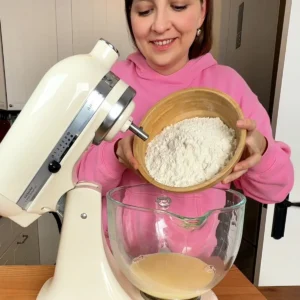
- Let it rest for 20 minutes. With the bowl covered.
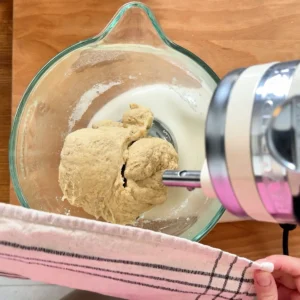
- Mix the tahini with the butter. The 40 g of tahini and the 40 g of soft butter, into a smooth paste.
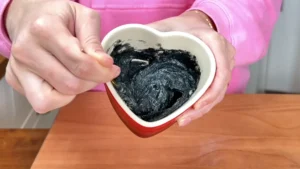
- Work in the paste in three additions. Without adding the next one until the previous one has disappeared. With a stand mixer: dough hook on low, about 3 minutes per addition and 3 more minutes at the end. By hand: about 15 minutes in total, pushing with the heel of your hand, folding and turning. At first the dough tears and slides around: that's normal, it comes back together.
- Adjust the dough if needed. If it feels stiff, add the held-back milk 5 g at a time, up to 10 g. If it gets very soft or greasy, chill it for 10 minutes and carry on.
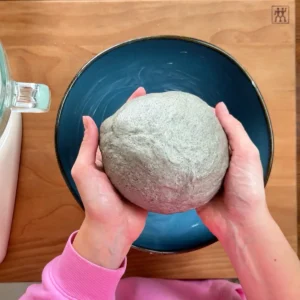
- Knead until smooth and elastic. It's ready when it pulls away from the counter almost by itself.
First Rise
- Let it grow by 80%. In a lightly greased, covered bowl. At about 25 °C (77 °F), around 1 hour 30 minutes; at 18 °C (64 °F), 3 hours or more. With tahini it can be a little slower: go by volume. It can also rise in the fridge for up to 12 hours: when you take it out, if it hasn't reached 80%, wait until it does.
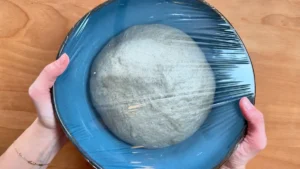
- Chill it for 1 hour. Optional, but cold dough rolls out much better. If it rose in the fridge, skip this step.
Shaping
- Make the filling. Mix the 90 g of tahini with the 12 g of cinnamon and 1 g of salt into a paste. Keep the 130 g of brown sugar to one side.
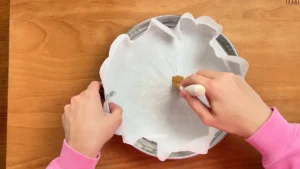
- Prepare the pan. Line it with parchment paper and grease it.
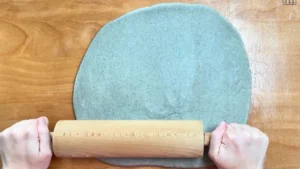
- Roll out the dough. On a counter with a very thin layer of oil, into a rectangle about 30 x 50 cm (12 x 20 in) and ½ cm (¼ in) thick.
- Spread the tahini paste. In a thin, even layer over the whole surface, leaving about 2 cm (¾ in) bare along one of the short sides: that's where the spirals will end.
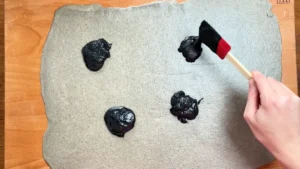
- Sprinkle the sugar on top. The 130 g, over the tahini, keeping the bare border clear.
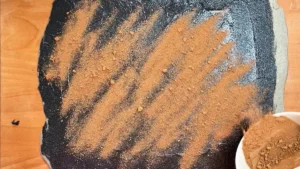
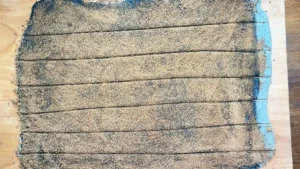
- Mark and cut the strips. With a pizza cutter or a sharp knife, along the 50 cm (20 in) side: 6 strips about 5 cm (2 in) wide for a rectangular pan, or 7 slightly narrower ones for a round pan.
- Roll up each strip and place it in the pan. Into a spiral, starting from the filled end, and press the end to seal it. Leave 1 cm (⅜ in) between them; in the round pan, one in the center and six around it.
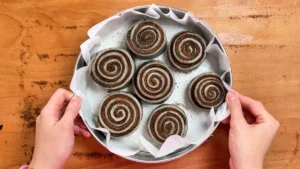
Second Rise and Baking
- Let them rise for 1-2 hours. Covered, until a light press with a finger leaves a dent that doesn't fully spring back. You can also leave them in the fridge overnight and let them finish rising at room temperature in the morning.
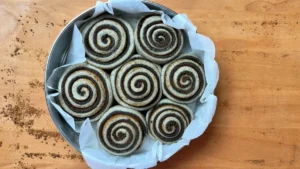
- Preheat the oven. When they're almost ready, to 180 °C (350 °F), conventional bake with top and bottom heat, not convection.
- Pour the cream over them. The 30 g over the top of the rolls. It's optional.
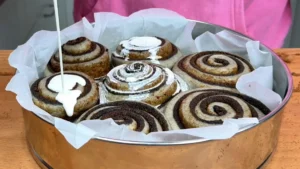
- Bake for about 35 minutes. On the lower-middle rack. Go by the thermometer, not the color: 92 °C (198 °F) in the center roll, because the dough is gray and you can't see when it's done. If they get too dark on top, cover them loosely with foil halfway through.
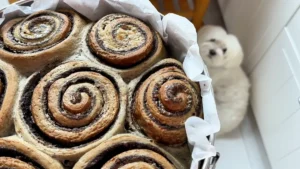
Frosting
- Sift the powdered sugar. The 50 g, into a small bowl.
- Smooth the cream cheese. The 100 g, straight from the fridge, in another bowl: stir it with a spatula or a small whisk for 20-30 seconds, just until smooth.
- Add the sugar in two parts. First 25 g and then the other 25 g, mixing only until it's combined: if you overbeat it, it turns runny. With a mixer, on low speed and only for a few seconds.
- Add the vanilla. The 4 g, with a couple of stirs.
- Adjust the texture, if you like. For a runnier frosting, add milk or cream 5 g at a time, up to 10 g.
- Keep it in the fridge. Until you're ready to use it.
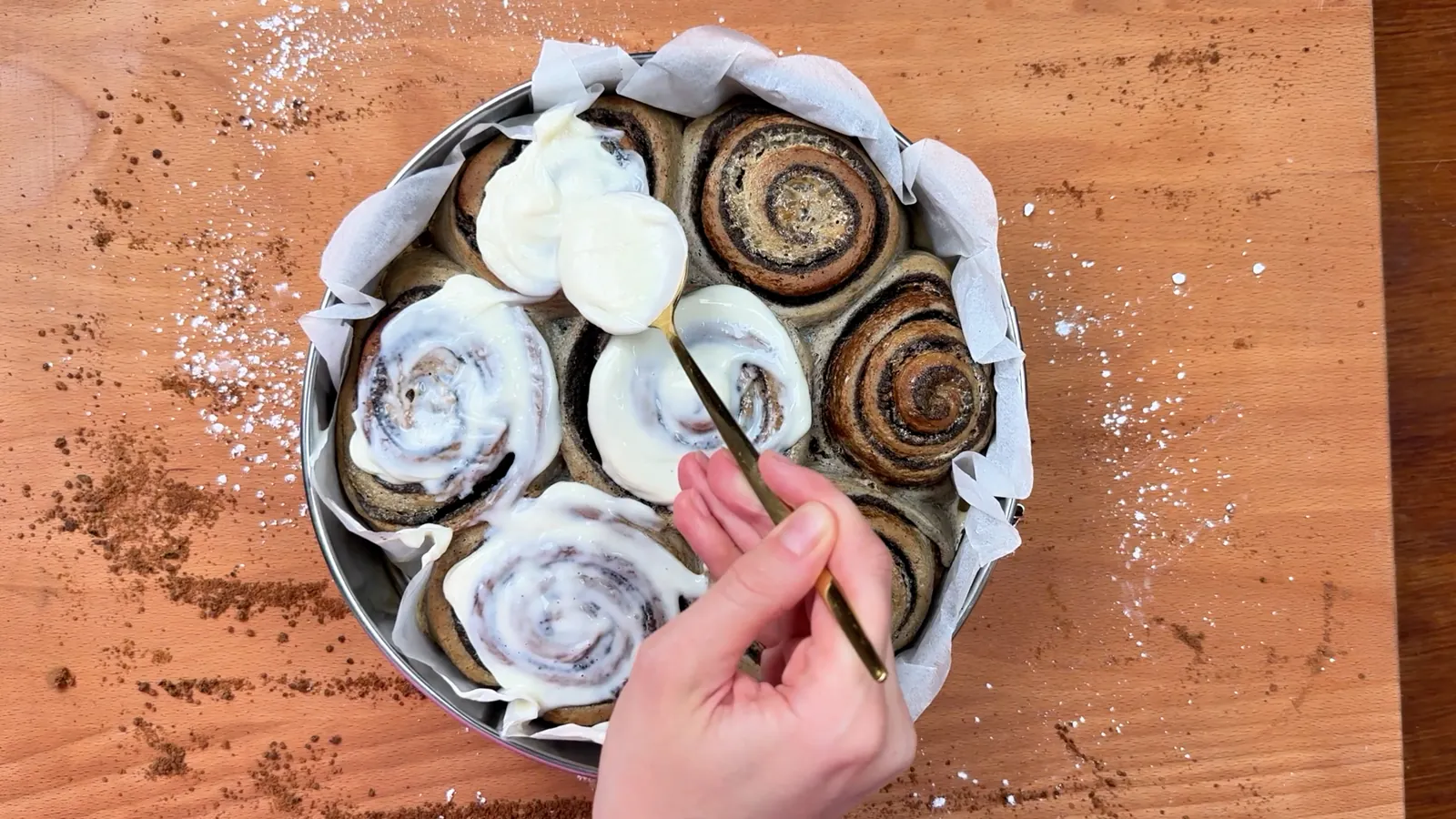
- Frost the slightly cooled rolls. Wait about 10 minutes after taking them out of the oven and spread the frosting over the top.
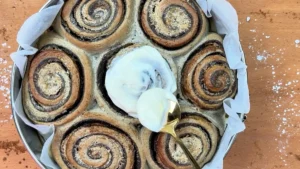
Notes
- Stir the tahini really well before weighing it: the oil rises to the top, and if you only take from one part, the dough changes.
- The filling goes on in two steps: first the tahini paste with the cinnamon and salt, then the sugar on top. That way it spreads without tearing the dough. We explain it in the filling: tahini first, sugar second.
- Yeast: 5 g (1½ tsp) of instant, 7 g (2¼ tsp, 1 packet) of active dry or 16 g (½ oz) of fresh cake yeast. Instant goes straight in with the flour. Active dry is dissolved first in the warm milk (35-40 °C / 95-105 °F) and left for 10 minutes.
- Tahini-only version: 80 g of black tahini in the dough instead of 40 g of tahini and 40 g of butter. It rises less.
- Rising times are at about 25 °C (77 °F). With tahini the dough can be a little slower: go by volume.
- For the frosting, use the cream cheese cold and mix it just until combined: if you overbeat it, it turns runny.
- They keep for 3 days in the fridge, well covered. To serve, 40 seconds in the microwave at 50% power.
- For the vanilla, you can use our homemade vanilla extract.
Any questions about the recipe? Ask us in the comments and we’ll get back to you. And if you make it, tell us how it turned out, we love hearing from you! 🤗
What We Knead the Dough With: By Hand or Stand Mixer
The hardest part of this recipe is working in the tahini and butter paste. By hand, that’s about 15 minutes of kneading a dough that tears and slides around at first, until it comes back together. It can be done and turns out just as well, but it takes patience and a bit of arm work 💪
We make it in our KitchenAid stand mixer, and it’s a whole different story: with the dough hook on low, it works in the paste one addition at a time while your hands are free to weigh the filling or tidy up the kitchen 🙌
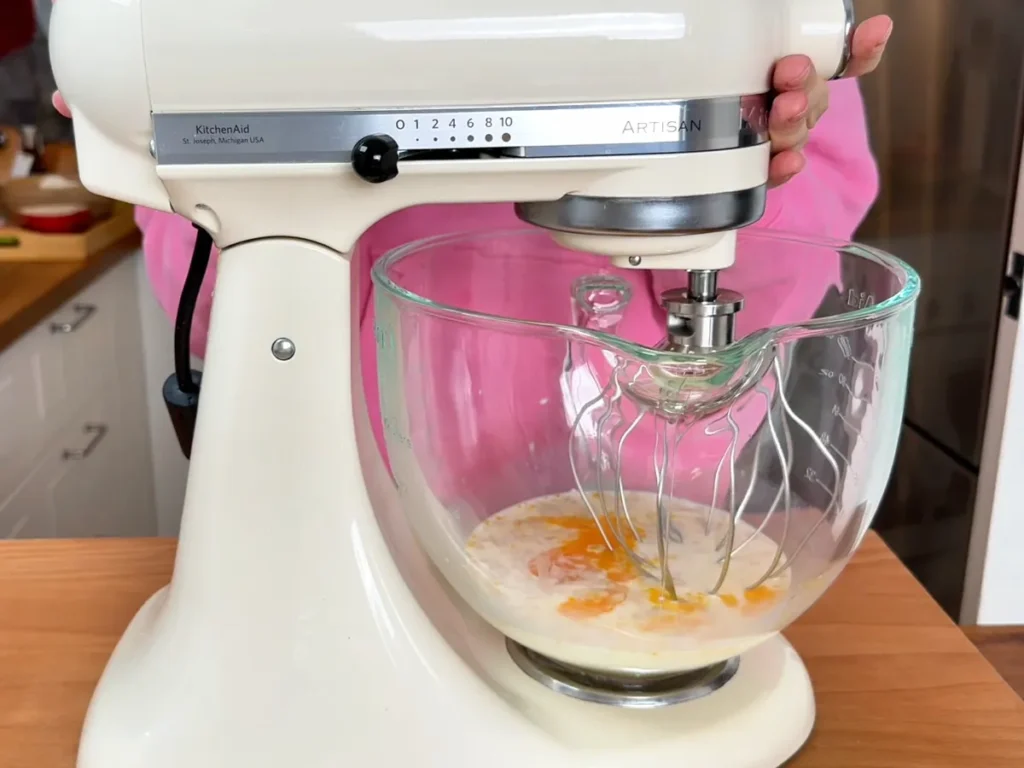
Affiliate link: if you buy the stand mixer through this link, Amazon pays us a small commission and it costs you the same 🤗
That said, buying one just for cinnamon rolls would be overkill. It makes sense for us because it’s the appliance we use most in our kitchen:
- For kneading bread and soft doughs: sourdough bread, Japanese milk bread, brioche tart with berries or apple, cinnamon rolls, bagels.
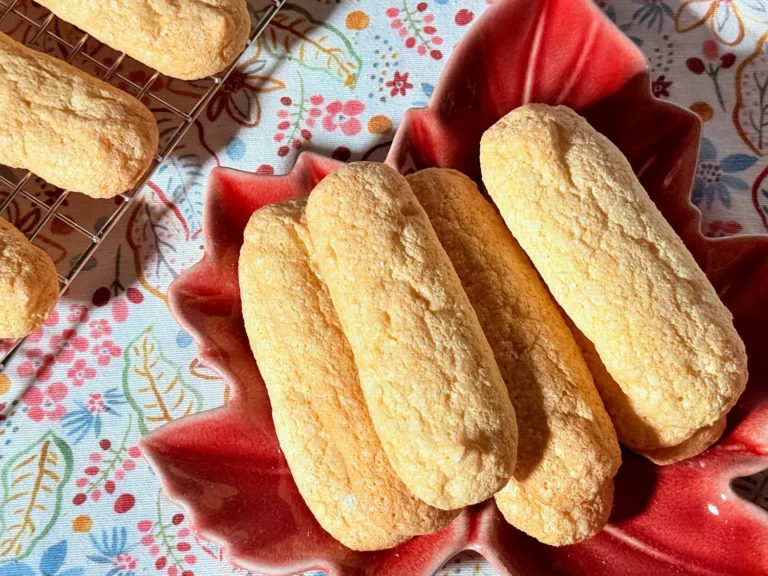
- For whipping eggs, egg whites and cream: pancakes without baking powder, homemade ladyfingers, no-bake pumpkin cheesecake, pumpkin sweet potato cake.
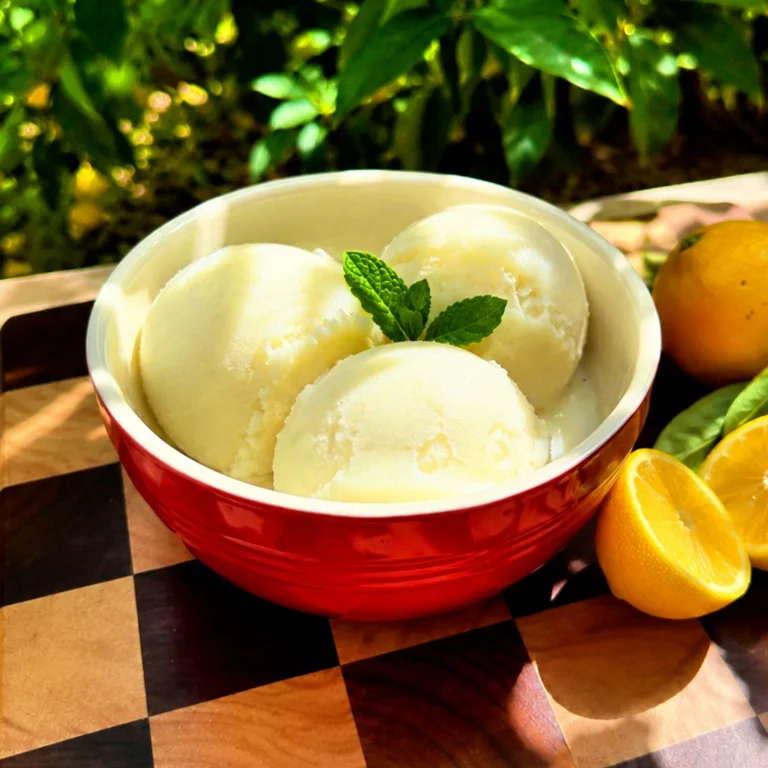
- For ice cream and marshmallows: apple marshmallows, honey marshmallows, no-churn chocolate ice cream, no-churn lemon ice cream.
Why Half Butter and Half Black Tahini
The first time, we made them with no butter at all in the dough, using 80 g of black tahini. They were really good, with more sesame flavor, but they rose a lot less. Tahini is ground sesame: besides fat, it has the solid part of the seed, which makes the dough heavier and slower to rise.
With 40 g of each, the dough gets the color and flavor of black sesame, and the butter gives it the tall, fluffy crumb of classic cinnamon rolls. That’s why it’s the version we recommend. If you’d like to try the tahini-only one, you’ll find it in the variations.
Black Tahini, Well Stirred
Black tahini is a paste of toasted, ground black sesame seeds, and it’s what gives the whole recipe its gray color. We use this black tahini (affiliate link). You need 130 g (about 9 tbsp) in total: 40 g for the dough and 90 g for the filling.
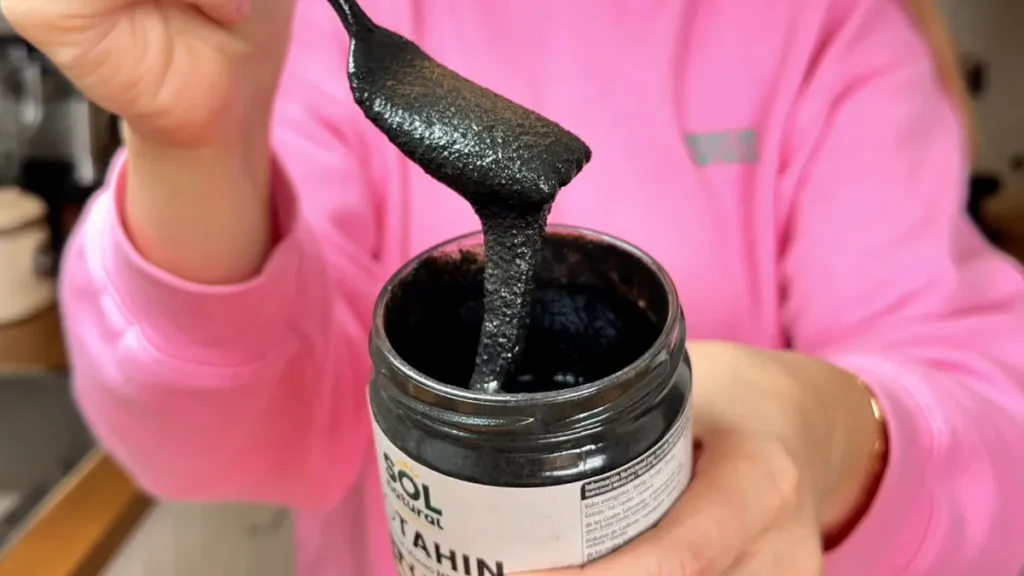
Before weighing it, stir it really well. In the jar, the oil rises to the top and the paste settles at the bottom, and if you only take from one part, the dough changes: with the oil from the top it turns softer and greasier, and with the paste from the bottom, drier. Stir until it’s smooth and the same color from top to bottom.
Which Yeast to Use
We use fresh yeast, but the recipe turns out the same with dry yeast. In the recipe card we list instant yeast first, because fresh yeast (cake yeast) is hard to find in most US supermarkets. What changes is the amount and how you add it. Just make sure it’s baker’s yeast, not baking powder.
| Yeast | Amount | How to add it in this recipe |
|---|---|---|
| Instant | 5 g (1½ tsp) | Straight in with the flour, no proofing |
| Active dry | 7 g (2¼ tsp, 1 packet) | Dissolved in the milk warmed to 35-40 °C (95-105 °F). Wait 10 minutes until foamy, then add the egg and sugar |
| Fresh (cake yeast) | 16 g (½ oz) | Crumbled over the milk with the egg and sugar, then whisked until there are no lumps |
With tahini, the dough can rise a little more slowly than regular cinnamon rolls, whichever yeast you use. Don’t worry: go by volume, not by the clock. We explain the three types of yeast in more detail in our fluffy homemade cinnamon rolls.
Tips for Soft, Fluffy Black Sesame Cinnamon Rolls
Add the Tahini Butter After the Rest
First we mix everything except the fat, let the dough rest for 20 minutes, and only then add the tahini and butter. That way the gluten starts forming before the fat arrives and gets in its way. Before adding them, we mix them together into a smooth paste: they go in at the same time and the dough turns evenly gray, with no streaks.
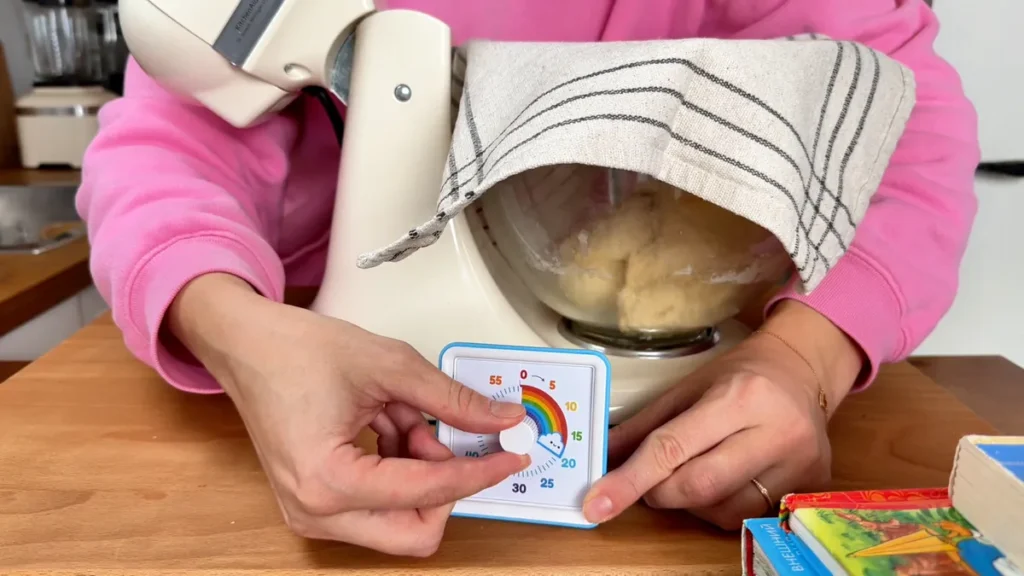
The paste goes in three additions, without adding the next one until the previous one has disappeared. At first it looks like the dough won’t take it: it tears and slides around. That’s normal. Keep kneading and in a couple of minutes it comes back together. If it gets very soft or greasy, put it in the fridge for 10 minutes and carry on. And if it feels stiff at the end, add the held-back milk 5 g at a time, up to 10 g (2 tsp) at most.
Chill the Dough Before Shaping
After the first rise, the dough goes into the fridge for 1 hour. It’s optional, but it makes a big difference: cold, it rolls out better, doesn’t stick, and the rectangle comes out more even, and with it, more even rolls. If you let it rise in the fridge, it’s already cold and you can skip this step.
A Splash of Cream Before Baking
Right before they go into the oven, we pour 30 g (2 tbsp) of heavy cream over the rolls. It’s optional too, but the cream soaks into the surface, runs down between the rolls and leaves them softer and more tender on the bottom.
The Filling: Tahini First, Sugar Second
We learned this from making cinnamon rolls over and over, and it works for any recipe, not just this one 💡 Most recipes mix the sugar with the fat and spices and spread it all on together. The problem is that the sugar turns the mixture into a thick, gritty paste: it’s really hard to spread, it drags the dough, sometimes tears it, and the layer never comes out even.
We do it in two steps:
- First, the fat with the spices. We mix the tahini with the cinnamon and salt into a paste and spread it in a thin layer over the whole dough. Without the sugar, it spreads in no time. In other cinnamon roll recipes, do the same with soft butter.
- Then, the sugar on top. We sprinkle it over the tahini layer, where it sticks and doesn’t move when you roll.
This way the dough doesn’t suffer, the cinnamon is spread evenly with no dry patches, and every turn of the spiral gets the same amount of filling.
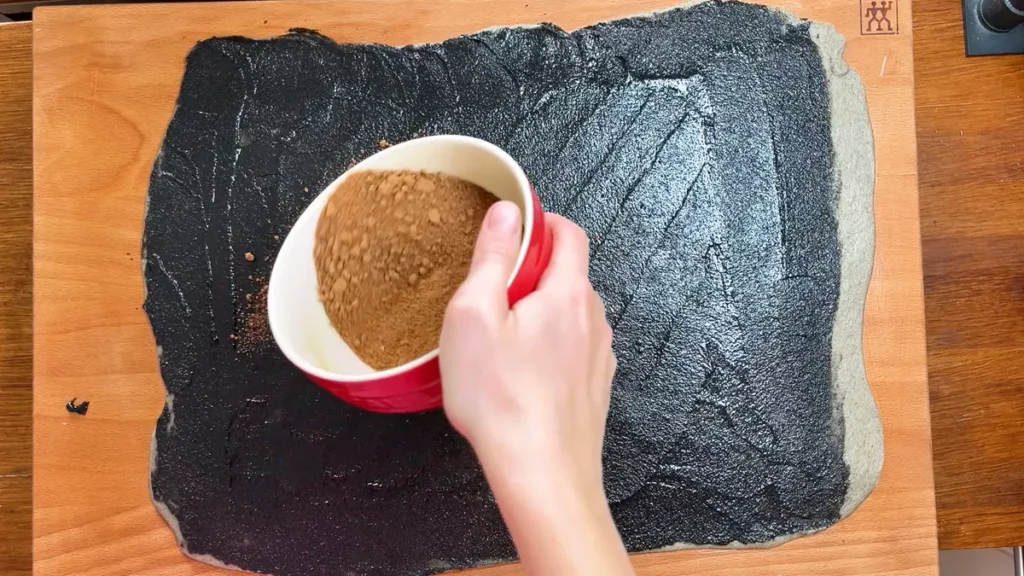
One more detail: leave about 2 cm (¾ in) without filling along one of the short sides of the rectangle. That’s where the spirals will end, and without filling the end sticks well and doesn’t open up in the oven.
Cut the Strips First, Then Roll
Many recipes roll all the dough into one long log and then slice it with thread or a knife. We do it the other way around: with the dough rolled out and the filling on, we mark and cut the strips with a pizza cutter or a sharp knife, and then roll up each strip on its own.
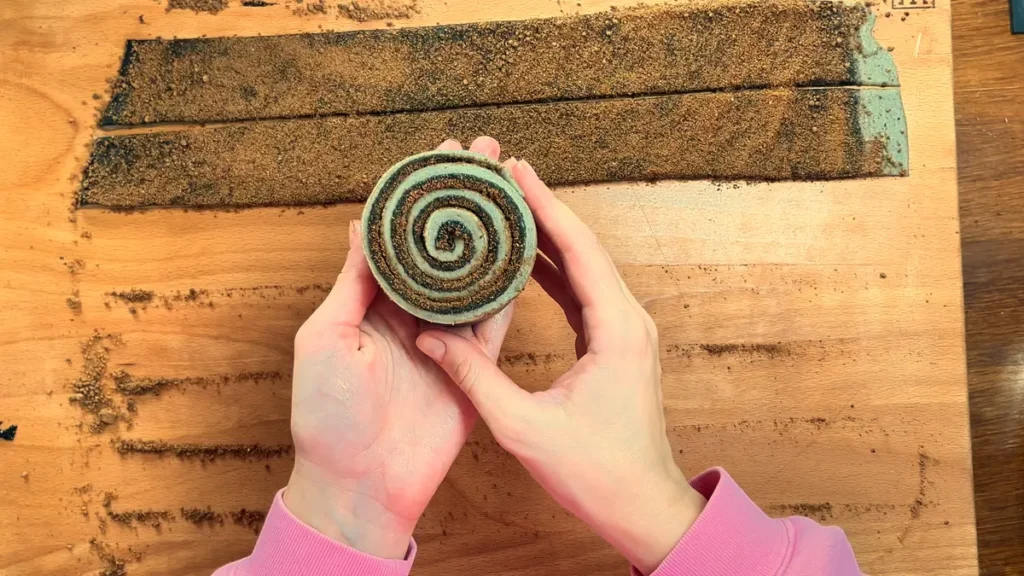
We find it easier, and they turn out better:
- All the rolls come out the same size, because you mark the strips before cutting. With a log, the end slices almost always come out smaller.
- They don’t get squashed. When you slice a log of soft dough, the slices flatten and the spirals turn oval. Rolling each strip keeps them round.
- It’s easier. Rolling up a short strip is much simpler than a 50 cm (20 in) log of soft dough, and the filling doesn’t squeeze out the sides.
Start rolling from the filled end and finish at the bare one, pressing a little to seal it. In the pan, leave 1 cm (⅜ in) between them: as they rise, they come together and grow upward, leaning on each other.
Baking: With Gray Dough, Trust the Thermometer
With regular cinnamon rolls, the golden color helps you tell when they’re ready. Not with these: the dough is gray from the start and the color tells you nothing. It’s easy to take them out too soon, raw inside, or to leave them in too long just in case and dry them out.
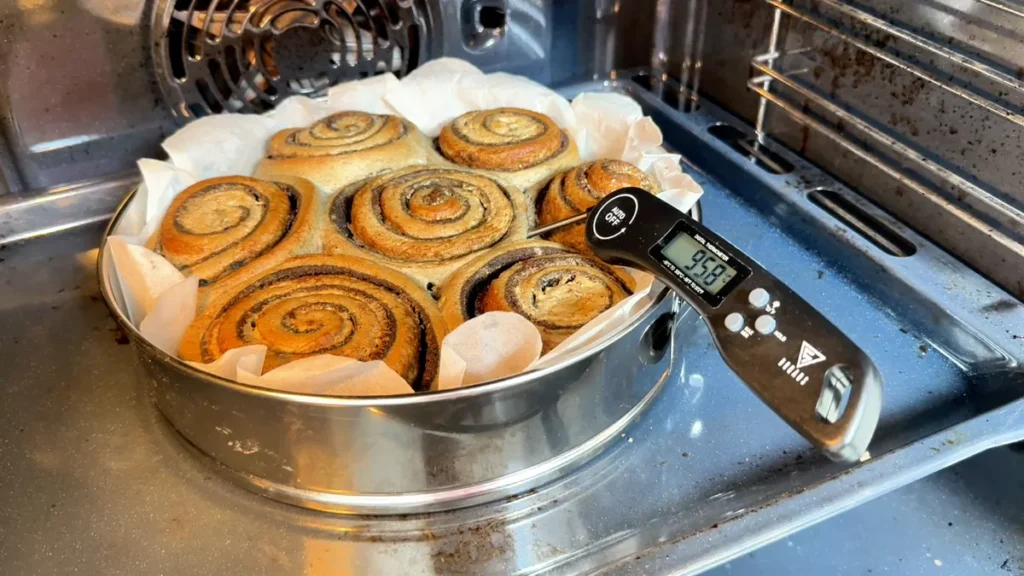
Here’s what works for us:
- At 180 °C (350 °F), conventional bake with top and bottom heat, not convection. The fan dries out the surface faster.
- On the lower-middle rack, so the top stays further from the heating element and the heat reaches the base well.
- With a thermometer, 92 °C (198 °F) in the center. Insert it in the middle roll, which is the last one to bake through. It’s usually around 35 minutes, but the thermometer has the final word.
- If they get too dark on top, cover them with foil halfway through, just resting on top, not sealed.
For this recipe, a thermometer is what makes the biggest difference. We use this kitchen thermometer (affiliate link). If you don’t have one, gently pull apart two rolls in the center with a fork: the dough inside shouldn’t look wet or sticky.
The Frosting: Cold Cream Cheese, Don’t Overmix
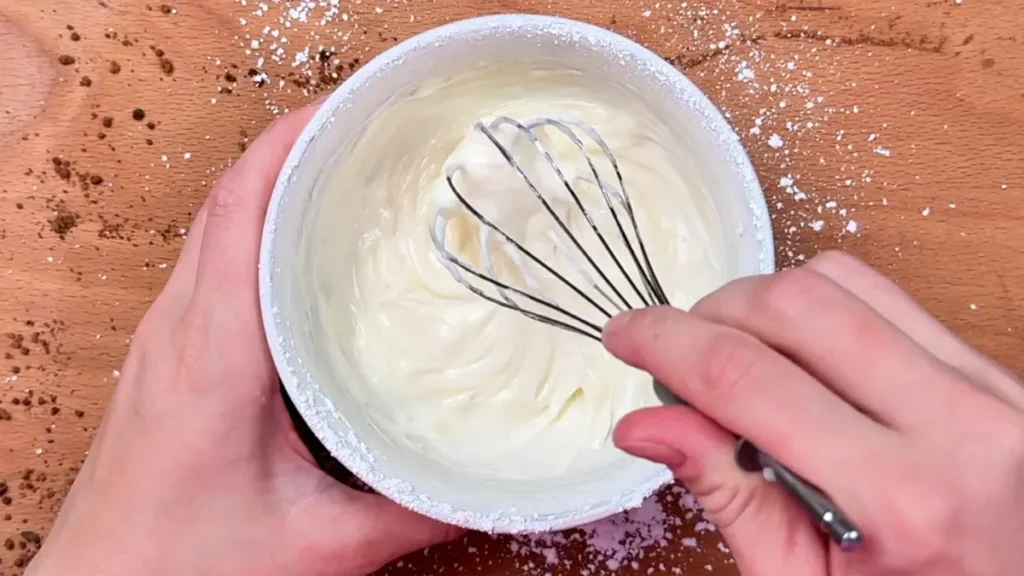
It’s a very simple frosting: just cream cheese and powdered sugar, with a little vanilla if you like. It has twice as much cheese as sugar, so it tastes of cream cheese and not just sweet, and it goes with the sesame without covering it up.
The trick is in how you mix it:
- Cream cheese, cold from the fridge. Full-fat, not light, and straight from the fridge. Cold, it keeps its creamy texture; at room temperature it gets much softer.
- Mix just enough. Stir the cheese only until smooth, about 20-30 seconds, and add the sugar in two parts, just mixing it in. If you overbeat it, the cream cheese softens and the frosting turns too runny. With a mixer, on low speed and only for a few seconds.
- Sifted powdered sugar. Since you won’t be beating it much, this way there are no little lumps.
If you want it runnier, add milk or cream 5 g at a time, up to 10 g (2 tsp). Keep it in the fridge until you use it, and wait about 10 minutes for the rolls to cool slightly before spreading it: it melts a little between the swirls, but doesn’t melt away completely.
And if you have vanilla, this is where it goes: the frosting doesn’t go in the oven, so the aroma comes through in full. If you’d like to make your own, here’s our homemade vanilla extract.
Make Them Ahead: Overnight Black Sesame Cinnamon Rolls
It takes a few hours, but almost all of it is waiting, and the fridge lets you spread it out however suits you best.
The dough, in the fridge for up to 12 hours. After kneading, shape it into a ball, cover it and refrigerate. When you take it out, it may already have grown by 80%; if not, wait until it does. Since it’s already cold, you can shape it right away, without the hour in the fridge.
The shaped rolls, in the fridge overnight. For fresh rolls at breakfast: shape them, place them in the pan, cover them well and refrigerate. In the morning, take them out and let them finish rising at room temperature before baking. Since they come out cold, it takes longer: allow 1-2 hours, or a bit more.
Variations
- Tahini only in the dough. Swap the 40 g of tahini and 40 g of butter for 80 g of black tahini. They’re really good, with more sesame flavor, but they rise less and the crumb is a little denser.
- Thicker or runnier frosting. Without milk it’s thick and stays on top; with 10 g (2 tsp) of milk or cream it’s runnier and seeps between the swirls.
- In a round or rectangular pan. A 22 cm (9 in) round pan fits 7 rolls: one in the center and six around it. A 20 x 30 cm (8 x 12 in) rectangular pan fits 6, with strips about 5 cm (2 in) wide.
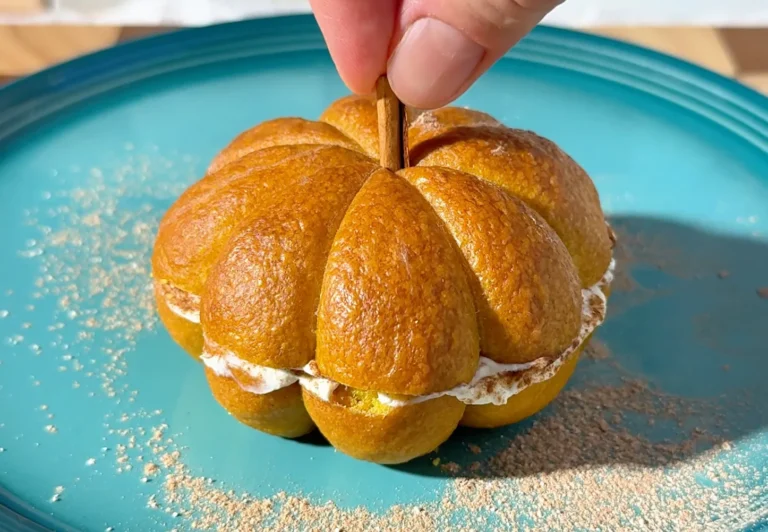
- Other flavors. If you love cinnamon rolls, try the classics, our fluffy homemade cinnamon rolls, or the seasonal ones, our pumpkin cinnamon rolls 🎃
How to Store Black Sesame Cinnamon Rolls
We keep them in the fridge, well covered, because the frosting has cream cheese. That way they stay soft for 3 days.
When we take them out, we warm them in the microwave at 50% power for 40 seconds and they’re like fresh from the oven again. At half power they warm through without the dough turning tough 😋
Black Sesame Cinnamon Rolls FAQ
What do black sesame cinnamon rolls taste like?
Like cinnamon and toasted sesame. Black tahini has a more intense, toasty flavor than regular tahini, and with the brown sugar and cinnamon it’s reminiscent of nuts. The cream cheese frosting adds a fresh touch on top.
Where can I buy black tahini?
At Asian grocery stores, some health food stores and online. Look for one that’s just toasted black sesame, with no added sugar. We use this black tahini (affiliate link).
Is black tahini the same as black sesame paste?
They’re very close: both are just black sesame ground into a paste. We haven’t made this recipe with Asian black sesame paste, which is often more deeply toasted, so expect a stronger flavor. Check the label, too: some black sesame pastes made for desserts already have sugar added, and for this recipe you want one that’s only black sesame.
Why do I need to stir the tahini so much?
Because in the jar the oil rises to the top and the paste settles at the bottom. If you weigh only oil or only paste, the dough turns out too soft or too dry. Stir until it’s smooth and the same color from top to bottom.
Can I make them without butter, using only tahini?
Yes. Swap the 40 g of tahini and 40 g of butter in the dough for 80 g of black tahini. We’ve made them that way and they’re really good, with more sesame flavor, but they rise less and the crumb is a little denser. That’s why we recommend half and half.
Can I use regular tahini instead of black tahini?
We haven’t tried it with regular tahini. The technique would be the same, but you’d lose the gray color, which is what makes this recipe special.
How do I know they’re done if the dough is gray?
With a thermometer: they should read 92 °C (198 °F) in the center roll, which is usually around 35 minutes. With this dough the color doesn’t help, because it’s gray from the start. If you don’t have a thermometer, gently pull apart two rolls in the center with a fork: the dough inside shouldn’t look wet or sticky.
Why does the sugar go on after the tahini?
Because the filling spreads much more easily that way. Mixed with the sugar, the tahini turns into a thick, gritty paste that drags and tears the dough. If you spread the tahini with the cinnamon and salt first and then sprinkle the sugar on top, it spreads in no time and stays even all through the spiral. It works for any cinnamon roll recipe, with butter.
Why not roll up all the dough and slice it with thread?
Because when you cut the strips before rolling, all the rolls come out the same size, they don’t get squashed when you cut them, and the spirals stay round. Plus, rolling up a short strip is much easier than a 50 cm (20 in) log of soft dough.
Which yeast can I use?
Instant, active dry or fresh. Use 5 g (1½ tsp) of instant yeast straight in with the flour, 7 g (2¼ tsp, 1 packet) of active dry dissolved first in the warm milk (35-40 °C / 95-105 °F) and left for 10 minutes, or 16 g (½ oz) of fresh cake yeast crumbled into the milk. It has to be baker’s yeast, not baking powder.
Can I make them without a stand mixer?
Yes. By hand, the part that takes longest is working in the tahini and butter paste: about 15 minutes in total, pushing the dough with the heel of your hand, folding it and turning it. At first it tears and slides around, but if you keep kneading it comes back together.
Can I make them the night before?
Yes. Shape the rolls, place them in the pan, cover them well and leave them in the fridge overnight. In the morning, take them out and let them finish rising at room temperature, 1 to 2 hours or a bit more, since they come out cold. You can also keep the dough in the fridge for up to 12 hours after kneading.
Why did my frosting turn runny?
Almost always from overbeating it or using the cream cheese at room temperature. Use it cold from the fridge and full-fat, stir it only until smooth and add the powdered sugar in two parts, mixing just enough. And only add milk or cream if you really want it runnier.
Can I freeze them?
We haven’t tried it with this dough, so we can’t promise how it turns out. If you try it, let us know how it goes in the comments.
Are black sesame cinnamon rolls the same as black sesame buns?
Not quite. In the UK, cinnamon rolls are often called cinnamon buns, so black sesame cinnamon buns are exactly these. But in Asian bakeries, black sesame buns or rolls are usually soft buns filled with sweet black sesame paste and no cinnamon. Ours are cinnamon rolls with black tahini in the dough and filling.
How long do they keep, and how do I reheat them?
Well covered in the fridge, they stay soft for 3 days. To serve them, we warm them for 40 seconds in the microwave at 50% power and they’re like fresh from the oven again.
Made This Recipe or Have a Question?
Any questions before you start? Ask us down below and we’ll get back to you. And if you’ve already made it, tell us how it turned out or leave us a rating: it really helps more people find the recipe 😊
Rate this recipe ⭐️